🇧🇯 The flowers of Benin
1 page from Benin: its flowers, the things made with them and the places to see them.
Benin’s flora is shaped by its savannas, river forests, and woodlands, with about 3,000 plant species. Riparian (riverbank) forests are especially rich, holding many rare and endemic plants. Baobabs, kapok trees, African mahogany, and wild orchids are among the notable flowering plants found here.
- Benin has about 3,000 plant species.
- Riparian forests hold many rare and endemic plants.
- Baobab and kapok trees are signature species.
- Wild orchids grow in river forests.
- Forest laws protect rare trees along waterways.
The plant life of Benin
Benin’s plant life is a blend of savanna, woodland, and riverbank forests. Dense forests are rare, but the country is home to around 3,000 plant species. The north features woody savannas, while the south transitions to lighter woodlands and palms near the coast. Riparian forests, which grow along rivers, are especially important for their diversity and support a mix of forest and savanna plants. These areas are structurally complex, with trees ranging from 14 to 25 meters tall and a dense undergrowth. The country’s flora includes palms, baobabs, kapok trees, and various legumes.
From region to region in Benin
Northern Benin is dominated by savanna and woodland, with protected areas like Pendjari and W National Parks. River valleys and gallery forests cut through these drier areas, creating pockets of denser vegetation. The south has more palms and semi-deciduous forests, while rocky hills and escarpments in the northwest support unique plant communities. Along the coast, coconut and oil palms are common.
Flowers to know in Benin
Benin’s notable flowering plants include the baobab (Adansonia digitata), kapok tree (Bombax costatum), and African mahogany (Khaya senegalensis). The African locust bean (Parkia biglobosa) and tamarind (Tamarindus indica) are also present. In the river forests, orchids such as Eulophia cucculata and Eulophia guineensis grow. Rare species like Milicia excelsa and Afzelia africana are protected by law, especially in gallery forests.
How flowers are used in Benin
Plants play a role in traditional medicine, especially in the south where they are used to treat malaria and other illnesses. Rural communities also rely on forest products for daily needs. Some trees, such as the shea and tamarind, provide food, while others are valued for timber or shade. Orchids and other wildflowers are part of the natural landscape rather than cultivated gardens.
Threats and protection in Benin
Riparian forests face threats from deforestation, shifting cultivation, grazing, and overuse of resources. These pressures have led to the decline of rare and endemic plants. The government has enacted laws to protect forests, especially along waterways, but enforcement remains weak. National parks and reserves aim to conserve the country’s unique plant diversity.
The facts in this overview come from the Wikipedia article "Wildlife of Benin", written by its contributors and used under the CC BY-SA 4.0 licence. Phool rewrote the text in its own words, with AI assistance, and compares every page with the article to make sure no passage is copied. It may be reused under the same CC BY-SA 4.0 licence with a link back.
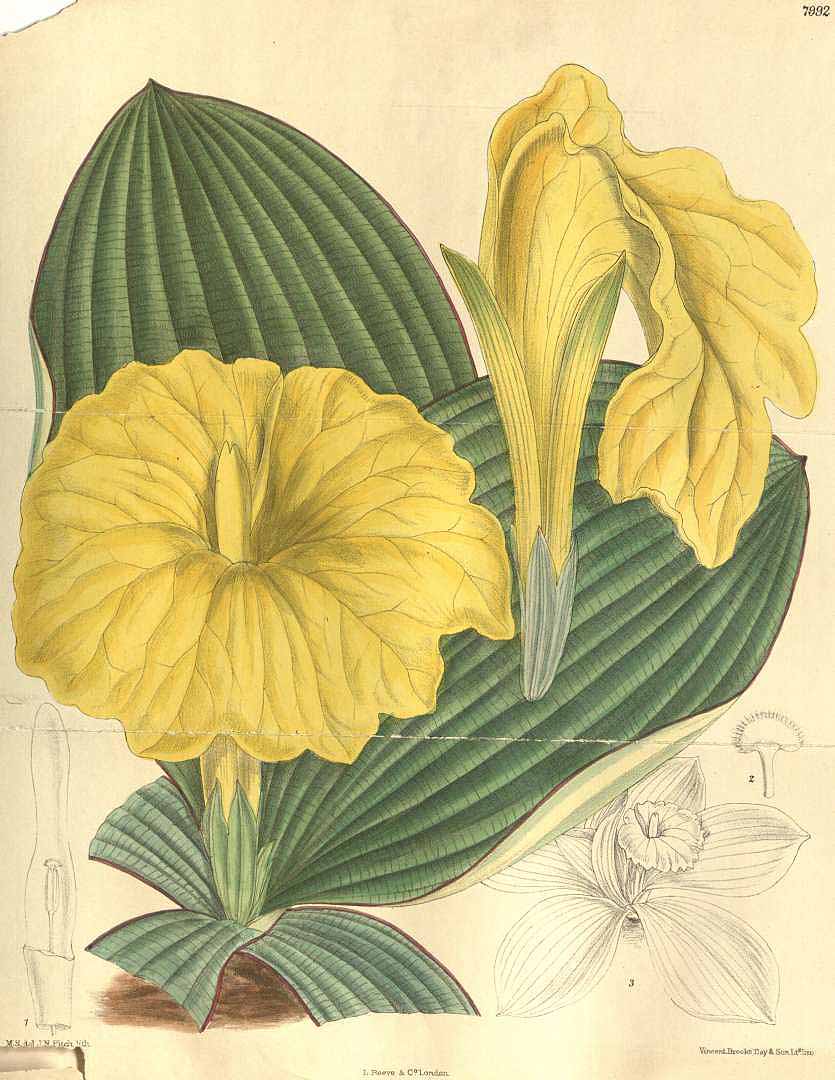
Photo credits on this page
The small pictures above come from Wikimedia Commons under free licences. Some are cropped to fit.
- Costus spectabilis: Matilda Smith (1854–1926), Public domain, source
- Benin: Marco Schmidt, CC BY-SA 3.0, source