
Butterfly Bush
Buddleja, family Scrophulariaceae
Shrubs and small trees with nectar-rich flowers that draw butterflies
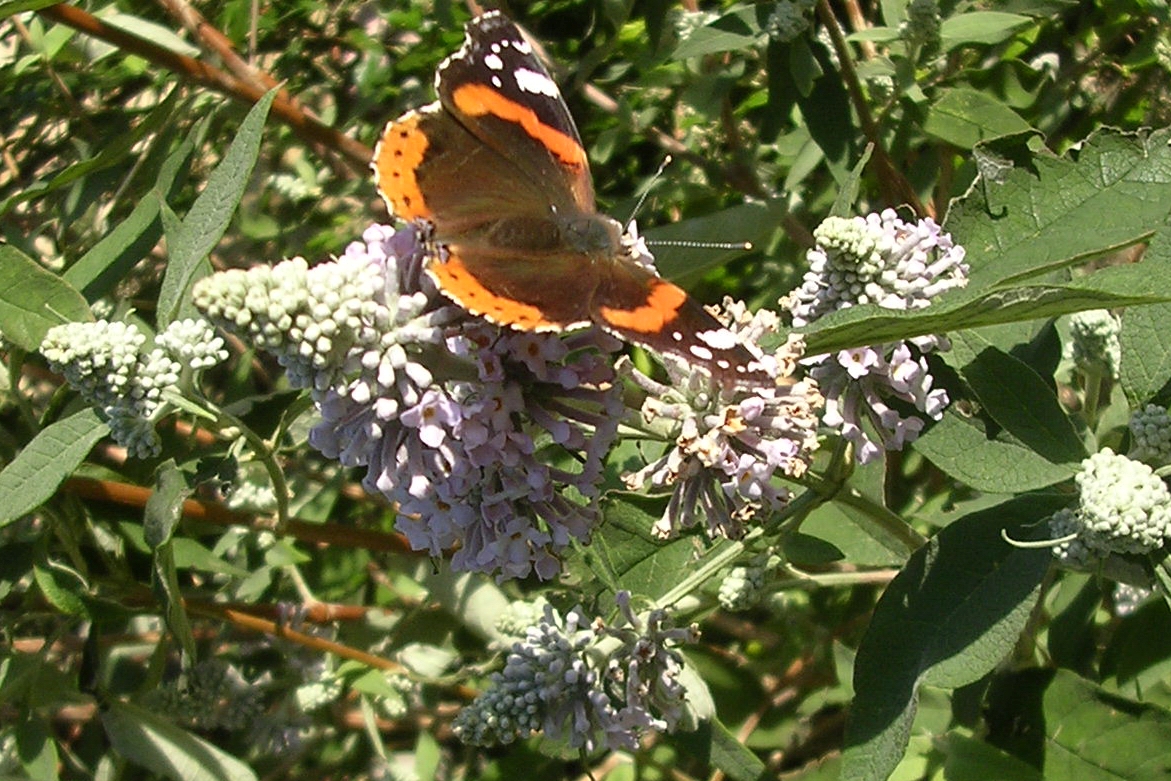
Buddleja is a group of over 140 flowering plants, mostly shrubs, found in Asia, Africa, and the Americas. Known as butterfly bushes, their fragrant, nectar-filled blooms come in a range of colors and are popular in gardens for attracting butterflies, bees, and moths.
- Over 140 species, mostly shrubs, found on four continents
- Flowers attract butterflies, bees, and moths with nectar
- Colors range from pastel pinks and blues to bright yellows and reds
- Some species, like B. davidii, are considered invasive in Europe and North America
- Named after English botanist Adam Buddle
What does Butterfly Bush look like?
Buddleja plants are mostly shrubs, though a few can grow into small trees. They usually reach up to 5 meters tall, but some tree forms can be much larger. Their leaves are often long and narrow, arranged in pairs along the stem. The flowers are grouped in clusters, either as long spikes or rounded heads, depending on the species. Each flower is tube-shaped and splits into four petals, with colors ranging from soft pinks and blues to vivid yellows, oranges, reds, and purples. Many have a sweet, honey-like scent and are rich in nectar.
Where does Butterfly Bush come from?
Buddleja grows wild in parts of Asia, Africa, and the Americas, but not in Europe or Australasia. The first species described by European botanists came from the Caribbean. The name Buddleja honors Adam Buddle, an English botanist, and was given by Linnaeus after a suggestion from William Houstoun. Over 60 species are native to the Americas, with others found in Africa and Asia. The genus has shifted between plant families over time and is now placed in Scrophulariaceae.
When and how Butterfly Bush blooms
Buddleja flowers appear in different ways depending on the species. Asian types often form long, upright clusters, while American species may have rounded flower heads. Most are grown as shrubs in gardens, started from seed or cuttings. They thrive in sunny spots and are valued for their ability to attract pollinators. Some species, like B. globosa, have been grown in gardens since the 18th century.


How Butterfly Bush is used
Gardeners plant Buddleja for its colorful, fragrant flowers and its ability to draw butterflies and other insects. The most widely grown species is B. davidii, known for its role in butterfly gardens. Buddleja can sometimes escape cultivation and spread into wild areas, especially in urban settings where it may grow on old buildings or waste ground. Some regions consider it invasive and have taken steps to control its spread.
Kinds of Butterfly Bush
There are many species and hybrids of Buddleja. Popular garden varieties include 'Royal Red', 'Black Knight', 'Sungold', and 'Pink Delight', each with distinctive flower colors. Hybrids like B. 'Lochinch' and B. × weyeriana combine traits from different species. Breeders have also developed forms that do not produce seeds, to help limit unwanted spreading.
What Butterfly Bush means
Buddleja is often called the butterfly bush because its flowers are a favorite of butterflies. In some places, it has become a symbol of resilience, especially in cities where it grows on abandoned sites. Its ability to thrive in disturbed areas has given it nicknames like 'the bomb site plant' in the UK. However, its tendency to spread has led to restrictions in some regions.
Where Butterfly Bush is used and seen

Questions people ask about Butterfly Bush
Where does Buddleja come from?
Buddleja species are native to Asia, Africa, and the Americas, with over 60 species found from the southern United States to southern Chile. They do not grow naturally in Europe or Australasia.
Why is it called the butterfly bush?
Buddleja is often called the butterfly bush because its nectar-rich flowers are especially attractive to butterflies, as well as bees and moths.
What do Buddleja flowers look like?
The flowers are small, tubular, and grouped in clusters that can be long spikes or rounded heads. They come in many colors, including pink, blue, yellow, orange, red, purple, and white, and often have a strong, sweet scent.
Is Buddleja considered invasive?
Some species, especially Buddleja davidii, can spread aggressively outside gardens and are considered invasive in parts of Europe and North America, where they grow on disturbed sites and waste ground.
Are there different types of Buddleja for gardens?
Yes, there are many species and hybrids grown in gardens, such as 'Royal Red', 'Black Knight', 'Sungold', and 'Pink Delight', each offering different flower colors and forms.
Good reading and sources
- Encyclopaedia BritannicaArticle
- Buddleia: The plant that dominates Britain's railwaysBBC, Article
- Editorial: In praise of ... buddleiaThe Guardian, Article
- USDA Plants DatabaseUS Department of Agriculture, Article
- Plants of the World OnlineRoyal Botanic Gardens, Kew, Plant database
- Where it has been recordedGBIF, Plant database
- Sightings and photos by naturalistsiNaturalist, Plant database
The facts on this page come from the Wikipedia article "Buddleja", written by its contributors and used under the CC BY-SA 4.0 licence, and from its Wikidata record (CC0). Phool rewrote the text in its own words, with AI assistance, and compares every page with the article to make sure no passage is copied. It may be reused under the same CC BY-SA 4.0 licence with a link back.
It may contain mistakes. It is not medical or foraging advice: many flowers are poisonous, and traditional uses are reported, not recommended. If something is wrong, tell us. Last refreshed 2026-10-03.
Others in the family Scrophulariaceae
The whole family Nemesia
A group of colourful bedding plants from South Africa
🇿🇦 South Africa · Wildflower
Nemesia
A group of colourful bedding plants from South Africa
🇿🇦 South Africa · Wildflower
 Emu BushEremophila
A group of Australian shrubs with tubular flowers in arid zones
🇦🇺 Australia and 1 more · Flowering shrub
Emu BushEremophila
A group of Australian shrubs with tubular flowers in arid zones
🇦🇺 Australia and 1 more · Flowering shrub
 Butterfly-bushBuddleja davidii
A honey-scented shrub with lilac to purple flower spikes, loved by butterflies
🇨🇳 China and 5 more · Flowering shrub
Butterfly-bushBuddleja davidii
A honey-scented shrub with lilac to purple flower spikes, loved by butterflies
🇨🇳 China and 5 more · Flowering shrub
 MulleinVerbascum
Tall flowering plants with a rosette of leaves and spikes of five-petalled blooms
Verbascum · Wildflower
MulleinVerbascum
Tall flowering plants with a rosette of leaves and spikes of five-petalled blooms
Verbascum · Wildflower