
Botanical Garden Munich-Nymphenburg
In its own language: Botanischer Garten München-Nymphenburg
Munich’s large public garden with greenhouses and plant collections from around the world
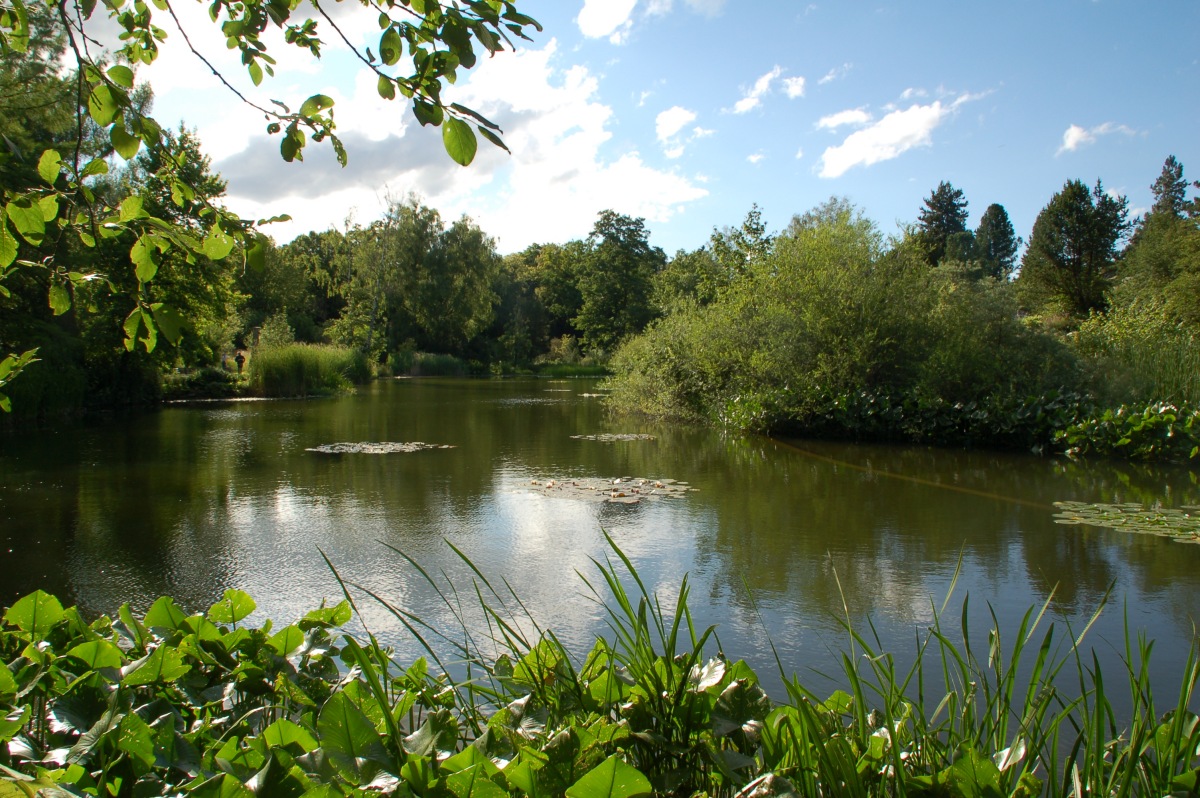
This botanical garden in Munich, Germany, covers 21 hectares and displays nearly 20,000 plant species. Visitors can explore outdoor gardens, an extensive greenhouse complex, and themed collections such as roses, alpine plants, and an arboretum. The garden also serves as a center for plant education and conservation.
- Nearly 20,000 plant species and subspecies are grown here
- The garden covers 21 hectares in Munich
- Eleven greenhouses display tropical, desert, and alpine plants
- There is a special outdoor alpine garden and a large rose collection
- The garden opened to the public in 1914
What is Botanical Garden Munich-Nymphenburg?
The Botanical Garden Munich-Nymphenburg is a large public garden in Munich, featuring outdoor beds, themed plantings, and a wide variety of trees and shrubs. Its grounds include an alpine garden, a rose section, and a systematic area where plants are grouped by their botanical families. The garden’s greenhouses house tropical, desert, and subtropical plants, with dedicated spaces for cacti, succulents, ferns, bromeliads, aroids, cycads, and orchids. Visitors can also see special displays such as Mexican plants and seasonal exhibitions.
The history of Botanical Garden Munich-Nymphenburg
Munich’s first botanical garden was founded in 1809 near Karlsplatz, but the current Botanical Garden Munich-Nymphenburg replaced it in 1912–1913. The new garden was designed by Peter Holfelder, with input from Walter Kupper and Leonhard Dillis, and officially opened in May 1914. Its purpose is to offer a peaceful setting for visitors and to promote knowledge about plants and the natural world.
What there is to see
The garden’s layout includes outdoor areas organized by plant type and region, as well as a complex of eleven greenhouses covering 4,500 square meters. These greenhouses allow the cultivation of plants from tropical, subtropical, and arid environments, including a large orchid collection and displays of cacti, succulents, and ferns. The garden also manages an alpine outpost, the Alpengarten auf dem Schachen, located at a high elevation.



When to go
People visit the garden throughout the year to enjoy its plant displays, walk among themed collections, and attend educational events. The greenhouses provide a chance to see exotic plants regardless of the season. The garden is also involved in plant conservation and public education, offering resources for learning about botany and horticulture.
Parts and collections
The garden’s collections are diverse, with notable sections for alpine plants, roses, and an arboretum. The orchid collection is especially broad, representing many genera and hybrids. The garden’s external alpine station at Schachen allows for the display of mountain species in their preferred climate.
Why Botanical Garden Munich-Nymphenburg matters
As a major botanical institution in Germany, the garden plays a role in plant conservation and education. It is a destination for both locals and tourists interested in botany, horticulture, and natural beauty. The garden’s design and collections reflect over a century of dedication to public enjoyment and scientific study.
Questions people ask about Botanical Garden Munich-Nymphenburg
Where is the Botanical Garden Munich-Nymphenburg located?
The garden is in Munich, Germany, at Menzinger Straße 65. It is situated near Nymphenburg Palace and is easily accessible from the city.
What can visitors see at the garden?
Visitors can explore outdoor plantings, themed gardens such as roses and alpine plants, and a large greenhouse complex with tropical, desert, and subtropical species.
How old is the garden?
The Botanical Garden Munich-Nymphenburg was established in 1912–1913 and officially opened in May 1914, replacing Munich’s earlier botanical garden.
Does the garden have any special plant collections?
Yes, it features notable collections of alpine plants, roses, trees, and a large variety of orchids, as well as cacti, succulents, and ferns.
What is the purpose of the garden?
The garden aims to provide a peaceful setting for visitors, promote plant education, and support conservation efforts.
Good reading and sources
- Botanical Garden Munich-Nymphenburg on WikipediaEncyclopedia
- More photos on Wikimedia CommonsPhotos
- Wikidata recordOpen data
The facts on this page come from the Wikipedia article "Botanical Garden Munich-Nymphenburg", written by its contributors and used under the CC BY-SA 4.0 licence, and from its Wikidata record (CC0). Phool rewrote the text in its own words, with AI assistance, and compares every page with the article to make sure no passage is copied. It may be reused under the same CC BY-SA 4.0 licence with a link back.
It may contain mistakes. Opening times, prices and bloom dates change: check with the place before you travel. If something is wrong, tell us. Last refreshed 2026-10-03.
More of the same kind
 Place
Tropical Botanical Garden and Research Institute
A major botanical garden and research centre in Thiruvananthapuram, Kerala
Thiruvananthapuram, 🇮🇳 India · Botanical garden
Place
Tropical Botanical Garden and Research Institute
A major botanical garden and research centre in Thiruvananthapuram, Kerala
Thiruvananthapuram, 🇮🇳 India · Botanical garden
 Place
Baldha Gardenবলধা গার্ডেন
A historic botanical garden in Old Dhaka with hundreds of plant species
Dhaka, 🇧🇩 Bangladesh · Botanical garden
Place
Baldha Gardenবলধা গার্ডেন
A historic botanical garden in Old Dhaka with hundreds of plant species
Dhaka, 🇧🇩 Bangladesh · Botanical garden
 Place
Hakone Botanical Garden of Wetlands箱根湿生花園
A garden of wetland and alpine plants in Hakone, Japan
Hakone, 🇯🇵 Japan · Botanical garden
Place
Hakone Botanical Garden of Wetlands箱根湿生花園
A garden of wetland and alpine plants in Hakone, Japan
Hakone, 🇯🇵 Japan · Botanical garden
 Place
Sim's Park, Coonoor
A century-old botanical garden in the Nilgiri hills of Tamil Nadu
Coonoor, 🇮🇳 India · Botanical garden, May
Place
Sim's Park, Coonoor
A century-old botanical garden in the Nilgiri hills of Tamil Nadu
Coonoor, 🇮🇳 India · Botanical garden, May
More from Germany
All the flowers of Germany Place
Schau- und Sichtungsgarten Hermannshof
A public show and trial garden in Weinheim, Germany
Weinheim, 🇩🇪 Germany · Botanical garden
Place
Schau- und Sichtungsgarten Hermannshof
A public show and trial garden in Weinheim, Germany
Weinheim, 🇩🇪 Germany · Botanical garden
 Place
Flora und Botanischer Garten Köln
Cologne’s historic park and botanical garden with glasshouses and themed gardens
Cologne, 🇩🇪 Germany · Botanical garden
Place
Flora und Botanischer Garten Köln
Cologne’s historic park and botanical garden with glasshouses and themed gardens
Cologne, 🇩🇪 Germany · Botanical garden
 Place
WilhelmaWilhelma Zoologisch-Botanischer Garten Stuttgart
A Moorish-style zoo and botanical garden in Stuttgart, Germany
Stuttgart, 🇩🇪 Germany · Botanical garden
Place
WilhelmaWilhelma Zoologisch-Botanischer Garten Stuttgart
A Moorish-style zoo and botanical garden in Stuttgart, Germany
Stuttgart, 🇩🇪 Germany · Botanical garden
 Place
Rhododendron-Park Bremen
A vast park in Bremen with the world’s largest rhododendron and azalea collection
Bremen, 🇩🇪 Germany · Botanical garden
Place
Rhododendron-Park Bremen
A vast park in Bremen with the world’s largest rhododendron and azalea collection
Bremen, 🇩🇪 Germany · Botanical garden