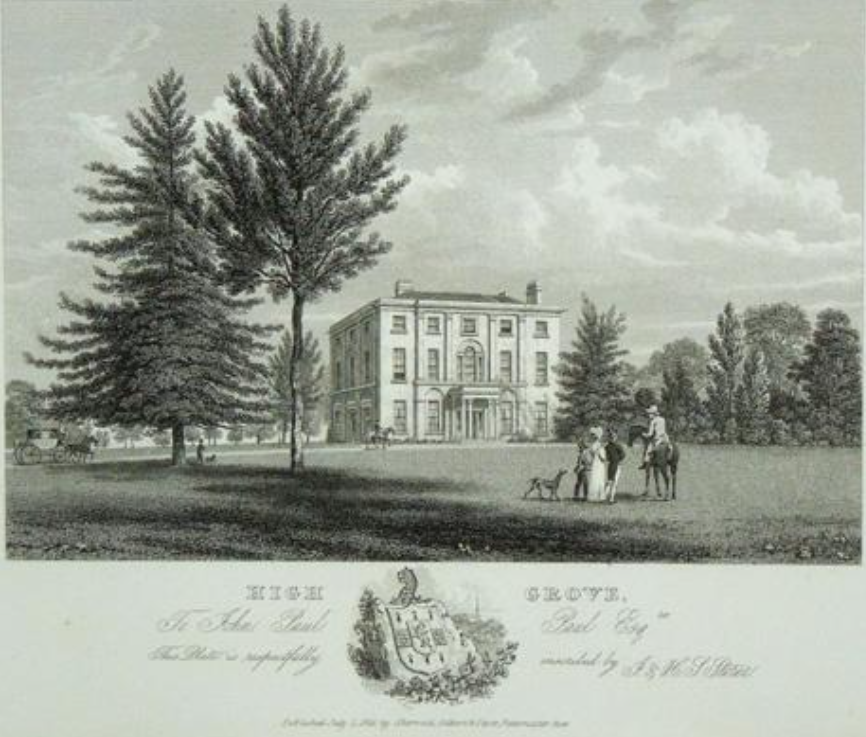
Highgrove House
The King's country house in Gloucestershire, with organic gardens open to visitors
Highgrove House is a late 18th-century country house near Tetbury in Gloucestershire, England, and the private home of King Charles III and Queen Camilla. Its gardens, which have welcomed visitors since 1996, are run on organic lines and hold rare trees, flowers and heirloom seeds, drawing more than 30,000 people a year.
- Open to visitors since 1996, drawing over 30,000 people each year
- Built between 1796 and 1798, probably to a design by Anthony Keck
- Bought by the Duchy of Cornwall in 1980 from Maurice Macmillan
- Grade II listed since March 1985, along with its coach house and lodge
- Organic gardens sheltering birds and wildlife, with rare trees and heirloom seeds
What is Highgrove House?
Highgrove is a country estate beside the town of Tetbury in Gloucestershire. At its centre is a rectangular, three-storey Georgian house of ashlar stone with a slate roof and neo-classical detailing, holding nine main bedrooms and four reception rooms, plus a nursery wing and staff rooms. Around it lie gardens that were overgrown when the house changed hands in 1980 and are now planted with heirloom seeds, flowers and rare trees. Among the buildings are beehive pavilions and a beef-yard in traditional Cotswold stone. A high stone wall surrounds the estate, and the gardens are the part visitors come to see.
The history of Highgrove House
The house was put up between 1796 and 1798 for John Paul Paul, and is thought to be the work of the architect Anthony Keck. It stayed with Paul's descendants until 1860, then passed through several owners, among them the barrister William Yatman, who left after a fire in 1893, and the Mitchell family, who rebuilt. The Macmillan family bought the estate in 1956 and sold it in 1980 to the Duchy of Cornwall, which paid somewhere between £800,000 and £1,000,000, it is thought, using money from the sale of three other properties. Charles, then Prince of Wales, became tenant for life, and in 1987 the house gained the neo-classical additions still seen today.
What there is to see
Visitors come for the gardens, open to visitors since 1996, with over 30,000 coming each year. Charles designed them with advice from the gardener Rosemary Verey and the naturalist Miriam Rothschild. The garden is run on organic lines, with organic lawn management too, and the planting doubles as a habitat for birds and other wildlife. The grounds hold rare trees, flowers and heirloom seeds. Among the buildings are beehive pavilions and a beef-yard made by Willie Bertram from traditional Cotswold stone, along with solar panels and a wood-chip boiler. The Orchard Tearooms have opened on Tuesdays under a winter initiative against loneliness.


When to go
Visitors come in the months the gardens are open, which has been the case since 1996; more than 30,000 arrive in a year. There is no flower festival recorded here, so the draw is the planting itself, along with the tearooms. Charles has often held charitable events at the house, which he rents from the Duchy of Cornwall as a country residence. It has appeared in books and television programmes about his environmental ideas. At Christmas 2020 the royal family stayed at Highgrove after the usual Sandringham gathering was cancelled, and in 2023 the newly crowned King and Queen came back after the coronation.
Parts and collections
The house has changed shape more than once. After a fire in 1893 gutted the interior and damaged the west front, the Bristol architect John Hart rebuilt it to its old appearance the next year, and a porch went up on the south-east side. In 1987 the architect Peter Falconer carried out a remodelling based on an impression painted by Felix Kelly, adding a balustrade, pediment and pilasters; the Georgian Group approved the work. Inside, Dudley Poplak decorated rooms in the 1980s with clean, fresh colours including lime green and aquamarine, and his work was later replaced by designs from Robert Kime.
Why Highgrove House matters
Highgrove is a royal country house rather than a public park. It is Grade II listed, as are the Coach House, the Lodge and the gate piers. The house passed to William, Prince of Wales, when his father became king in September 2022, since it belongs to the Duchy of Cornwall; the King now rents it. Security is tight: a stone wall rings the estate, an aerial exclusion zone for light aircraft was imposed in 1991, and two public footpaths were moved in 1983. It has been the subject of books by former staff and of television programmes.
Questions people ask about Highgrove House
Where is Highgrove House?
It stands in Doughton, in the parish of Tetbury Upton, Gloucestershire, in South West England, southwest of the town of Tetbury. The King's sister, Anne, lives about six miles away at Gatcombe Park.
Who owns Highgrove House?
The Duchy of Cornwall owns it. Charles bought it through the duchy in 1980 and later became tenant for life. When he became king in September 2022, control passed to William, Prince of Wales, as Duke of Cornwall, and the King rents the house from the duchy.
Can you visit the gardens?
Yes. Visitors have been welcome in the gardens since 1996 and more than 30,000 come each year. The Orchard Tearooms opened on Tuesdays in 2023 as part of a winter initiative to give people warm spaces.
What grows there?
The grounds hold rare trees, flowers and heirloom seeds, grown organically, with the lawns managed the same way. They were designed by Charles with the gardener Rosemary Verey and the naturalist Miriam Rothschild, and now shelter birds and other wildlife.
What is the house like?
It is a rectangular three-storey Georgian building of ashlar blocks, with a stone and slate roof and neo-classical decoration, put up in the 1790s. It has nine main bedrooms and four reception rooms, and was remodelled in 1987 with a balustrade, pediment and pilasters.
Good reading and sources
- Official websiteOfficial site
- BBC NEWS | UKBBC, Article
- King Charles III: Warm space opens at Highgrove HouseBBC, Article
- Revealed: royals took more than £1bn income from controversial estatesThe Guardian, Article
- Highgrove House on WikipediaEncyclopedia
- More photos on Wikimedia CommonsPhotos
- Wikidata recordOpen data
The facts on this page come from the Wikipedia article "Highgrove House", written by its contributors and used under the CC BY-SA 4.0 licence, and from its Wikidata record (CC0). Phool rewrote the text in its own words, with AI assistance, and compares every page with the article to make sure no passage is copied. It may be reused under the same CC BY-SA 4.0 licence with a link back.
It may contain mistakes. Opening times, prices and bloom dates change: check with the place before you travel. If something is wrong, tell us. Last refreshed 2026-10-03.
More of the same kind
 Place
AlhambraLa Alhambra
Medieval palace and fortress complex overlooking Granada, Spain
Granada, 🇪🇸 Spain · Flower garden
Place
AlhambraLa Alhambra
Medieval palace and fortress complex overlooking Granada, Spain
Granada, 🇪🇸 Spain · Flower garden
 Place
Rose garden
A public garden devoted to growing and displaying many kinds of roses
L'Haÿ-les-Roses, 🇫🇷 France · Flower garden
Place
Rose garden
A public garden devoted to growing and displaying many kinds of roses
L'Haÿ-les-Roses, 🇫🇷 France · Flower garden
 Place
Villa Rufolo
A historic villa in Ravello with year-round flower gardens and sea views
Ravello, 🇮🇹 Italy · Flower garden
Place
Villa Rufolo
A historic villa in Ravello with year-round flower gardens and sea views
Ravello, 🇮🇹 Italy · Flower garden
 Place
International Garden Festival
Britain’s first major international garden festival, held in Liverpool in 1984
Liverpool, 🇬🇧 United Kingdom · Festival or show, May to Oct
Place
International Garden Festival
Britain’s first major international garden festival, held in Liverpool in 1984
Liverpool, 🇬🇧 United Kingdom · Festival or show, May to Oct
More from the United Kingdom
All the flowers of the United Kingdom Place
Castle Howard
A grand English country house with historic gardens near York
Henderskelfe, 🇬🇧 United Kingdom · Flower garden
Place
Castle Howard
A grand English country house with historic gardens near York
Henderskelfe, 🇬🇧 United Kingdom · Flower garden
 Place
Royal Botanic Gardens, Kew
London’s world-renowned botanical gardens and plant science centre
Kew, 🇬🇧 United Kingdom · Botanical garden
Place
Royal Botanic Gardens, Kew
London’s world-renowned botanical gardens and plant science centre
Kew, 🇬🇧 United Kingdom · Botanical garden
 Place
RHS Garden Wisley
A major English garden with glasshouses, borders and plant trials in Surrey
Wisley, 🇬🇧 United Kingdom · Botanical garden
Place
RHS Garden Wisley
A major English garden with glasshouses, borders and plant trials in Surrey
Wisley, 🇬🇧 United Kingdom · Botanical garden
 Place
RHS Garden Hyde Hall
A 360-acre public display garden in Essex run by the Royal Horticultural Society
Chelmsford, 🇬🇧 United Kingdom · Botanical garden
Place
RHS Garden Hyde Hall
A 360-acre public display garden in Essex run by the Royal Horticultural Society
Chelmsford, 🇬🇧 United Kingdom · Botanical garden