
Inhotim
A vast Brazilian botanical garden and outdoor art museum in Minas Gerais
Inhotim is a large botanical garden and contemporary art museum near Brumadinho, Brazil. Spread over nearly 2,000 acres in the Atlantic Forest, it combines hundreds of plant species with outdoor art pavilions and installations by Brazilian and international artists.
- Houses over 5,000 plant species and 1,300 types of palm
- Features more than 20 art pavilions and large-scale sculptures
- Located in the Atlantic Forest biome near Brumadinho, Brazil
- Home to the carrion flower, the world’s largest flower
- Recognized as a Private Reserve of Natural Patrimony (RPPN)
What is Inhotim?
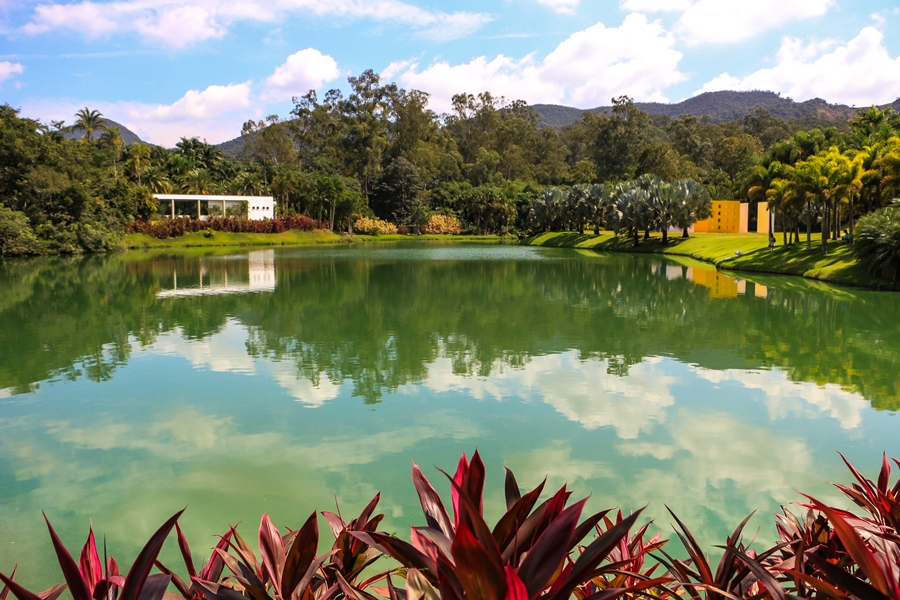
Inhotim is a unique blend of botanical garden and open-air museum, covering nearly 2,000 acres. Visitors walk through gardens filled with thousands of plant species, including rare palms and the world’s largest flower, the carrion flower. Scattered throughout the landscape are more than 20 art pavilions and large-scale sculptures by artists from Brazil and around the world. The grounds include preserved Atlantic Forest, lakes, and designed landscapes, making it a place for both plant lovers and art enthusiasts.
The history of Inhotim
The site began as farmland, named after a former owner known locally as Nhô Tim. In the 1980s, Bernardo Paz started buying land to protect the area from development. With input from landscape artist Roberto Burle Marx, Paz transformed the ranch into a botanical garden. Inspired by artist Tunga, Paz began collecting contemporary art and opened Inhotim to the public in 2006. Over time, it has grown into one of Latin America's largest outdoor art centers and a recognized botanical institution.
What there is to see
Inhotim’s gardens feature over 5,000 plant species, with 1,300 types of palm alone. The grounds are divided into areas for plant conservation, art installations, and visitor spaces. The botanical collection is continually inventoried and expanded. Notable features include the Equatorial Greenhouse, home to the carrion flower, and various themed gardens. Art pavilions are set among the gardens, each designed to interact with the landscape.


When to go
Open to the public since 2006, Inhotim attracts hundreds of thousands of visitors each year. People come to see both the extensive plant collections and the contemporary art installations. The site is also a center for plant conservation and education, with guided tours and special exhibitions. Certain rare plants, like the carrion flower, are displayed when in bloom, drawing extra attention from visitors.
Parts and collections
Inhotim’s botanical collection includes a wide range of plant families, with a focus on palms and rare species. The art installations vary from permanent large-scale sculptures to temporary exhibitions. The pavilions showcase works by artists such as Yayoi Kusama, Anish Kapoor, and Adriana Varejão. Some pavilions are dedicated to a single artist, while others host rotating displays.
Why Inhotim matters
Inhotim is recognized as a Private Reserve of Natural Patrimony (RPPN) and is part of Brazil’s official botanical garden network. It is known for housing the carrion flower, the largest flower in the world, which has bloomed there several times. The institute is a major cultural destination in Brazil, blending environmental preservation with contemporary art. Its unique combination of gardens and art has earned international acclaim.
Questions people ask about Inhotim
Where is Inhotim located?
Inhotim is located in Brumadinho, in the state of Minas Gerais, Brazil, about 60 kilometers from Belo Horizonte.
What can visitors see at Inhotim?
Visitors can explore extensive botanical gardens with thousands of plant species and view contemporary art installations and pavilions by both Brazilian and international artists.
What is special about the botanical collection?
Inhotim’s botanical garden includes over 5,000 plant species, with a notable collection of 1,300 types of palm and rare plants like the carrion flower, which is the largest flower in the world.
What is the history of Inhotim?
Inhotim began as farmland and was gradually transformed by Bernardo Paz into a botanical garden and art museum, opening to the public in 2006 and growing into a major cultural institution.
Who are some of the artists featured at Inhotim?
The museum features works by artists such as Hélio Oiticica, Yayoi Kusama, Anish Kapoor, Adriana Varejão, and many others.
Good reading and sources
- Official websiteOfficial site
- Brazilian millionaire builds ambitious contemporary arts park in the hillsThe Guardian, Article
The facts on this page come from the Wikipedia article "Inhotim", written by its contributors and used under the CC BY-SA 4.0 licence, and from its Wikidata record (CC0). Phool rewrote the text in its own words, with AI assistance, and compares every page with the article to make sure no passage is copied. It may be reused under the same CC BY-SA 4.0 licence with a link back.
It may contain mistakes. Opening times, prices and bloom dates change: check with the place before you travel. If something is wrong, tell us. Last refreshed 2026-10-03.
More of the same kind
 Place
Tropical Botanical Garden and Research Institute
A major botanical garden and research centre in Thiruvananthapuram, Kerala
Thiruvananthapuram, 🇮🇳 India · Botanical garden
Place
Tropical Botanical Garden and Research Institute
A major botanical garden and research centre in Thiruvananthapuram, Kerala
Thiruvananthapuram, 🇮🇳 India · Botanical garden
 Place
Baldha Gardenবলধা গার্ডেন
A historic botanical garden in Old Dhaka with hundreds of plant species
Dhaka, 🇧🇩 Bangladesh · Botanical garden
Place
Baldha Gardenবলধা গার্ডেন
A historic botanical garden in Old Dhaka with hundreds of plant species
Dhaka, 🇧🇩 Bangladesh · Botanical garden
 Place
Hakone Botanical Garden of Wetlands箱根湿生花園
A garden of wetland and alpine plants in Hakone, Japan
Hakone, 🇯🇵 Japan · Botanical garden
Place
Hakone Botanical Garden of Wetlands箱根湿生花園
A garden of wetland and alpine plants in Hakone, Japan
Hakone, 🇯🇵 Japan · Botanical garden
 Place
Sim's Park, Coonoor
A century-old botanical garden in the Nilgiri hills of Tamil Nadu
Coonoor, 🇮🇳 India · Botanical garden, May
Place
Sim's Park, Coonoor
A century-old botanical garden in the Nilgiri hills of Tamil Nadu
Coonoor, 🇮🇳 India · Botanical garden, May
More from Brazil
All the flowers of Brazil Place
Botanical Garden of São PauloJardim Botânico de São Paulo
A large botanical garden in São Paulo with greenhouses, lakes, and native plants
São Paulo, 🇧🇷 Brazil · Botanical garden
Place
Botanical Garden of São PauloJardim Botânico de São Paulo
A large botanical garden in São Paulo with greenhouses, lakes, and native plants
São Paulo, 🇧🇷 Brazil · Botanical garden
 Place
Porto Alegre Botanical GardenJardim Botânico de Porto Alegre
A public botanical garden in Porto Alegre, Brazil, with diverse plant collections
Porto Alegre, 🇧🇷 Brazil · Botanical garden
Place
Porto Alegre Botanical GardenJardim Botânico de Porto Alegre
A public botanical garden in Porto Alegre, Brazil, with diverse plant collections
Porto Alegre, 🇧🇷 Brazil · Botanical garden
 Place
Botanical Garden of BrasíliaJardim Botânico de Brasília
A botanical garden in Brasília with themed gardens and educational spaces
Brasília, 🇧🇷 Brazil · Botanical garden
Place
Botanical Garden of BrasíliaJardim Botânico de Brasília
A botanical garden in Brasília with themed gardens and educational spaces
Brasília, 🇧🇷 Brazil · Botanical garden
 Place
Botanical Garden of CuritibaJardim Botânico de Curitiba
A major botanical garden and park in Curitiba, Brazil
Curitiba, 🇧🇷 Brazil · Botanical garden
Place
Botanical Garden of CuritibaJardim Botânico de Curitiba
A major botanical garden and park in Curitiba, Brazil
Curitiba, 🇧🇷 Brazil · Botanical garden