🇹🇷 The flowers of Turkey
83 pages from Turkey: its flowers, the things made with them and the places to see them, across 28 cities and regions.
Turkey is home to nearly 10,000 plant species, with about a third found nowhere else. Its mountains, varied climates, and soils create a rich and diverse flora. The country is especially known for its endemic milk-vetches (Astragalus), mulleins (Verbascum), and thistles (Centaurea), as well as oak and pine forests.
- About 32% of Turkey's plants are endemic.
- Nearly 400 Astragalus species grow in Turkey.
- The Anatolian diagonal divides eastern and western floras.
- Verbascum (mullein) has its world center in Turkey.
- Oak and pine forests cover much of the country.
The plant life of Turkey
Turkey's plant life is shaped by its mountains, varied climates, and complex geology. The country sits at the crossroads of three major botanical regions: Mediterranean, Euro-Siberian, and Irano-Turanian. This mix, along with fragmented landscapes, has led to high plant diversity and endemism. Forests of oak and pine, steppe grasslands, and Mediterranean shrublands are common. Central Anatolia is mostly dry steppe, while the coasts and mountains support richer forests. The range of soils—from saline flats to gypsum hills and serpentine outcrops—further boosts the variety of flowering plants.
From region to region in Turkey
Plant life changes sharply across Turkey. The Black Sea coast is humid and forested, with beech, fir, and chestnut. Central Anatolia is drier, with grasslands and salt-tolerant plants near lakes. The Mediterranean and Aegean coasts have hot, dry summers and mild, wet winters, supporting shrubland and oak forests. The eastern mountains, separated by the Anatolian diagonal, have many species unique to that region, including mixed oak woodlands and alpine meadows.
Flowers to know in Turkey
Turkey is a center of diversity for several plant groups. The milk-vetch genus (Astragalus) has nearly 400 species here, many forming thorny cushions in dry mountains. Mulleins (Verbascum) are also abundant, with most species found only in Turkey. Thistles of the Centaurea genus and various cushion plants like Acantholimon are common in steppe and rocky areas. The Anatolian diagonal is home to about 400 species found nowhere else.
How flowers are used in Turkey
Turkey has a long history of plant use. The region was an early center for the cultivation of wheat and other crops. Mediterranean shrublands and forests have been cleared for agriculture and grazing. Tea is widely grown on the humid slopes of the eastern Black Sea. Some wild plants are collected for food, and edible mushrooms are abundant.
Threats and protection in Turkey
Deforestation and heavy grazing have changed much of Turkey's natural vegetation, especially in the Taurus Mountains and coastal areas. Many forests have been replaced by shrubland or farmland. Some endemic plants are at risk due to habitat loss. Conservation efforts include protected areas and reserves, but pressures from agriculture and development remain strong.
The facts in this overview come from the Wikipedia article "Flora of Turkey", written by its contributors and used under the CC BY-SA 4.0 licence. Phool rewrote the text in its own words, with AI assistance, and compares every page with the article to make sure no passage is copied. It may be reused under the same CC BY-SA 4.0 licence with a link back.

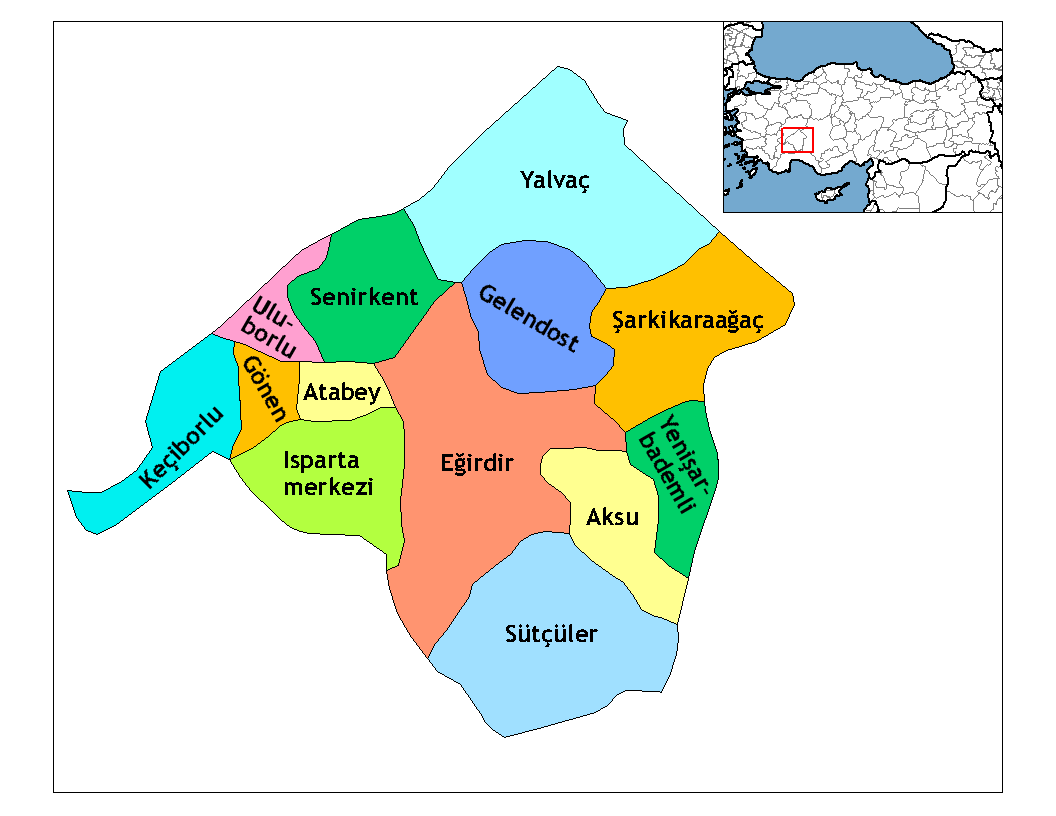
Cities and regions of Turkey
Nothing matches those filters yet. Take one off, or check back: new pages are written every day.
Photo credits on this page
The small pictures above come from Wikimedia Commons under free licences. Some are cropped to fit.
- Isparta Rose Harvest: Isparta at Turkish Wikipedia, Public domain, source
- Kuyucak Lavender Village: No machine-readable author provided. Rarelibra assumed (based on copyr, Public domain, source
- Turkey: Gerhardpils, CC BY-SA 3.0, source