
Tulip
Tulipa, family Liliaceae
Spring-blooming bulbs with showy, cup-shaped flowers in many colours
Tulips are perennial bulb plants in the genus Tulipa, known for their large, bright spring flowers. Native to a band from southern Europe through Central Asia, they are widely grown as garden and cut flowers, especially in the Netherlands, and come in many colours except true blue.
- Tulips bloom in spring from underground bulbs.
- They come in many colours except true blue.
- The Netherlands is the world's main tulip producer.
- Tulips were first cultivated in Persia and Turkey.
- Tulips can cause skin allergies and are toxic to pets.
What does Tulip look like?
Tulips are herbaceous perennials that grow from bulbs, with each bulb producing a stem bearing two to six bluish-green, strap-shaped leaves. The flowers are usually large, cup- or star-shaped, and come in a wide range of bright colours—red, yellow, pink, orange, white, purple, and maroon. Some have a contrasting blotch at the base of the petals. Most tulips have a single flower per stem, but some species can have up to four. While most have no scent, a few species and cultivars are fragrant.
Where does Tulip come from?
Tulips are native to a broad region stretching from southern Europe across the Near East and Central Asia, especially in mountainous and steppe areas with temperate climates. They were first cultivated by Persian and Turkish people as early as the 10th century, becoming highly prized in the Ottoman Empire. The name 'tulip' likely comes from a Turkish or Persian word for 'turban', referring to the flower's shape. Tulips reached Western Europe in the 16th century, quickly becoming popular and leading to the famous Dutch tulip mania of the 17th century.
When and how Tulip blooms
Tulips bloom in spring, emerging from bulbs planted in the ground. After flowering, the plant dies back and the bulb remains dormant through summer. In the wild, they grow in meadows and steppes with cool, wet springs and dry summers. In gardens, tulips are grown from bulbs, which are planted in autumn. Breeding has produced thousands of cultivars with a wide range of colours and forms.


How Tulip is used
Tulips are grown worldwide as ornamental plants in gardens and parks, and are a major cut flower for gifts and decoration. The Netherlands is especially known for tulip cultivation and export. Tulips are also used as symbols and emblems, and feature in festivals and art. Some people may develop skin allergies from handling tulips, and they are toxic to pets such as cats, dogs, and horses.
Kinds of Tulip
There are about 75 species of tulip, divided into four subgenera. Thousands of hybrids and cultivars exist, bred for different colours, shapes, and flowering times. The 'Rembrandt' group recalls the streaked patterns caused by the tulip breaking virus, once highly prized. Black tulips have been a breeding goal, with 'Queen of the Night' and a true black tulip bred in 1986 being notable examples.
What Tulip means
Tulips are strongly associated with the Netherlands, where they became a symbol during the Dutch Golden Age and the tulip mania. They also hold cultural importance in Turkey and Iran, where they were first cultivated and used as symbols by the Ottoman Empire. Tulips appear in art, literature, and festivals, and are national or regional emblems in several countries. Some compounds in tulips can cause dermatitis, especially for people handling bulbs and cut flowers.
Where Tulip is used and seen
 BouquetA creative arrangement of flowers, given or displayed for many occasions
 Indira Gandhi Memorial Tulip GardenAsia’s largest tulip garden on the slopes above Dal Lake in Srinagar
 KeukenhofA vast Dutch flower garden famous for its spring tulip displays
 FloristryThe craft and trade of arranging and selling flowers
 TulipiereA pottery vessel with spouts for growing tulip bulbs indoors
 Cut flowersFresh flowers and buds trimmed for decoration and display
 Flower gardenA garden space planted and arranged for flowering plants and seasonal blooms
 Bedding (horticulture)Seasonal displays of flowering plants in beds, borders, and containers
Traditions that use it
Where to see Tulip
 🇮🇳 Srinagar · Apr to OctThe Mughal gardens of SrinagarTerraced seventeenth-century gardens above Dal Lake, with water channels, chinar trees and flower beds.
🇮🇳 Srinagar · Mar to AprTulip garden of SrinagarA hillside of tulips above Dal Lake, open for only a few weeks each spring.
🇮🇳 Srinagar · Apr to OctThe Mughal gardens of SrinagarTerraced seventeenth-century gardens above Dal Lake, with water channels, chinar trees and flower beds.
🇮🇳 Srinagar · Mar to AprTulip garden of SrinagarA hillside of tulips above Dal Lake, open for only a few weeks each spring. 🇮🇳 New Delhi · Feb to MarAmrit Udyan at Rashtrapati BhavanThe formal gardens of India's presidential palace, opened to the public each year in late winter.
 🇯🇵 Hitachinaka · Apr to OctNemophila hill at Hitachi Seaside ParkA hill by the Pacific covered in small sky-blue flowers in spring and red kochia bushes in autumn.
🇰🇷 Gapyeong · Jan to DecThe Garden of Morning CalmA hillside garden north-east of Seoul designed to show a Korean sense of beauty in plants.
🇯🇵 Hitachinaka · Apr to OctNemophila hill at Hitachi Seaside ParkA hill by the Pacific covered in small sky-blue flowers in spring and red kochia bushes in autumn.
🇰🇷 Gapyeong · Jan to DecThe Garden of Morning CalmA hillside garden north-east of Seoul designed to show a Korean sense of beauty in plants. 🇸🇬 Singapore · All yearGardens by the BayA waterfront park of giant planted towers and two cooled glasshouses with changing flower shows.
Questions people ask about Tulip
Where do tulips come from?
Tulips are native to a region stretching from southern Europe through the Near East and Central Asia, especially in mountainous and steppe areas. They were first cultivated in Persia and Turkey.
What do tulips symbolise?
Tulips have been symbols of wealth and status, especially during the Dutch Golden Age, and are national or regional emblems in several countries. They are also associated with spring and renewal.
What colours do tulips come in?
Tulips are found in a wide range of colours, including red, yellow, pink, orange, white, purple, and maroon. There are no true blue tulips, though some have a faint violet hue.
Are tulips scented?
Most tulips have little or no scent, but a few species and cultivars are described as scented or fragrant.
Are tulips safe for pets?
Tulips contain compounds that are toxic to cats, dogs, and horses. Handling bulbs and cut flowers can also cause skin allergies in some people.
Good reading and sources
- Encyclopaedia BritannicaArticle
- Tasty tulipsThe Guardian, Article
- There Never Was a Real Tulip FeverSmithsonian Magazine, Article
- Plants of the World OnlineRoyal Botanic Gardens, Kew, Plant database
- Where it has been recordedGBIF, Plant database
- Sightings and photos by naturalistsiNaturalist, Plant database
The facts on this page come from the Wikipedia article "Tulip", written by its contributors and used under the CC BY-SA 4.0 licence, and from its Wikidata record (CC0). Phool rewrote the text in its own words, with AI assistance, and compares every page with the article to make sure no passage is copied. It may be reused under the same CC BY-SA 4.0 licence with a link back.
It may contain mistakes. It is not medical or foraging advice: many flowers are poisonous, and traditional uses are reported, not recommended. If something is wrong, tell us. Last refreshed 2026-10-03.
Others in the family Liliaceae
The whole family LilyLilium
Tall bulb flowers with large, colourful blooms in many gardens and cultures
Lilium · Wildflower
LilyLilium
Tall bulb flowers with large, colourful blooms in many gardens and cultures
Lilium · Wildflower
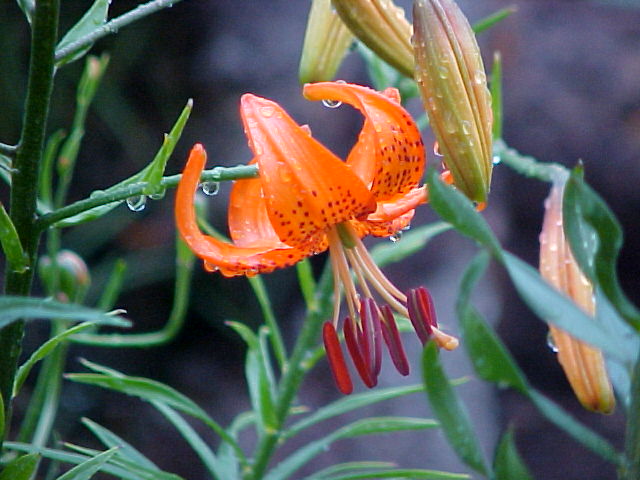 Lilium davidii
A tall Asian lily with edible bulbs and orange recurved flowers
🇨🇳 China and 1 more · Wildflower
Lilium davidii
A tall Asian lily with edible bulbs and orange recurved flowers
🇨🇳 China and 1 more · Wildflower
 Chinese LilyLilium brownii
A wild and cultivated lily from China with edible bulbs
🇨🇳 China and 3 more · Wildflower
Chinese LilyLilium brownii
A wild and cultivated lily from China with edible bulbs
🇨🇳 China and 3 more · Wildflower
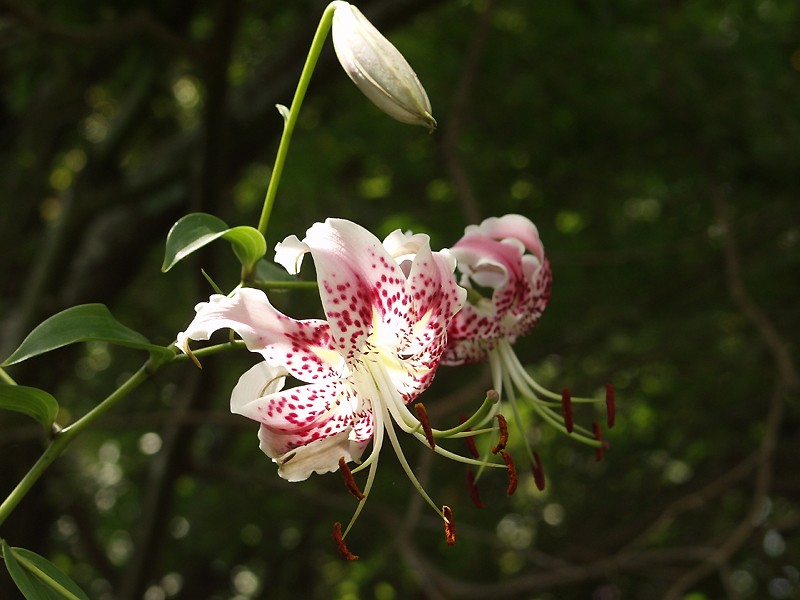 Lilium speciosum
A late-summer lily with fragrant white to pink flowers from East Asia
🇯🇵 Japan and 2 more · Wildflower
Lilium speciosum
A late-summer lily with fragrant white to pink flowers from East Asia
🇯🇵 Japan and 2 more · Wildflower
More from the Netherlands
All the flowers of the Netherlands LindenTilia
Tall, broad-leaved trees with fragrant yellow flowers and heart-shaped leaves
🇨🇳 China and 7 more · Flowering tree
LindenTilia
Tall, broad-leaved trees with fragrant yellow flowers and heart-shaped leaves
🇨🇳 China and 7 more · Flowering tree
 Narcissus
Spring-flowering bulbs with trumpet-shaped blooms in white, yellow, and orange
🇬🇧 United Kingdom and 7 more · Wildflower
Narcissus
Spring-flowering bulbs with trumpet-shaped blooms in white, yellow, and orange
🇬🇧 United Kingdom and 7 more · Wildflower
 Forget-me-notMyosotis
Small blue wildflowers known for remembrance and love
🇳🇿 New Zealand and 7 more · Wildflower
Forget-me-notMyosotis
Small blue wildflowers known for remembrance and love
🇳🇿 New Zealand and 7 more · Wildflower
 Crocus
Small corm-grown flowers in white, yellow, orange or purple
🇹🇷 Turkey and 7 more · Wildflower
Crocus
Small corm-grown flowers in white, yellow, orange or purple
🇹🇷 Turkey and 7 more · Wildflower