
Crocus
Small corm-grown flowers in white, yellow, orange or purple
Crocus is a group of about 100 perennial plants in the iris family, grown from corms. Native to areas from the Mediterranean to Central Asia, crocuses are valued for their bright flowers in early spring or autumn and for producing saffron from Crocus sativus.
- Crocus flowers grow from corms and bloom in spring, autumn, or winter.
- Crocus sativus provides saffron, a highly valued spice and dye.
- Native to regions from the Mediterranean to Central Asia.
- Flowers can be white, yellow, orange, or purple.
- Crocuses have been known since ancient times.
What does Crocus look like?
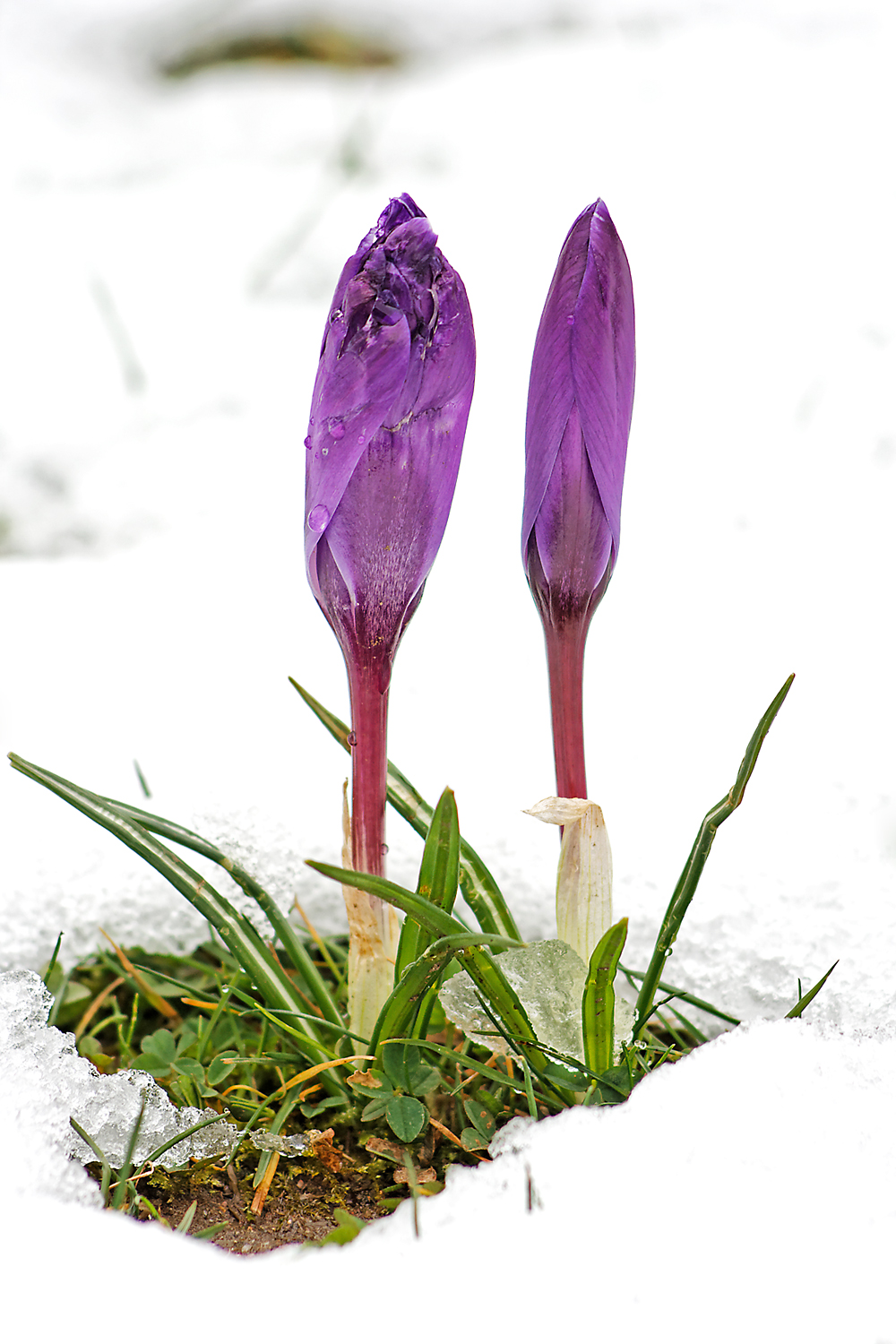
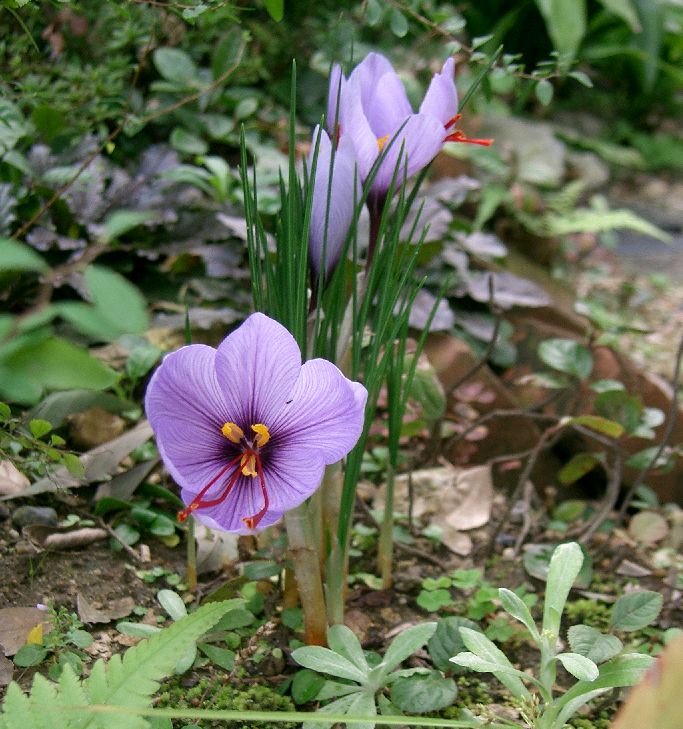
Crocus plants are low to the ground, with narrow leaves that have a pale stripe down the middle. Their flowers, which can be white, yellow, orange, or purple, appear close to the soil and may open singly or in small groups. The blooms are cup- or tube-shaped, with six petal-like segments. After flowering, the plant becomes dormant until the next season.
Where does Crocus come from?
Crocuses grow wild in woodlands, scrub, and meadows from the Mediterranean region through North Africa, southern and central Europe, the Middle East, and into Central Asia and western China. They have been known since ancient times, with early mentions by Greek writers. Romans brought crocuses to Britain, especially for saffron, and they spread further in Europe in later centuries.
When and how Crocus blooms
Crocuses grow from rounded corms, which are covered by a fibrous or leathery tunic. They can be started from seed or by planting corms, which produce new small corms for future growth. The flowers emerge in autumn, winter, or spring, depending on the species, and close up at night or in cloudy weather.


How Crocus is used
People grow crocuses for their early or late blooms in gardens and parks. The dried stigmas of Crocus sativus are collected to make saffron, a prized spice and dye, especially in Iran. Crocuses are also valued as ornamental plants and have been used as emblems and in botanical illustration.
Kinds of Crocus
There are about 100 species of crocus, with some flowering in spring and others in autumn. Crocus sativus is grown for saffron, while Crocus vernus and others are popular for their garden flowers. Cultivated varieties may show a range of colors and patterns.
What Crocus means
Crocus has a long history in Europe and Asia, both as a garden flower and as the source of saffron, one of the world's most valuable spices. It appears in old herbals and botanical illustrations. The plant is sometimes used as a symbol or emblem in certain regions.
Where Crocus is used and seen

Traditions that use it
Where to see Crocus
 🇮🇹 Kastelruth · Jun to JulAlpine meadows in flower on the Seiser AlmA vast high pasture in the Dolomites, full of gentians, orchids and globeflowers before the hay is cut in July.
Questions people ask about Crocus
Where do crocuses come from?
Crocuses are native to a wide area stretching from the Mediterranean and North Africa through southern and central Europe, the Middle East, and into Central Asia and western China.
What are crocuses used for?
Crocuses are grown for their colorful flowers in gardens and parks. The stigmas of Crocus sativus are harvested to make saffron, a valuable spice and dye.
What do crocus flowers look like?
Crocus flowers are low-growing, cup- or tube-shaped, and come in white, yellow, orange, or purple. They grow close to the ground and often appear early in the year or in autumn.
Are all crocuses used for saffron?
No, only Crocus sativus is used for producing saffron. Other crocus species are mainly grown for their ornamental flowers.
When do crocuses bloom?
Depending on the species, crocuses bloom in autumn, winter, or early spring. The exact time varies with the type of crocus and the local climate.
Good reading and sources
- Encyclopaedia BritannicaArticle
- USDA Plants DatabaseUS Department of Agriculture, Article
- Plants of the World OnlineRoyal Botanic Gardens, Kew, Plant database
- Where it has been recordedGBIF, Plant database
- Sightings and photos by naturalistsiNaturalist, Plant database
The facts on this page come from the Wikipedia article "Crocus", written by its contributors and used under the CC BY-SA 4.0 licence, and from its Wikidata record (CC0). Phool rewrote the text in its own words, with AI assistance, and compares every page with the article to make sure no passage is copied. It may be reused under the same CC BY-SA 4.0 licence with a link back.
It may contain mistakes. It is not medical or foraging advice: many flowers are poisonous, and traditional uses are reported, not recommended. If something is wrong, tell us. Last refreshed 2026-10-03.
Others in the family Iridaceae
The whole family Gladiolus
Tall, showy flower spikes grown from corms, known as sword lilies
Gladiolus · Garden flower
Gladiolus
Tall, showy flower spikes grown from corms, known as sword lilies
Gladiolus · Garden flower
 Iris
A large group of perennial flowers with striking, six-lobed blooms
Iris · Wildflower
Iris
A large group of perennial flowers with striking, six-lobed blooms
Iris · Wildflower
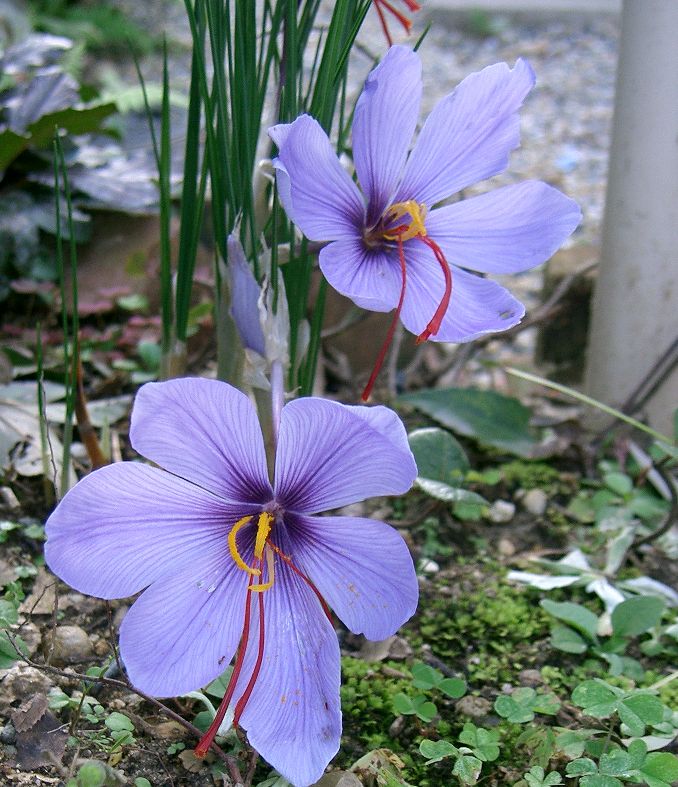 Saffron crocusCrocus sativus
The purple autumn flower whose red stigmas yield the spice saffron
🇨🇳 China and 1 more · Garden flower
Iris damascena
A rare white and purple iris found only on a Syrian mountain
🇸🇾 Syria · Wildflower
Saffron crocusCrocus sativus
The purple autumn flower whose red stigmas yield the spice saffron
🇨🇳 China and 1 more · Garden flower
Iris damascena
A rare white and purple iris found only on a Syrian mountain
🇸🇾 Syria · Wildflower
More from Turkey
All the flowers of Turkey PeachPrunus persica
A flowering fruit tree from China, grown for its pink blossoms and sweet fruit
🇨🇳 China and 7 more · Flowering tree
PeachPrunus persica
A flowering fruit tree from China, grown for its pink blossoms and sweet fruit
🇨🇳 China and 7 more · Flowering tree
 PomegranatePunica granatum
A shrub with bright red flowers and a fruit full of edible seeds
🇮🇷 Iran and 9 more · Flowering shrub
PomegranatePunica granatum
A shrub with bright red flowers and a fruit full of edible seeds
🇮🇷 Iran and 9 more · Flowering shrub
 TulipTulipa
Spring-blooming bulbs with showy, cup-shaped flowers in many colours
🇳🇱 Netherlands and 7 more · Wildflower
TulipTulipa
Spring-blooming bulbs with showy, cup-shaped flowers in many colours
🇳🇱 Netherlands and 7 more · Wildflower
 Sour cherryPrunus cerasus
The small, tart cherry tree grown for its sour red fruit
🇹🇷 Turkey and 7 more · Flowering tree
Sour cherryPrunus cerasus
The small, tart cherry tree grown for its sour red fruit
🇹🇷 Turkey and 7 more · Flowering tree