
Gladiolus
Tall, showy flower spikes grown from corms, known as sword lilies
Gladiolus is a group of perennial plants with sword-shaped leaves and tall spikes of colourful flowers, grown from corms. Native mainly to southern and tropical Africa, with some species in Eurasia, gladioli are widely grown as garden and cut flowers, and are linked to August birthdays and fortieth anniversaries.
- Most Gladiolus species are native to southern Africa
- Flowers grow on tall spikes from corms
- Colours range from pink and red to white, cream, and orange
- Gladiolus is the birth flower for August
- Symbolic flower of Punjab
What does Gladiolus look like?
Gladiolus plants grow from rounded corms covered in brown, fibrous layers. Their upright stems bear narrow, sword-like leaves with a waxy surface that sheds rain. The flowers form on tall, one-sided spikes and can be small or large, depending on the species or hybrid. Each flower has six petal-like tepals, fused at the base into a tube, with colours ranging from pink, red, purple, white, cream to orange. Commercial varieties often have large, showy blooms.
Where does Gladiolus come from?
Gladiolus is native mainly to southern Africa, especially the Cape Floristic Region, with additional species in tropical Africa, Asia, and Mediterranean Europe. The genus was first described in 1753. Over time, many species have been discovered, and formerly separate genera are now included. Gladiolus spread worldwide as a garden and cut flower, with most hybrids tracing back to African species.
When and how Gladiolus blooms
Gladiolus flowers grow from corms, which are planted in spring in temperate zones. The plants need moisture during the growing season and are usually lifted and stored over winter where winters are cold. Propagation is by cormlets or seed, but it takes several years for new plants to flower. Large-flowered hybrids may need staking. Some hardy types can survive cold winters if the soil is dry.


How Gladiolus is used
Gladiolus is popular in gardens and as a cut flower for arrangements. It is given as a gift for August birthdays and fortieth wedding anniversaries. The flower is also a symbol of Punjab and is associated with victory in some traditions. Gladioli have appeared in music, literature, and public events, such as the International Four Days Marches Nijmegen.
Kinds of Gladiolus
There are nearly 300 species and many hybrids, with most wild species found in southern Africa. Main hybrid groups include 'Grandiflorus', 'Primulines', and 'Nanus', bred for larger flowers and a range of colours. Notable cultivars like 'Robinetta' have received horticultural awards. Natural and artificial hybrids are also known.
What Gladiolus means
Gladiolus is the birth flower for August and marks the fortieth wedding anniversary. It is linked to victory and celebration, such as being given to finishers of the Nijmegen marches. The flower is symbolic in Punjab and has been featured in music, such as Scott Joplin's 'Gladiolus Rag'. Gladioli are also known as the signature flower of Dame Edna Everage.
Where Gladiolus is used and seen


Traditions that use it
Where to see Gladiolus
 🇻🇳 Hanoi · All yearQuang Ba night flower marketHanoi's wholesale flower market near West Lake, which trades from the middle of the night until dawn.
 🇧🇩 Jashore · Jan to DecGodkhali flower marketA dawn roadside market in the heart of Bangladesh's main flower-growing area.
 🇲🇽 Mexico City · All yearMercado de Jamaica, Mexico City's flower marketA huge covered market open day and night, with more than a thousand stalls of cut flowers and finished arrangements.
 🇨🇴 Medellín · AugustThe silleteros parade at Medellín's Feria de las FloresEach August, flower growers from the hills carry huge arrangements on their backs through the streets of Medellín.
 🇪🇨 Cuenca · All yearThe flower square of CuencaA small daily flower market under white umbrellas, set against a colonial church in the historic centre of Cuenca.
Questions people ask about Gladiolus
Where does Gladiolus come from?
Most Gladiolus species are native to southern Africa, especially the Cape Floristic Region, but some are found in tropical Africa, Asia, and Mediterranean Europe.
What does Gladiolus look like?
Gladiolus has upright stems with sword-shaped leaves and tall spikes of funnel-shaped flowers in various colours, including pink, red, purple, white, cream, and orange.
How is Gladiolus used?
Gladiolus is grown in gardens and used as a cut flower for arrangements. It is also given as a gift for August birthdays and fortieth wedding anniversaries, and is a symbol of Punjab.
What does Gladiolus symbolise?
Gladiolus is associated with August birthdays, fortieth anniversaries, and victory, and is the symbolic flower of Punjab.
Are there different types of Gladiolus?
Yes, there are nearly 300 species and many hybrids, with a wide range of flower sizes and colours developed through breeding.
Good reading and sources
- Encyclopaedia BritannicaArticle
- Gladiolus 'Robinetta' (_recurvus_ hybrid)Royal Horticultural Society, Article
- USDA Plants DatabaseUS Department of Agriculture, Article
- Plants of the World OnlineRoyal Botanic Gardens, Kew, Plant database
- Where it has been recordedGBIF, Plant database
- Sightings and photos by naturalistsiNaturalist, Plant database
The facts on this page come from the Wikipedia article "Gladiolus", written by its contributors and used under the CC BY-SA 4.0 licence, and from its Wikidata record (CC0). Phool rewrote the text in its own words, with AI assistance, and compares every page with the article to make sure no passage is copied. It may be reused under the same CC BY-SA 4.0 licence with a link back.
It may contain mistakes. It is not medical or foraging advice: many flowers are poisonous, and traditional uses are reported, not recommended. If something is wrong, tell us. Last refreshed 2026-10-03.
Others in the family Iridaceae
The whole family Iris
A large group of perennial flowers with striking, six-lobed blooms
Iris · Wildflower
Iris
A large group of perennial flowers with striking, six-lobed blooms
Iris · Wildflower
 Crocus
Small corm-grown flowers in white, yellow, orange or purple
🇹🇷 Turkey and 7 more · Wildflower
Crocus
Small corm-grown flowers in white, yellow, orange or purple
🇹🇷 Turkey and 7 more · Wildflower
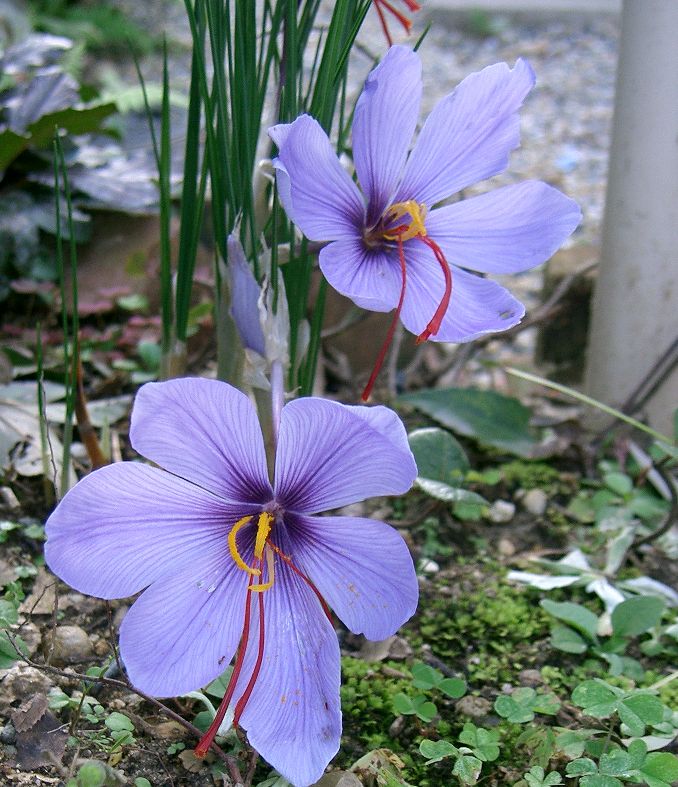 Saffron crocusCrocus sativus
The purple autumn flower whose red stigmas yield the spice saffron
🇨🇳 China and 1 more · Garden flower
Iris damascena
A rare white and purple iris found only on a Syrian mountain
🇸🇾 Syria · Wildflower
Saffron crocusCrocus sativus
The purple autumn flower whose red stigmas yield the spice saffron
🇨🇳 China and 1 more · Garden flower
Iris damascena
A rare white and purple iris found only on a Syrian mountain
🇸🇾 Syria · Wildflower