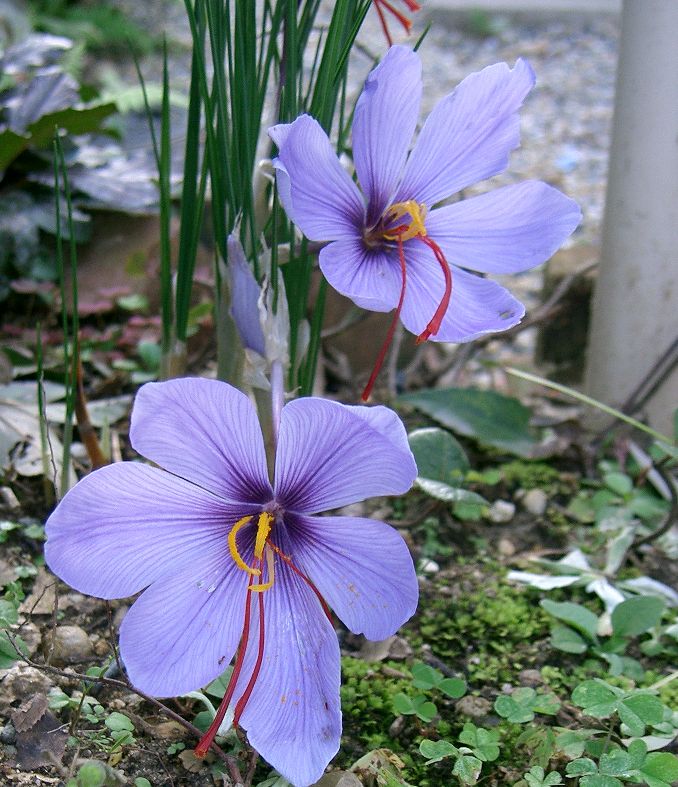
Saffron crocus
Crocus sativus, family Iridaceae
The purple autumn flower whose red stigmas yield the spice saffron
Saffron crocus is a small, autumn-flowering plant grown for its vivid red stigmas, which are harvested as the spice saffron. This sterile perennial, not found in the wild, blooms with purple flowers and is cultivated by hand in sunny, well-drained fields.
- Each flower produces only three red stigmas used for saffron spice
- Saffron crocus is sterile and does not grow in the wild
- It blooms in autumn with purple flowers
- Tens of thousands of flowers are needed for one pound of saffron
What does Saffron crocus look like?
Saffron crocus is a perennial herb that grows from a rounded underground corm, reaching 10 to 30 cm in height. Each plant produces narrow, grass-like leaves and a single stalk bearing a purple flower in autumn. The flower has six petals and three bright red or orange stigmas, which are the source of saffron. The plant is sterile, so it does not produce seeds, and each corm yields only one or two flowers per season.
Where does Saffron crocus come from?
Crocus sativus does not grow wild and is only known as a cultivated plant. Research points to its origin from selective breeding of Crocus cartwrightianus in southern mainland Greece. Over 3,500 years, people have grown and traded saffron crocus across many cultures and regions. The plant’s lack of genetic diversity is due to its single domestication event and clonal propagation.
When and how Saffron crocus blooms
Saffron crocus is planted as corms, usually 10 cm deep and apart, in sunny, well-drained soil. The plant blooms in autumn, producing purple flowers. Since it is sterile, new plants come from dividing and replanting corms. Each flower has three stigmas, which are picked by hand mid-morning when the flower is open. The corms multiply each year and last for several seasons.


How Saffron crocus is used
The red stigmas of saffron crocus are dried and used as the spice saffron, valued for its color and flavor in cooking. Saffron is also used in traditional Asian medicine for its mood-enhancing effects and other health purposes. The plant is sometimes grown as an ornamental in gardens, but its main use is for harvesting saffron.
Kinds of Saffron crocus
All cultivated saffron crocus plants are clonal and nearly identical, as the species is sterile and cannot reproduce by seed. Some variation is introduced through clonal selection or mutation breeding, but creating new cultivars is difficult. Wild relatives may be cross-pollinated in laboratory settings to explore new traits.
What Saffron crocus means
Saffron crocus has played a role in trade, cuisine, and medicine for over three millennia. Its spice, saffron, is highly prized and labor-intensive to produce, requiring tens of thousands of flowers for a single pound. The plant is sometimes confused with toxic autumn crocus (Colchicum), so care is needed in identification.
Where Saffron crocus is used and seen

Traditions that use it
Where to see Saffron crocus

Questions people ask about Saffron crocus
Where does saffron crocus come from?
Saffron crocus is a cultivated plant thought to have originated from wild Crocus cartwrightianus in southern mainland Greece. It is not found growing in the wild.
What is saffron crocus used for?
The main use is to harvest the red stigmas, which are dried to make the spice saffron. Saffron is used in cooking and traditional medicine, and the plant is sometimes grown as an ornamental.
How is saffron harvested from the plant?
The three red stigmas from each flower are picked by hand, usually mid-morning when the flowers are open. It takes between 50,000 and 75,000 flowers to produce about one pound of saffron.
What does the saffron crocus flower look like?
It has a purple flower with six petals and three long, vivid red or orange stigmas. The plant grows 10 to 30 cm tall and has grass-like leaves.
Is saffron crocus the same as autumn crocus?
No, although both are called autumn crocus, true saffron crocus (Crocus sativus) is different from Colchicum species, which are toxic and belong to another plant family.
Good reading and sources
- Encyclopaedia BritannicaArticle
- Colchicum autumnaleRoyal Horticultural Society, Article
- Plants of the World OnlineRoyal Botanic Gardens, Kew, Plant database
- Where it has been recordedGBIF, Plant database
- Sightings and photos by naturalistsiNaturalist, Plant database
- Crocus sativus on WikipediaEncyclopedia
- More photos on Wikimedia CommonsPhotos
- Wikidata recordOpen data
The facts on this page come from the Wikipedia article "Crocus sativus", written by its contributors and used under the CC BY-SA 4.0 licence, and from its Wikidata record (CC0). Phool rewrote the text in its own words, with AI assistance, and compares every page with the article to make sure no passage is copied. It may be reused under the same CC BY-SA 4.0 licence with a link back.
It may contain mistakes. It is not medical or foraging advice: many flowers are poisonous, and traditional uses are reported, not recommended. If something is wrong, tell us. Last refreshed 2026-10-03.
Others in the family Iridaceae
The whole family Gladiolus
Tall, showy flower spikes grown from corms, known as sword lilies
Gladiolus · Garden flower
Gladiolus
Tall, showy flower spikes grown from corms, known as sword lilies
Gladiolus · Garden flower
 Iris
A large group of perennial flowers with striking, six-lobed blooms
Iris · Wildflower
Iris
A large group of perennial flowers with striking, six-lobed blooms
Iris · Wildflower
 Crocus
Small corm-grown flowers in white, yellow, orange or purple
🇹🇷 Turkey and 7 more · Wildflower
Iris damascena
A rare white and purple iris found only on a Syrian mountain
🇸🇾 Syria · Wildflower
Crocus
Small corm-grown flowers in white, yellow, orange or purple
🇹🇷 Turkey and 7 more · Wildflower
Iris damascena
A rare white and purple iris found only on a Syrian mountain
🇸🇾 Syria · Wildflower
More from China
All the flowers of China PeachPrunus persica
A flowering fruit tree from China, grown for its pink blossoms and sweet fruit
🇨🇳 China and 7 more · Flowering tree
PeachPrunus persica
A flowering fruit tree from China, grown for its pink blossoms and sweet fruit
🇨🇳 China and 7 more · Flowering tree
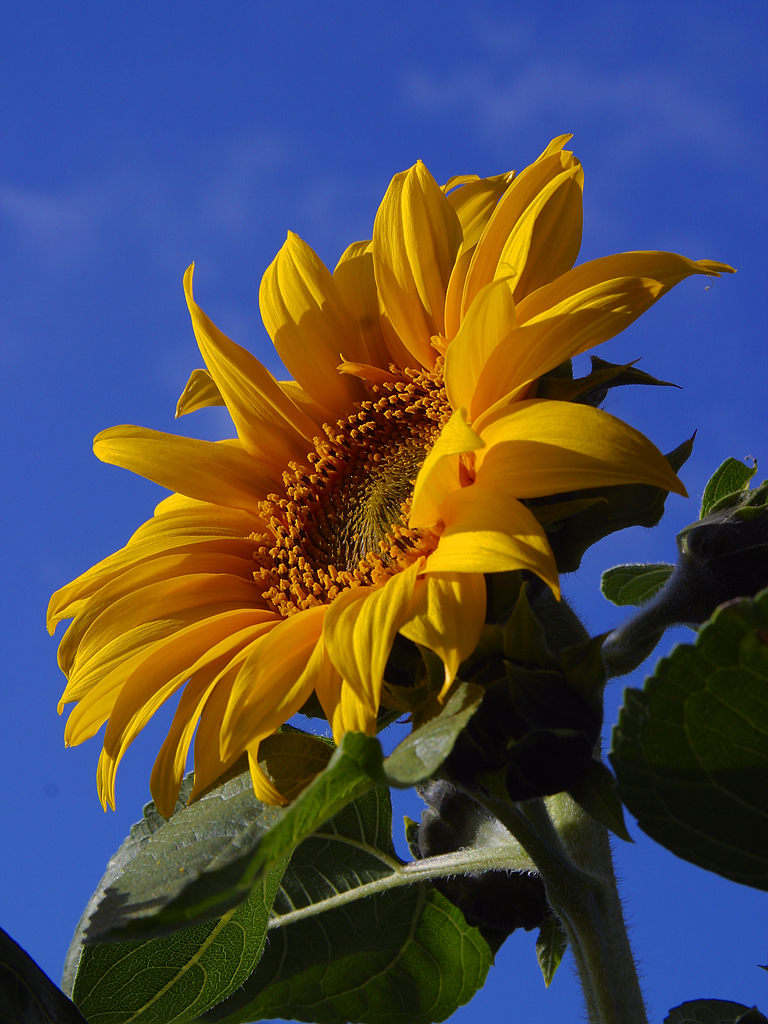 Common sunflowerHelianthus annuus
A tall annual plant grown for its large yellow flower heads and edible seeds
🇨🇦 Canada and 4 more · Wildflower
Common sunflowerHelianthus annuus
A tall annual plant grown for its large yellow flower heads and edible seeds
🇨🇦 Canada and 4 more · Wildflower
 PomegranatePunica granatum
A shrub with bright red flowers and a fruit full of edible seeds
🇮🇷 Iran and 9 more · Flowering shrub
PomegranatePunica granatum
A shrub with bright red flowers and a fruit full of edible seeds
🇮🇷 Iran and 9 more · Flowering shrub
 ApricotPrunus armeniaca
A small fruit tree with early white to pink blossoms and golden-orange fruit
🇨🇳 China and 6 more · Flowering tree
ApricotPrunus armeniaca
A small fruit tree with early white to pink blossoms and golden-orange fruit
🇨🇳 China and 6 more · Flowering tree