
Peach
Prunus persica, family Rosaceae
A flowering fruit tree from China, grown for its pink blossoms and sweet fruit
The peach tree is a small, leaf-shedding tree from East China, valued for its springtime pink flowers and juicy, edible fruit. It is widely grown in orchards and gardens, and its fruit is a major crop in many countries. In China, the peach is a symbol of long life.
- Peach trees bloom with pink flowers before their leaves appear in spring
- The fruit can be fuzzy (peach) or smooth (nectarine), both from the same species
- China is the world's top producer and the center of peach diversity
- Peach is a symbol of longevity in Chinese culture
What does Peach look like?
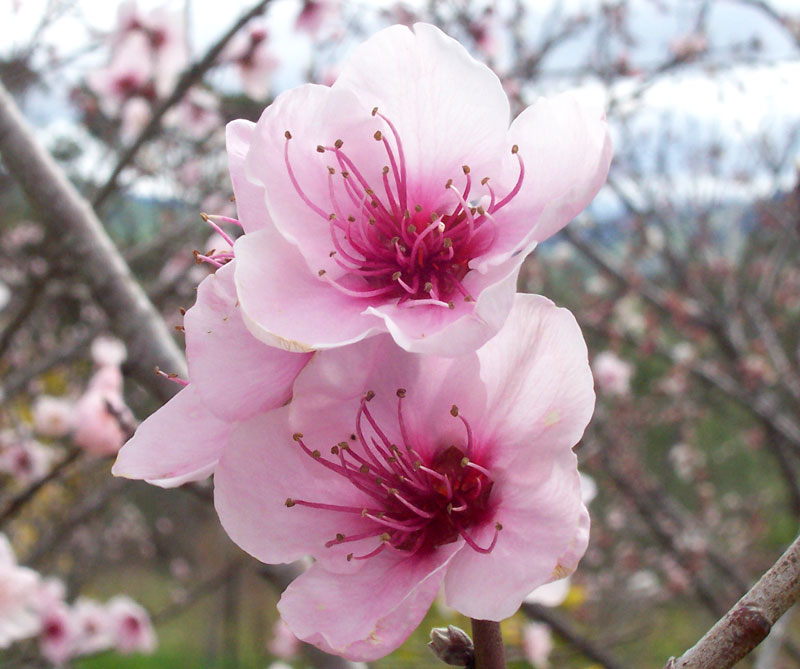
Peach trees are usually small, reaching about 3 to 4 meters in height and width, with a rounded crown. Their leaves are long and narrow with finely toothed edges. In early spring, before the leaves appear, the tree produces single or paired flowers in shades of pink, sometimes white or red. The flowers have four or five petals and many stamens. The fruit is round or slightly flattened, with a fuzzy or smooth skin, and its flesh can be white, yellow, or red. The stone inside is rough and deeply grooved.
Where does Peach come from?
Peaches were first grown and selected in East China thousands of years ago, likely near the Yangtze Delta. Their name in science, persica, comes from the old belief that they came from Persia, but archaeological and genetic studies point to China as their true origin. The tree spread from China to Persia (now Iran) and then to Europe and the rest of the world. China remains the center of peach diversity and is the largest producer today.
When and how Peach blooms
Peach trees bloom in early spring, often before their leaves emerge. The flowers are self-fertile and can set fruit on their own. Trees are usually grown from seed or by grafting, and they need a period of winter chill to flower well. Fruit appears two to three years after planting. The tree prefers deep, well-drained soil and regular pruning to keep its shape and allow sunlight to reach the fruit.


How Peach is used
Peach trees are grown mainly for their sweet, juicy fruit, which is eaten fresh or used in cooking and preserves. The flowers are also appreciated in gardens for their early spring display. In China, the peach is a symbol of longevity and is often seen in art and celebrations. The tree is also planted as an ornamental for its attractive blossoms.
Kinds of Peach
There are many cultivated forms of peach, including those with smooth skin called nectarines. Some varieties have double or bicolored flowers, and fruit can range in color and shape. Growth habits vary, with some trees being dwarf or weeping. Closely related species include the Chinese bush peach and Chinese wild peach.
What Peach means
In Chinese tradition, the peach represents long life and is a common motif in art and folklore. The fruit is important in many countries as a crop, and China leads global production by a large margin. The peach has been part of human cultivation for thousands of years and is closely tied to the history and culture of East Asia.
Where Peach is used and seen


Where to see Peach

Questions people ask about Peach
Where do peach trees originally come from?
Peach trees were first domesticated in eastern China, likely near the Yangtze Delta, and have been grown there for thousands of years before spreading to other parts of Asia and the world.
What do peach flowers look like?
Peach flowers appear in early spring, usually before the leaves. They are pink, sometimes white or red, with four or five petals and many stamens, and can be single or double depending on the variety.
What is the difference between a peach and a nectarine?
Both are forms of Prunus persica. The main difference is that nectarines have smooth skin, while peaches have fuzzy skin. This is due to a genetic trait affecting the fruit's surface.
What does the peach symbolize in Chinese culture?
In China, the peach is seen as a symbol of longevity and is often featured in art and traditional celebrations.
How are peach trees used?
Peach trees are grown for their edible fruit, which is eaten fresh or used in cooking. They are also planted for their ornamental flowers in gardens and parks.
Good reading and sources
- Encyclopaedia BritannicaArticle
- The Clinton-Sullivan Campaign of 1779 (U.S. National Park Service)US National Park Service, Article
- USDA Plants DatabaseUS Department of Agriculture, Article
- Plants of the World OnlineRoyal Botanic Gardens, Kew, Plant database
- Where it has been recordedGBIF, Plant database
- Sightings and photos by naturalistsiNaturalist, Plant database
The facts on this page come from the Wikipedia article "Peach", written by its contributors and used under the CC BY-SA 4.0 licence, and from its Wikidata record (CC0). Phool rewrote the text in its own words, with AI assistance, and compares every page with the article to make sure no passage is copied. It may be reused under the same CC BY-SA 4.0 licence with a link back.
It may contain mistakes. It is not medical or foraging advice: many flowers are poisonous, and traditional uses are reported, not recommended. If something is wrong, tell us. Last refreshed 2026-10-03.
Others in the family Rosaceae
The whole family RoseRosa
Woody perennial plants with showy, often fragrant flowers in many colours
Rosa · Wildflower
RoseRosa
Woody perennial plants with showy, often fragrant flowers in many colours
Rosa · Wildflower
 AlmondPrunus amygdalus
A Mediterranean tree grown for its fragrant spring flowers and edible seeds
🇮🇷 Iran and 6 more · Flowering tree
AlmondPrunus amygdalus
A Mediterranean tree grown for its fragrant spring flowers and edible seeds
🇮🇷 Iran and 6 more · Flowering tree
 Wild cherryPrunus avium
A tall flowering tree native to Europe, grown for its sweet fruit and spring blossom
🇮🇹 Italy and 6 more · Flowering tree
Wild cherryPrunus avium
A tall flowering tree native to Europe, grown for its sweet fruit and spring blossom
🇮🇹 Italy and 6 more · Flowering tree
 HawthornCrataegus
A thorny shrub or tree with white or pink spring flowers and small edible fruits
🇮🇪 Ireland and 7 more · Wildflower
HawthornCrataegus
A thorny shrub or tree with white or pink spring flowers and small edible fruits
🇮🇪 Ireland and 7 more · Wildflower
More from China
All the flowers of China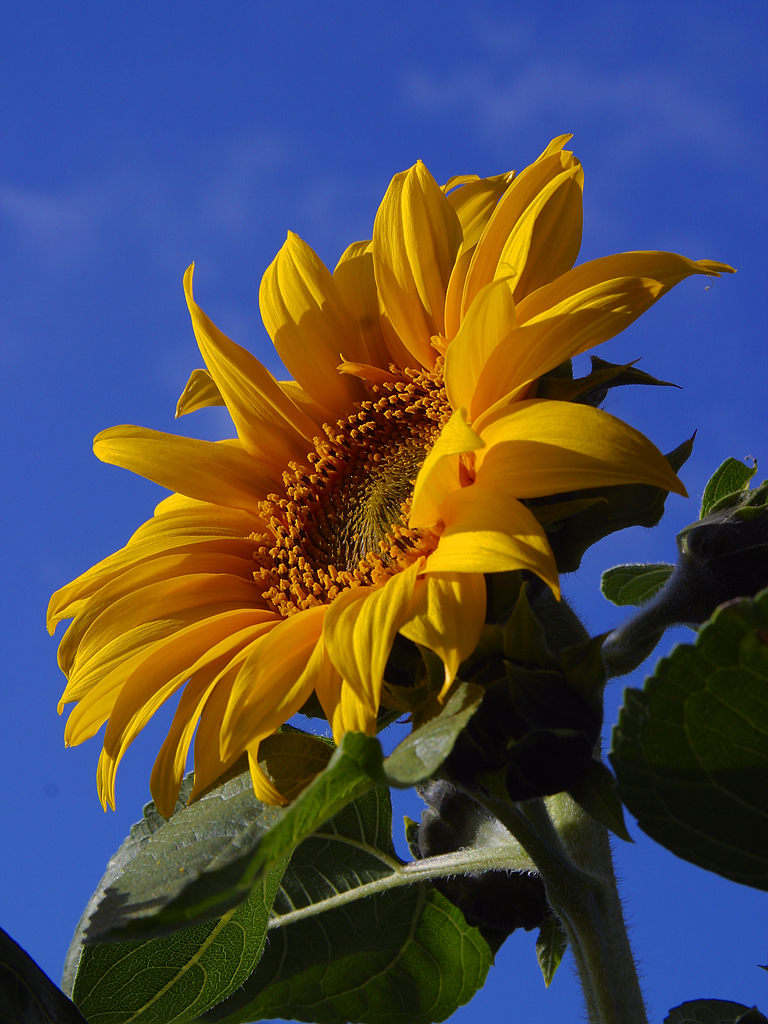 Common sunflowerHelianthus annuus
A tall annual plant grown for its large yellow flower heads and edible seeds
🇨🇦 Canada and 4 more · Wildflower
Common sunflowerHelianthus annuus
A tall annual plant grown for its large yellow flower heads and edible seeds
🇨🇦 Canada and 4 more · Wildflower
 PomegranatePunica granatum
A shrub with bright red flowers and a fruit full of edible seeds
🇮🇷 Iran and 9 more · Flowering shrub
PomegranatePunica granatum
A shrub with bright red flowers and a fruit full of edible seeds
🇮🇷 Iran and 9 more · Flowering shrub
 BirchBetula
Slender trees with papery bark found across the northern world
🇨🇳 China and 7 more · Wildflower
BirchBetula
Slender trees with papery bark found across the northern world
🇨🇳 China and 7 more · Wildflower
 ApricotPrunus armeniaca
A small fruit tree with early white to pink blossoms and golden-orange fruit
🇨🇳 China and 6 more · Flowering tree
ApricotPrunus armeniaca
A small fruit tree with early white to pink blossoms and golden-orange fruit
🇨🇳 China and 6 more · Flowering tree