
Penjing
In its own language: 盆景
The Chinese art of shaping miniature trees and landscapes in trays
Penjing is a traditional Chinese art form that creates miniature trees and landscapes in shallow containers. It uses living plants, rocks, and sometimes figures to evoke natural scenes, with styles ranging from single trees to detailed landscapes. Penjing has influenced similar arts in Japan and Vietnam.
- Penjing creates miniature landscapes using living trees, rocks, and water.
- It originated in China and influenced bonsai in Japan.
- Three main styles: tree, landscape, and water-land combinations.
- Brightly colored or creative pots are often used.
- Penjing is displayed in homes, gardens, and exhibitions.
What is Penjing?
Penjing is the art of arranging living trees, plants, and rocks in shallow containers to create miniature landscapes. These can be simple, with a single tree, or complex, showing mountains, water, and even small figures or buildings. The trees are shaped by careful pruning, wiring, and training over years. Pots are often brightly colored or creatively shaped, and the overall effect is to capture the spirit of a natural scene in a small space.
Where does Penjing come from?
Penjing began in China, with roots going back to Neolithic times when shallow dishes were used for ceremonial purposes. The art developed over centuries, influenced by Daoist and Buddhist ideas of nature and meditation. Early penjing used wild-collected, naturally gnarled trees seen as sacred. The practice spread to Japan as bonsai and to Vietnam as hòn non bộ, but penjing remains distinct in its variety of forms and creative freedom.
How Penjing is made
To make penjing, artists select suitable trees or plants, often elms, pines, or junipers, and shape them by pruning and wiring. Rocks, moss, and sometimes miniature figures or buildings are added to create a scene. The arrangement is placed in a shallow tray, sometimes with water to represent lakes or seas. The process can take years, with ongoing care and reshaping.


When and where Penjing is used
Penjing is displayed in homes, gardens, and public exhibitions, especially in China. It is valued as a living art form and sometimes as a symbol of harmony with nature. Penjing is also found in classical Chinese gardens, where it serves as a focal point for contemplation and artistic appreciation. It is not tied to a specific festival but is enjoyed year-round.
Forms of Penjing
There are three main types: shumu penjing (tree-focused), shanshui penjing (landscape with rocks and water), and shuihan penjing (combining trees, rocks, and water with detailed scenes). Regional styles exist, such as the Lingnan 'Clip and Grow' school from southeast China, which uses fast-growing tropical plants. Pots and plant choices also vary by tradition.
What Penjing means
Penjing is seen as a form of living poetry and sculpture, reflecting Chinese ideas about nature and art. It has inspired similar traditions abroad, especially bonsai in Japan. Penjing appears in Chinese literature and art, and some regions, like Suzhou and Shanghai, are famous for their penjing masters. The art has survived political upheavals and continues to be practiced and exhibited widely.
The flowers of Penjing


Questions people ask about Penjing
Where did penjing originate?
Penjing began in China, with its earliest forms dating back to Neolithic times. It developed over centuries, influenced by Daoist and Buddhist traditions, and became a distinct art form by the Tang dynasty.
How is penjing different from bonsai?
Penjing allows a wider variety of tree shapes and uses more creative, colorful pots. Bonsai, developed in Japan from penjing, tends to use simpler shapes and muted containers, focusing on single trees.
What materials are used to make penjing?
Penjing uses living trees such as elms, pines, and junipers, as well as rocks, moss, lichens, and sometimes miniature figures or buildings. The arrangement is placed in a shallow tray or pot.
What does penjing symbolize?
Penjing reflects harmony with nature and the beauty of natural landscapes. It is seen as living poetry or sculpture, capturing the spirit of mountains, water, and trees in miniature.
Where can I see penjing today?
Penjing is displayed in Chinese gardens, museums, and exhibitions, especially in cities like Shanghai, Suzhou, and Guangzhou. Some botanical gardens outside China also have penjing collections.
Good reading and sources
The facts on this page come from the Wikipedia article "Penjing", written by its contributors and used under the CC BY-SA 4.0 licence, and from its Wikidata record (CC0). Phool rewrote the text in its own words, with AI assistance, and compares every page with the article to make sure no passage is copied. It may be reused under the same CC BY-SA 4.0 licence with a link back.
It may contain mistakes. If something is wrong, tell us. Last refreshed 2026-10-03.
More of the same kind
 Decoration
Nageirebana抛入花
A free-form ikebana style using tall vases and no flower holders
Arrangement
Decoration
Nageirebana抛入花
A free-form ikebana style using tall vases and no flower holders
Arrangement
 Decoration
Tokonoma床の間
A Japanese alcove for displaying scrolls and flower arrangements
🇯🇵 Japan · Arrangement
Decoration
Tokonoma床の間
A Japanese alcove for displaying scrolls and flower arrangements
🇯🇵 Japan · Arrangement
 Decoration
Rangoliरंगोली
Indian floor art made with coloured powders, rice, or petals for festivals and daily welcome
🇮🇳 India and 1 more · Carpet or floor pattern
Decoration
Rangoliरंगोली
Indian floor art made with coloured powders, rice, or petals for festivals and daily welcome
🇮🇳 India and 1 more · Carpet or floor pattern
 Decoration
Sōgetsu草月流
A modern school of Japanese ikebana open to all materials and styles
🇯🇵 Japan · Arrangement
Decoration
Sōgetsu草月流
A modern school of Japanese ikebana open to all materials and styles
🇯🇵 Japan · Arrangement
More from China
All the flowers of China Decoration
Bonsai盆栽
The Japanese art of shaping miniature trees in shallow pots
🇯🇵 Japan and 7 more · Art or design
Decoration
Bonsai盆栽
The Japanese art of shaping miniature trees in shallow pots
🇯🇵 Japan and 7 more · Art or design
 Decoration
History of flower arrangement
How arranging flowers became an art across cultures and centuries
🇪🇬 Egypt and 3 more · Arrangement
Decoration
History of flower arrangement
How arranging flowers became an art across cultures and centuries
🇪🇬 Egypt and 3 more · Arrangement
 Decoration
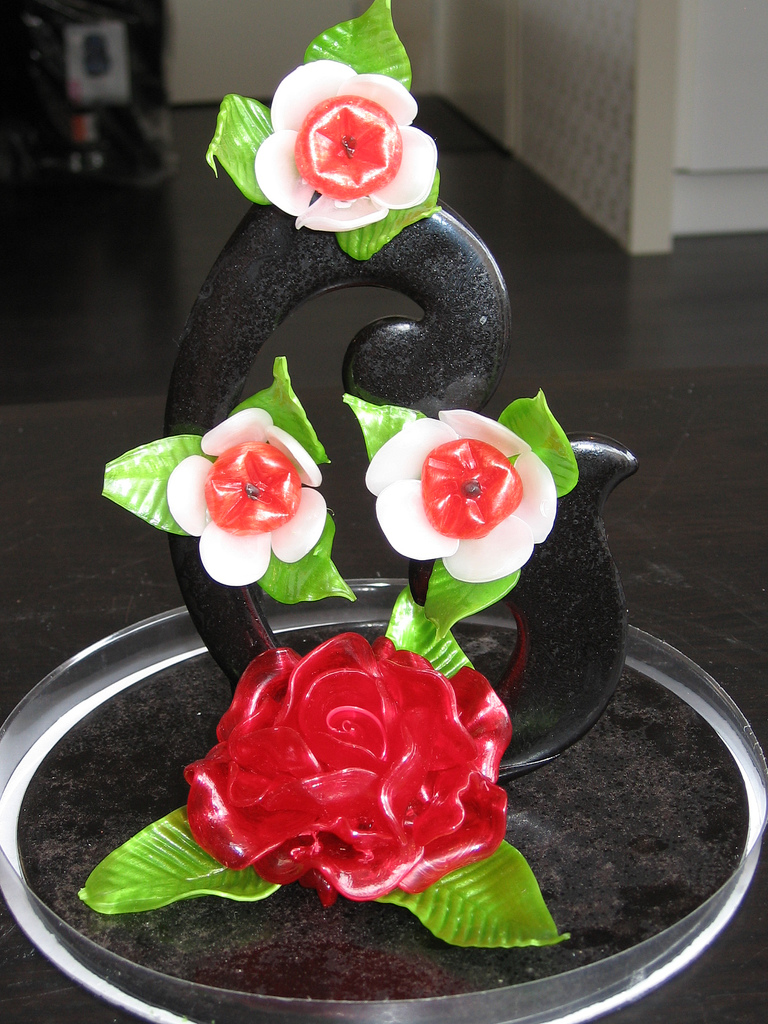
Sugar sculpture
Artistic centerpieces and figures made entirely from cooked sugar
🇨🇳 China and 1 more · Flower craft
Decoration
Sugar sculpture
Artistic centerpieces and figures made entirely from cooked sugar
🇨🇳 China and 1 more · Flower craft
 Decoration
language of flowers
A way of sending secret messages using flowers and their meanings
🇹🇷 Turkey and 6 more · Custom
Decoration
language of flowers
A way of sending secret messages using flowers and their meanings
🇹🇷 Turkey and 6 more · Custom