
Chinese Lily
Lilium brownii, family Liliaceae
A wild and cultivated lily from China with edible bulbs
Lilium brownii, or Chinese Lily, is a flowering plant native to China and nearby regions. It grows wild and is also cultivated for its edible bulbs, with different varieties found in the wild and in gardens.
- Native to China, Hong Kong, Vietnam, and Myanmar
- Cultivated for its edible bulbs in China
- Known as 'wild lily' and '(common) lily' in China
What does Chinese Lily look like?
Lilium brownii is a lily species with upright stems and long leaves. The leaves can be lance-shaped or broader, depending on the variety. Its flowers are typical of lilies, but the sources do not describe their exact color or scent. The plant is found both in the wild and in cultivation, especially for its bulbs.
Where does Chinese Lily come from?
This lily is native to mainland China, including regions such as Fujian, Guangdong, Tibet, and the Zhoushan Archipelago. It is also found in Hong Kong, the Kinmen and Matsu Islands, northern and central Vietnam, and Kachin in Myanmar. The plant has been known in China both as a wildflower and as a cultivated crop.
When and how Chinese Lily blooms
Lilium brownii grows from bulbs, which are often harvested for food. It is found in the wild and is also planted in gardens, particularly the variety with edible bulbs. The plant can be grown from its bulb in suitable climates, but the sources do not give detailed growing conditions.
How Chinese Lily is used
In China, one variety of Lilium brownii is widely cultivated for its edible bulbs, which are used in cooking. The wild form is also known and sometimes called 'wild lily'. The plant is grown in gardens as well as found in natural habitats.
Kinds of Chinese Lily
There are two main varieties: L. brownii var. brownii, called 'wild lily' in China, with narrow leaves, and L. brownii var. viridulum, known as '(common) lily', with broader leaves and often grown for its edible bulbs. Another variety, L. brownii var. chloraster, is also recognized.
What Chinese Lily means
The Chinese Lily is valued in China for its edible bulbs, especially the cultivated variety. It is known by different names depending on whether it is wild or grown. The plant is part of local food traditions, but the sources do not mention symbolic or religious meanings.
Questions people ask about Chinese Lily
Where does Lilium brownii come from?
Lilium brownii is native to mainland China, including regions like Fujian, Guangdong, Tibet, and the Zhoushan Archipelago. It is also found in Hong Kong, Vietnam, and Myanmar.
What is Lilium brownii used for?
In China, one variety of Lilium brownii is cultivated for its edible bulbs, which are used in cooking. The plant is also grown in gardens and found in the wild.
Are there different types of Lilium brownii?
Yes, there are several varieties, including the wild form with narrow leaves and a cultivated form with broader leaves grown for its edible bulbs.
What does the Chinese Lily look like?
Lilium brownii is a lily with upright stems and long leaves, which can be narrow or broad depending on the variety. The sources do not specify the flower's color.
Good reading and sources
- Plants of the World OnlineRoyal Botanic Gardens, Kew, Plant database
- Where it has been recordedGBIF, Plant database
- Sightings and photos by naturalistsiNaturalist, Plant database
- Lilium brownii on WikipediaEncyclopedia
- More photos on Wikimedia CommonsPhotos
- Wikidata recordOpen data
The facts on this page come from the Wikipedia article "Lilium brownii", written by its contributors and used under the CC BY-SA 4.0 licence, and from its Wikidata record (CC0). Phool rewrote the text in its own words, with AI assistance, and compares every page with the article to make sure no passage is copied. It may be reused under the same CC BY-SA 4.0 licence with a link back.
It may contain mistakes. It is not medical or foraging advice: many flowers are poisonous, and traditional uses are reported, not recommended. If something is wrong, tell us. Last refreshed 2026-10-03.
Others in the family Liliaceae
The whole family TulipTulipa
Spring-blooming bulbs with showy, cup-shaped flowers in many colours
🇳🇱 Netherlands and 7 more · Wildflower
TulipTulipa
Spring-blooming bulbs with showy, cup-shaped flowers in many colours
🇳🇱 Netherlands and 7 more · Wildflower
 LilyLilium
Tall bulb flowers with large, colourful blooms in many gardens and cultures
Lilium · Wildflower
LilyLilium
Tall bulb flowers with large, colourful blooms in many gardens and cultures
Lilium · Wildflower
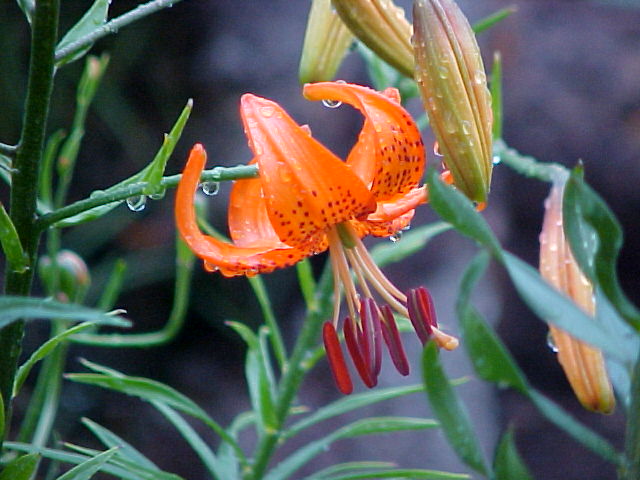 Lilium davidii
A tall Asian lily with edible bulbs and orange recurved flowers
🇨🇳 China and 1 more · Wildflower
Lilium davidii
A tall Asian lily with edible bulbs and orange recurved flowers
🇨🇳 China and 1 more · Wildflower
 Tulipa linifolia
A small red tulip with flax-like leaves from Central Asia
🇹🇯 Tajikistan and 3 more · Wildflower
Tulipa linifolia
A small red tulip with flax-like leaves from Central Asia
🇹🇯 Tajikistan and 3 more · Wildflower
More from China
All the flowers of China PeachPrunus persica
A flowering fruit tree from China, grown for its pink blossoms and sweet fruit
🇨🇳 China and 7 more · Flowering tree
PeachPrunus persica
A flowering fruit tree from China, grown for its pink blossoms and sweet fruit
🇨🇳 China and 7 more · Flowering tree
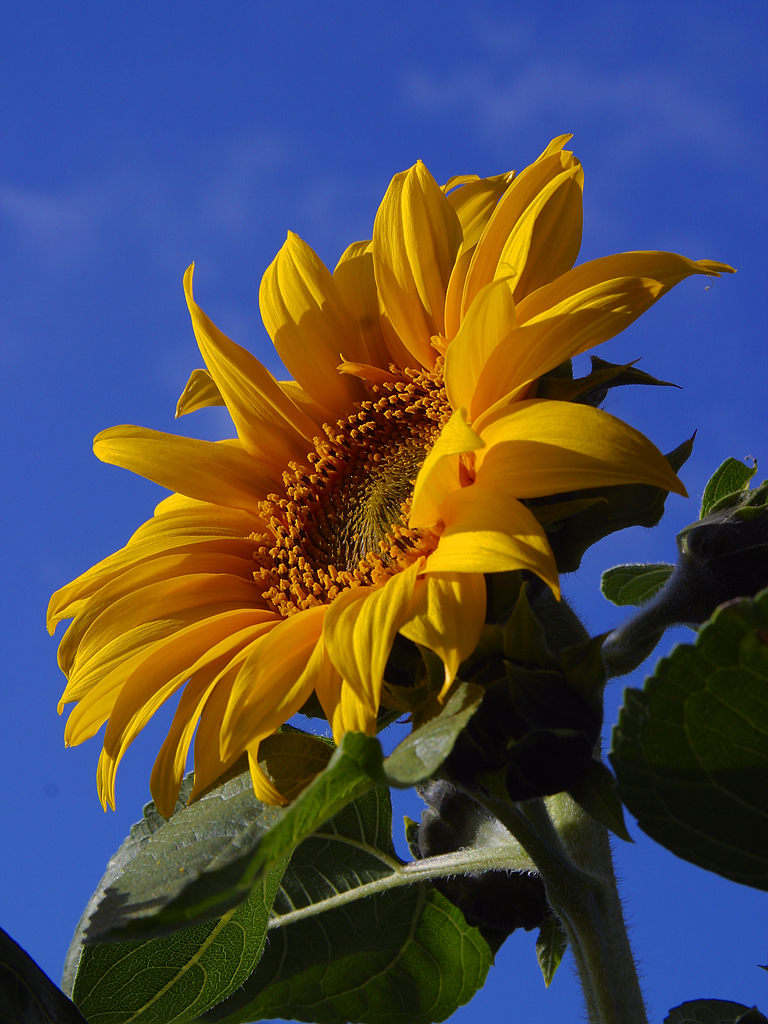 Common sunflowerHelianthus annuus
A tall annual plant grown for its large yellow flower heads and edible seeds
🇨🇦 Canada and 4 more · Wildflower
Common sunflowerHelianthus annuus
A tall annual plant grown for its large yellow flower heads and edible seeds
🇨🇦 Canada and 4 more · Wildflower
 PomegranatePunica granatum
A shrub with bright red flowers and a fruit full of edible seeds
🇮🇷 Iran and 9 more · Flowering shrub
PomegranatePunica granatum
A shrub with bright red flowers and a fruit full of edible seeds
🇮🇷 Iran and 9 more · Flowering shrub
 BirchBetula
Slender trees with papery bark found across the northern world
🇨🇳 China and 7 more · Wildflower
BirchBetula
Slender trees with papery bark found across the northern world
🇨🇳 China and 7 more · Wildflower