
Bedding (horticulture)
Seasonal displays of flowering plants in beds, borders, and containers
Bedding in horticulture means planting fast-growing flowers in beds, borders, or containers for seasonal color. These displays use annuals, biennials, or tender perennials, and are common in gardens, parks, and public spaces to create vibrant patterns or massed color.
- Bedding uses fast-growing flowers for seasonal color in beds or containers
- Public parks and cities often replant bedding displays two or three times a year
- Carpet bedding creates geometric patterns or pictures with colorful, low plants
- The U.S. bedding plant industry was worth nearly $2.5 billion in 2022
- Bedding plants are bred for uniform, reliable flowering and neat growth
What is Bedding (horticulture)?
Bedding in horticulture is the practice of planting groups of fast-growing flowers in beds, borders, or containers to create colorful displays for a season. These plants are usually annuals or short-lived perennials, chosen for their ability to bloom reliably and fill space quickly. Bedding can be formal, with geometric patterns and uniform color, or informal, with mixed plantings in containers or garden beds. Public parks often use bedding plants for large, eye-catching displays, while home gardeners use them in smaller beds or pots.
Where does Bedding (horticulture) come from?
The use of bedding plants became popular in European parks and gardens, where entire beds were replanted two or three times a year for changing displays. Bedding schemes spread with campaigns like 'Britain in Bloom' and 'America in Bloom', encouraging towns and cities to create impressive public plantings. The bedding plant industry expanded in the late 20th century, especially in the United States, as new greenhouse technologies and plant breeding made it easier and more affordable to produce large numbers of uniform, flowering plants for seasonal use.
How Bedding (horticulture) is made
Bedding displays are created by planting young flowering plants—grown from seed, cuttings, or bulbs—into prepared beds, borders, or containers. In spring and autumn, hardy plants and bulbs are used, while summer displays rely on tender annuals and perennials. Plants are often discarded after flowering, making way for new seasonal plantings. Carpet bedding uses low, colorful plants to form patterns or pictures, sometimes including lettering or logos. In containers, gardeners combine different shapes and colors for visual interest.


When and where Bedding (horticulture) is used
Bedding plants are used in public parks, city streets, and home gardens to provide continuous color through the seasons. Municipalities use them for formal displays and to mark events or celebrations. Home gardeners plant bedding in front yards, backyards, and patios, often in pots or hanging baskets. Bedding displays are also part of competitions and civic pride campaigns. Some bedding plants are chosen for their foliage as well as flowers, especially in winter displays.
Forms of Bedding (horticulture)
Bedding displays vary by climate and season. In cooler weather, spring bulbs and hardy annuals like tulips, pansies, and wallflowers are used. Summer bedding features heat-loving annuals such as petunias, begonias, and zinnias. Carpet bedding uses low-growing, colorful plants like echeveria and alternanthera to create patterns. Some gardeners prefer informal mixes, while others design precise geometric layouts. The industry offers thousands of cultivars for different effects.
What Bedding (horticulture) means
Bedding is a symbol of civic pride and is often featured in public gardens and city displays. Campaigns like 'Britain in Bloom' encourage communities to create impressive bedding schemes. Some critics, like William Morris, have found formal bedding too rigid, while others celebrate its color and creativity. Bedding plants are a major part of the horticultural industry, with billions in annual sales, and reflect trends in garden design and public space use.
The flowers of Bedding (horticulture)
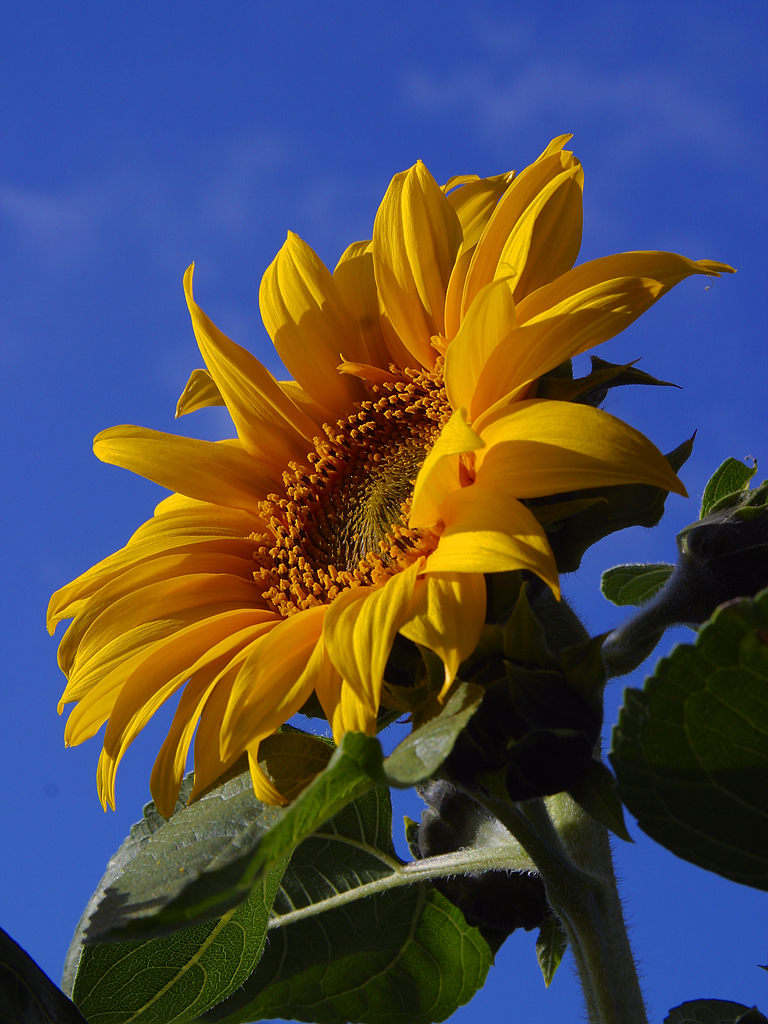 Common sunflowerA tall annual plant grown for its large yellow flower heads and edible seeds
 TulipSpring-blooming bulbs with showy, cup-shaped flowers in many colours
 VioletA large genus of delicate flowers found across temperate regions worldwide
 PoppyA group of colourful wild and garden flowers with capsule fruits and many seeds
 Forget-me-notSmall blue wildflowers known for remembrance and love
 PansyA large-flowered garden hybrid with a face-like blotch in many colours
 ClarkiaWildflowers and garden annuals with four-petalled blooms, mostly from western North America
 Wild tulipA wild yellow tulip with a light scent, found from Portugal to western China
Questions people ask about Bedding (horticulture)
What is bedding in horticulture?
Bedding refers to planting groups of fast-growing flowering plants in beds, borders, or containers for seasonal color. These displays use annuals, biennials, or tender perennials and are common in gardens, parks, and public spaces.
Which flowers are commonly used in bedding?
Common bedding plants include tulips, pansies, wallflowers, petunias, begonias, zinnias, lobelias, and marigolds. The choice depends on the season and local climate.
Where did bedding displays originate?
Bedding displays became popular in European parks and gardens, where beds were replanted for changing seasonal color. The practice spread through campaigns encouraging civic displays and expanded with advances in greenhouse production.
How are bedding displays made?
Young flowering plants are planted closely in prepared beds, borders, or containers. Displays are changed with the seasons, using different plants for spring, summer, autumn, and winter. Some displays form patterns or pictures.
What is carpet bedding?
Carpet bedding uses low, colorful plants with neat growth to create geometric patterns, lettering, or pictures. It is often used in public parks and for special displays.
Good reading and sources
- Bedding (horticulture) on WikipediaEncyclopedia
- More photos on Wikimedia CommonsPhotos
- Wikidata recordOpen data
The facts on this page come from the Wikipedia article "Bedding (horticulture)", written by its contributors and used under the CC BY-SA 4.0 licence, and from its Wikidata record (CC0). Phool rewrote the text in its own words, with AI assistance, and compares every page with the article to make sure no passage is copied. It may be reused under the same CC BY-SA 4.0 licence with a link back.
It may contain mistakes. If something is wrong, tell us. Last refreshed 2026-10-03.
More of the same kind
 Decoration
Nageirebana抛入花
A free-form ikebana style using tall vases and no flower holders
Arrangement
Decoration
Nageirebana抛入花
A free-form ikebana style using tall vases and no flower holders
Arrangement
 Decoration
Tokonoma床の間
A Japanese alcove for displaying scrolls and flower arrangements
🇯🇵 Japan · Arrangement
Decoration
Tokonoma床の間
A Japanese alcove for displaying scrolls and flower arrangements
🇯🇵 Japan · Arrangement
 Decoration
Bouquet
A creative arrangement of flowers, given or displayed for many occasions
🇨🇳 China and 1 more · Arrangement
Decoration
Bouquet
A creative arrangement of flowers, given or displayed for many occasions
🇨🇳 China and 1 more · Arrangement
 Decoration
Sōgetsu草月流
A modern school of Japanese ikebana open to all materials and styles
🇯🇵 Japan · Arrangement
Decoration
Sōgetsu草月流
A modern school of Japanese ikebana open to all materials and styles
🇯🇵 Japan · Arrangement