Bloom seasons and flower fields
The ipê trees of Brasília in the dry season
In the dry months, leafless ipê trees across Brasília flower in turn: pink and purple, then yellow, then white.
Presented by ClearTrust Free for gardeners, florists, travellers and the curious.
What it is
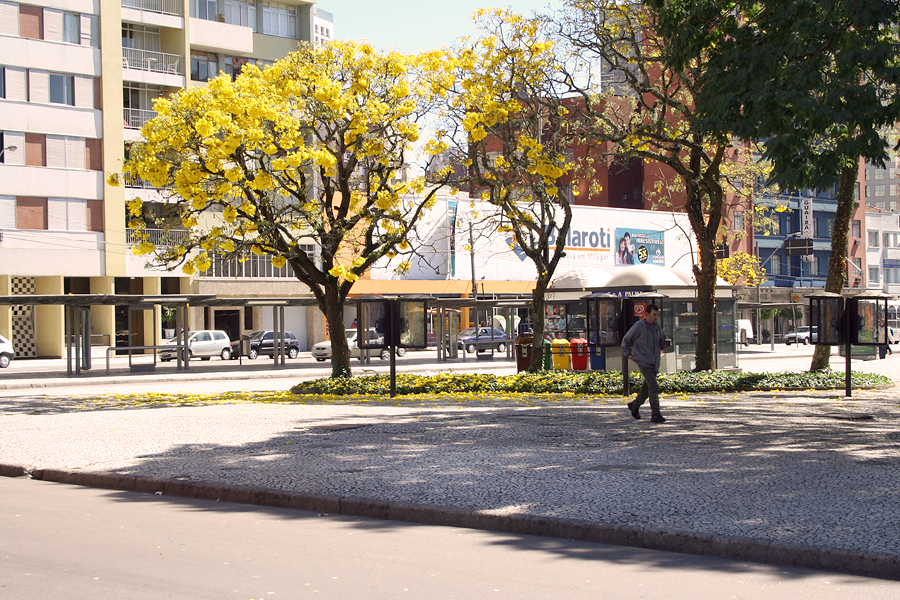
The ipê is a tree of the Brazilian savanna, the cerrado, and the yellow ipê is widely treated as Brazil's national flower. It drops its leaves in the dry season and then covers its bare branches in trumpet-shaped flowers. Brasília, the modernist capital built in the cerrado, has planted them in great numbers along its wide road axes and between its apartment blocks. They flower in a known order. Purple and pink ipês begin around June and July. The yellow ones follow in August and September and are the most admired. White ipês come last, for only a few days. The grass is brown and the sky is deep blue.
Before you go
- August is the best single month, with yellow ipês at their height.
- Each tree flowers for only a week or so. Local news and social media track where they are open.
- The air is extremely dry at this time. Drink a lot of water.
The flowers you will see


Read more
More in Brazil
 🇧🇷 Holambra · Aug to SepHolambra, Brazil's flower town, and its ExpofloraA small town founded by Dutch settlers that grows a large share of Brazil's flowers and holds a big flower fair each spring.
 🇧🇷 Rio de Janeiro · All yearThe Jardim Botânico of Rio de JaneiroA botanic garden founded in 1808 at the foot of Corcovado, with an avenue of royal palms, an orchid house and giant waterlilies.
 🇧🇷 Curitiba · All yearThe glasshouse and parterres of Curitiba's botanical gardenThe postcard view of Curitiba: a white metal and glass greenhouse above French-style flower beds and fountains.
🇧🇷 São Paulo · All yearThe CEAGESP flower fair in São PauloTwice a week before dawn, a hall of São Paulo's giant wholesale market fills with flowers and plants from across the state.
🇧🇷 Curitiba · All yearThe glasshouse and parterres of Curitiba's botanical gardenThe postcard view of Curitiba: a white metal and glass greenhouse above French-style flower beds and fountains.
🇧🇷 São Paulo · All yearThe CEAGESP flower fair in São PauloTwice a week before dawn, a hall of São Paulo's giant wholesale market fills with flowers and plants from across the state.Original text by the Phool desk, written with AI assistance. Background: "Handroanthus" on Wikipedia. Bloom dates move with the weather, and markets and gardens change their hours: check locally before you travel. If we have something wrong, tell us.
Photo credits on this page
The small pictures above come from Wikimedia Commons under free licences. Some are cropped to fit.
- Rio de Janeiro Botanical Garden: tsc_traveler [2], CC BY 2.0, source
- Botanical Garden of Curitiba: SamirNosteb, CC BY-SA 2.5 br, source
- Golden trumpet tree: Mathieu Bertrand Struck (mathieu.struck@gmail.com), CC BY-SA 2.5, source
- Pink trumpet tree: Giles Laurent, CC BY-SA 4.0, source
- Handroanthus: Jean-Pierre Chéreau & Roger Culos, CC BY-SA 3.0, source
- Expoflora Holambra: Allice Hunter, CC BY-SA 4.0, source