
Handroanthus
Showy-flowered trees from Central and South America, valued for timber and ornament
Handroanthus is a group of about 30 tree species in the Bignoniaceae family, native to parts of Central and South America. These trees are grown for their striking yellow or magenta flowers and very hard wood, used in landscaping, timber, and traditional remedies.
- Handroanthus trees produce large, showy yellow or magenta flowers.
- Their wood is among the hardest and most durable in the Americas.
- Several species are national emblems in South American countries.
- The bark is used for herbal teas in South America.
- Handroanthus is widely planted as an ornamental tree in warm climates.
What does Handroanthus look like?
Handroanthus trees can reach considerable heights and sometimes appear as shrubs. Their leaves are divided into several leaflets, often five to nine, and have a covering of scales and hairs. The flowers are large, tubular, and either bright yellow or, in a few species, magenta with a yellow throat. These blooms cluster at branch ends, often before the leaves return, making them stand out. The fruit is a long capsule that splits open to release thin, winged seeds. The wood is extremely dense and heavy, with a heartwood that is olive brown to black.
Where does Handroanthus come from?
Handroanthus grows wild from Central America through much of South America, including Brazil, Paraguay, Argentina, Chile, and parts of the Caribbean. The genus was first described in 1970, named after Brazilian botanist Oswaldo Handro. For a time, its species were grouped with Tabebuia, but DNA studies in 2007 led to Handroanthus being recognized as a separate group again. These trees have become popular ornamentals and have naturalized in many warm regions beyond their original range.
When and how Handroanthus blooms
Handroanthus trees flower at the end of the dry season, often when their branches are bare of leaves. They are grown from seeds, which are easily spread by wind due to their wings. The trees thrive in tropical and subtropical climates and are planted in gardens, parks, and along streets for their vivid floral displays. Their wood is harvested for timber, especially for outdoor uses.


How Handroanthus is used
People plant Handroanthus for their showy flowers in landscaping and public spaces. Several species provide timber that is highly valued for its durability and resistance to insects, used in decking, furniture, and carving. The bark is sold in South American markets and brewed as a tea called pau d'arco or lapacho, though its medicinal effects are unproven. Indigenous peoples have used the wood for making bows.
Kinds of Handroanthus
The genus includes about 30 species, such as Handroanthus impetiginosus (pink ipê), H. chrysotrichus, H. ochraceus, H. chrysanthus, H. guayacan, H. serratifolius, and H. billbergii. Some species are especially known for their timber, while others are favored for their ornamental flowers. The color of the flowers varies by species, with most being yellow and a few magenta.
What Handroanthus means
Handroanthus species are official emblems in several countries: Brazil (H. serratifolius), Ecuador (H. chrysanthus), Paraguay (H. heptaphyllus), and Venezuela (H. billbergii). The trees are widely recognized for their beauty and are a common sight in tropical cities. Their wood is highly prized, and the trees have cultural importance in both traditional crafts and national symbolism.
Traditions that use it
Where to see Handroanthus
Questions people ask about Handroanthus
Where does Handroanthus come from?
Handroanthus is native to Central America and much of South America, including Brazil, Paraguay, Argentina, and Chile. Some species also grow in the Caribbean and northern South America.
What are Handroanthus trees used for?
They are planted for their colorful flowers in gardens and streets, and their wood is used for decking, furniture, and carving. The bark is sometimes brewed as a traditional tea, though its health effects are not proven.
What do the flowers of Handroanthus look like?
The flowers are large, tubular, and usually bright yellow, though a few species have magenta blooms with a yellow throat. They often cover the tree before the leaves return.
Is Handroanthus a national symbol anywhere?
Yes, different species are national or regional emblems in Brazil, Ecuador, Paraguay, and Venezuela.
How is Handroanthus wood used?
The wood is valued for its strength and resistance to insects, making it popular for outdoor uses like decking and furniture. It is also used in traditional crafts and carvings.
Good reading and sources
- Plants of the World OnlineRoyal Botanic Gardens, Kew, Plant database
- Where it has been recordedGBIF, Plant database
- Sightings and photos by naturalistsiNaturalist, Plant database
The facts on this page come from the Wikipedia article "Handroanthus", written by its contributors and used under the CC BY-SA 4.0 licence, and from its Wikidata record (CC0). Phool rewrote the text in its own words, with AI assistance, and compares every page with the article to make sure no passage is copied. It may be reused under the same CC BY-SA 4.0 licence with a link back.
It may contain mistakes. It is not medical or foraging advice: many flowers are poisonous, and traditional uses are reported, not recommended. If something is wrong, tell us. Last refreshed 2026-10-03.
Others in the family Bignoniaceae
The whole family Pink trumpet-treeTabebuia rosea
A tall tree with pink to purple trumpet-shaped flowers, seen in parks and streets
🇲🇽 Mexico and 5 more · Flowering tree
Pink trumpet-treeTabebuia rosea
A tall tree with pink to purple trumpet-shaped flowers, seen in parks and streets
🇲🇽 Mexico and 5 more · Flowering tree
 Tabebuia
Tropical trees and shrubs grown for their large, showy blossoms
🇨🇺 Cuba and 5 more · Flowering tree
Tabebuia
Tropical trees and shrubs grown for their large, showy blossoms
🇨🇺 Cuba and 5 more · Flowering tree
 Millingtonia hortensis
Tall, fragrant-flowered tree known as tree jasmine or Indian cork tree
🇮🇳 India · Flowering tree
Millingtonia hortensis
Tall, fragrant-flowered tree known as tree jasmine or Indian cork tree
🇮🇳 India · Flowering tree
 Southern catalpaCatalpa bignonioides
A fast-growing American tree with showy white trumpet flowers
🇺🇸 United States · Flowering tree
Southern catalpaCatalpa bignonioides
A fast-growing American tree with showy white trumpet flowers
🇺🇸 United States · Flowering tree
More from Brazil
All the flowers of Brazil CactusCactaceae
Succulent plants with spines, native to the Americas
🇲🇽 Mexico and 7 more · Wildflower
CactusCactaceae
Succulent plants with spines, native to the Americas
🇲🇽 Mexico and 7 more · Wildflower
 Eucalyptus
The tall, aromatic trees and shrubs known as gum trees or eucalypts
🇦🇺 Australia and 7 more · Flowering tree
Eucalyptus
The tall, aromatic trees and shrubs known as gum trees or eucalypts
🇦🇺 Australia and 7 more · Flowering tree
 Asteraceae
The large plant family behind daisies, sunflowers and asters
🇺🇸 United States and 2 more · Wildflower
Asteraceae
The large plant family behind daisies, sunflowers and asters
🇺🇸 United States and 2 more · Wildflower
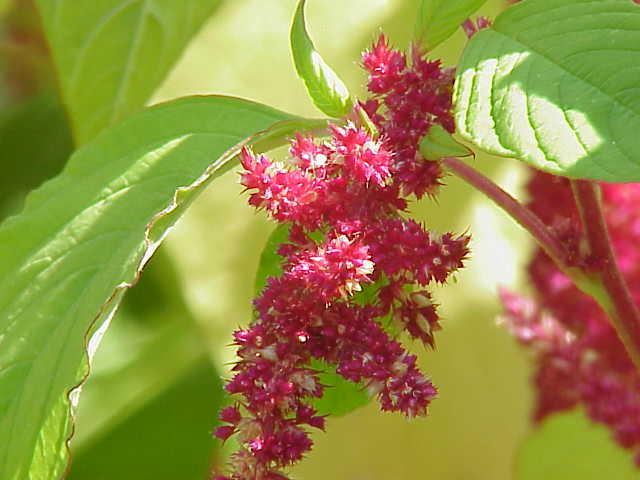 AmaranthAmaranthus
A tall, colourful plant grown for its flowers, leaves and edible seeds
🇲🇽 Mexico and 7 more · Wildflower
AmaranthAmaranthus
A tall, colourful plant grown for its flowers, leaves and edible seeds
🇲🇽 Mexico and 7 more · Wildflower