
Asteraceae
The vast family of daisies, asters, and sunflowers with star-like flower heads
Asteraceae is a major family of flowering plants with over 32,000 species, including daisies, sunflowers, and asters. Its members grow on every continent except Antarctica, thriving in many climates, and are known for their unique flower heads made up of many small florets. People value them for food, gardens, and herbal uses.
- Asteraceae includes over 32,000 species worldwide
- Its flower head is made of many tiny florets, not a single bloom
- The family was first described as Compositae in 1740
- Members range from herbs to shrubs, vines, and trees
- Some species are important food plants, like sunflower and lettuce
What does Asteraceae look like?
Asteraceae plants range from small herbs to shrubs, vines, and even trees. Their most striking feature is the flower head, or capitulum, which looks like a single flower but is actually made up of many tiny florets packed together. These heads often have petal-like ray florets around the edge and disc florets in the center, creating a star or sunburst effect. Leaves can be simple or deeply lobed, and stems are usually upright and may have glandular hairs. The family includes many familiar flowers such as daisies and sunflowers, with a wide range of colors and forms.
Where does Asteraceae come from?
Asteraceae was first described in 1740 under the name Compositae. Fossil evidence shows that its ancestors date back to the Late Cretaceous, about 76–66 million years ago, with the group likely evolving at least 85.9 million years ago. The family is now found worldwide, from deserts to tropical regions, and is especially common in hot and semi-desert climates. Its wide distribution and adaptability have made it one of the largest plant families.
When and how Asteraceae blooms
Asteraceae species can be annual, biennial, or perennial. Most have taproots, but some have fibrous roots or underground stems like rhizomes. Their flower heads develop as clusters of tiny florets, each with fused petals, surrounded by protective bracts. Seeds are often dispersed by wind, thanks to a fluffy structure called a pappus, as seen in dandelions. The plants grow in many soil types and climates, from wild habitats to cultivated gardens.


How Asteraceae is used
People use Asteraceae plants in many ways. Some, like sunflowers and lettuces, are important food crops. Others are grown for their attractive flowers in gardens and as cut flowers. Many species are valued in traditional herbal medicine. However, some Asteraceae can become weedy or invasive when introduced outside their native range. Their composite flower heads also make them popular for decorative and symbolic uses.
Kinds of Asteraceae
With over 1,900 genera and 32,000 species, Asteraceae includes a huge variety of forms. Some have only disc florets, others have both ray and disc florets, and a few have unique arrangements. There are annuals, perennials, shrubs, vines, and even tree-like species. Well-known members include daisies, asters, sunflowers, and dandelions, each with their own distinct look and uses.
What Asteraceae means
Asteraceae plants are important in many cultures for their beauty and usefulness. The word 'aster' means 'star' in Greek, reflecting the flower's shape. Some species are national or regional emblems, and many are featured in art and literature. The family is also significant in agriculture and horticulture, providing food, ornamentals, and herbal remedies. Some species can be invasive, affecting local ecosystems.
Questions people ask about Asteraceae
Where does Asteraceae come from?
Asteraceae originated at least 85.9 million years ago, with fossils found from the Late Cretaceous in Antarctica. Today, its species are found worldwide, except in Antarctica.
What are the main features of Asteraceae flowers?
The main feature is the composite flower head, or capitulum, made up of many tiny florets. These often have petal-like ray florets around the edge and disc florets in the center, giving a star-like appearance.
What are some common uses for Asteraceae plants?
People use them for food (like sunflower and lettuce), as garden and cut flowers, and in traditional herbal medicine. Some are also used for decoration and symbolism.
Are all Asteraceae plants herbs?
Most Asteraceae are herbaceous, but the family also includes shrubs, vines, and even some tree-like species.
Why is the family called 'composite'?
The name 'composite' refers to the flower head, which is actually a cluster of many small flowers (florets) that together look like a single bloom.
Good reading and sources
- Encyclopaedia BritannicaArticle
- Plants of the World OnlineRoyal Botanic Gardens, Kew, Plant database
- Where it has been recordedGBIF, Plant database
- Sightings and photos by naturalistsiNaturalist, Plant database
The facts on this page come from the Wikipedia article "Asteraceae", written by its contributors and used under the CC BY-SA 4.0 licence, and from its Wikidata record (CC0). Phool rewrote the text in its own words, with AI assistance, and compares every page with the article to make sure no passage is copied. It may be reused under the same CC BY-SA 4.0 licence with a link back.
It may contain mistakes. It is not medical or foraging advice: many flowers are poisonous, and traditional uses are reported, not recommended. If something is wrong, tell us. Last refreshed 2026-10-03.
Others in the family Asteraceae
The whole family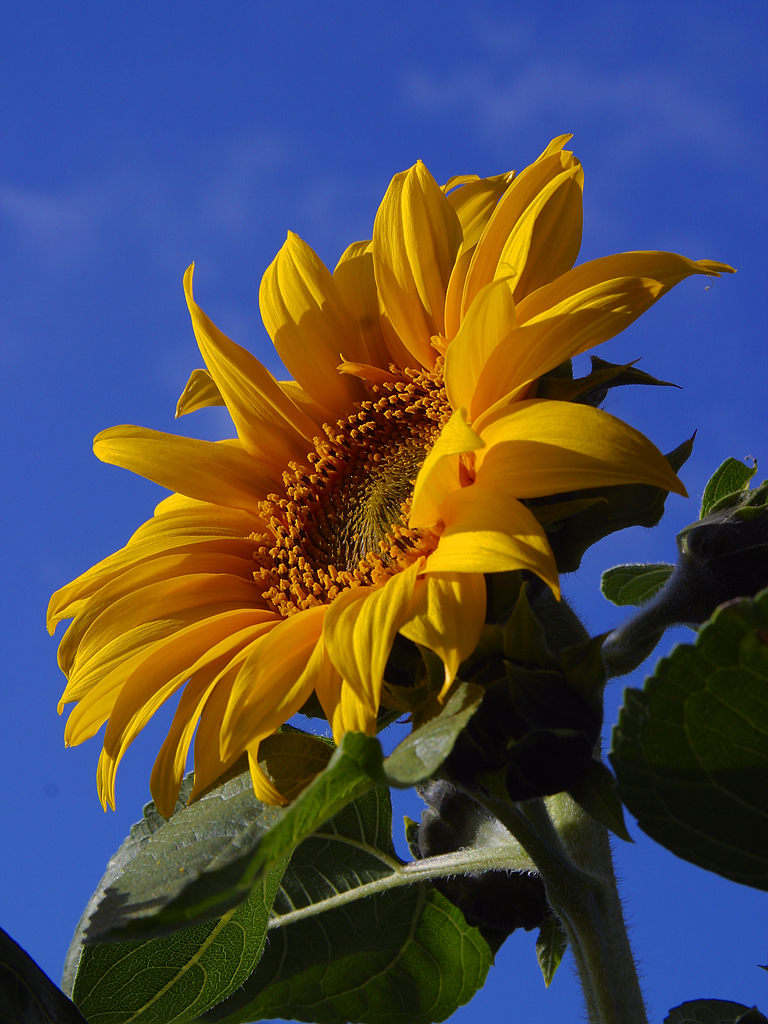 Common sunflowerHelianthus annuus
A tall annual plant grown for its large yellow flower heads and edible seeds
🇨🇦 Canada and 4 more · Wildflower
Common sunflowerHelianthus annuus
A tall annual plant grown for its large yellow flower heads and edible seeds
🇨🇦 Canada and 4 more · Wildflower
 Chrysanthemum菊花
Autumn-blooming flower with thousands of varieties, cherished in East Asia and beyond
🇨🇳 China and 6 more · Wildflower
Chrysanthemum菊花
Autumn-blooming flower with thousands of varieties, cherished in East Asia and beyond
🇨🇳 China and 6 more · Wildflower
 DandelionTaraxacum
A yellow-flowered perennial found in fields, lawns, and gardens worldwide
Taraxacum · Wildflower
DandelionTaraxacum
A yellow-flowered perennial found in fields, lawns, and gardens worldwide
Taraxacum · Wildflower
 Dahlia
A bushy perennial with tuberous roots and bright, star-shaped blooms
🇲🇽 Mexico and 1 more · Garden flower
Dahlia
A bushy perennial with tuberous roots and bright, star-shaped blooms
🇲🇽 Mexico and 1 more · Garden flower