Amaranth
Amaranthus, family Amaranthaceae
A tall, colourful plant grown for its flowers, leaves and edible seeds
Amaranth is a group of annual or perennial plants with tall stems and dense flower clusters, found in tropical regions worldwide. Its species are grown for their striking flowers, leafy greens, and protein-rich seeds, with a long history of use as food and ornament.
- Amaranth includes about 75 species found in tropical regions worldwide.
- Some species are grown for their edible leaves and protein-rich seeds.
- The Aztecs cultivated amaranth as a major food crop.
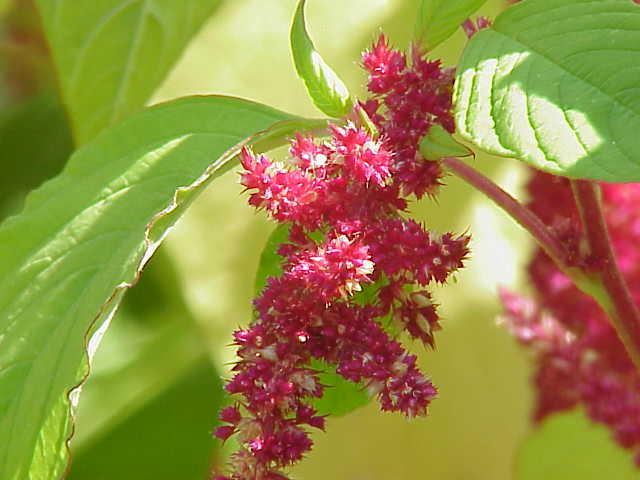
- Amaranth flowers are dense, colourful clusters that bloom in summer or autumn.
- Certain species are considered invasive weeds in agriculture.
What does Amaranth look like?
Amaranth plants can grow from 1 to 2.5 metres tall, with hollow, succulent stems that may be green or reddish. Their leaves are oval or elliptical, 6.5 to 15 cm long, and can be arranged opposite or alternate. The flowers are tiny, packed densely in large, tassel-like clusters called panicles, which can be erect or bent. Flower colours range from green to maroon and crimson, and the plant produces small, shiny seeds in capsules. Some species have spiny stalks.
Where does Amaranth come from?
The genus Amaranthus most likely began in Central America and is now found across tropical regions worldwide, from lowlands to mountain ranges like the Himalayas. Amaranth was cultivated by ancient peoples in the Americas, including the Aztecs, who called it huāuhtli. Archaeological finds show amaranth grain was used in Mexico and Argentina thousands of years ago. The name 'amaranth' comes from Greek, meaning 'unfading', and was first used in Europe for a related plant, Celosia.
When and how Amaranth blooms
Amaranths bloom in summer or autumn, producing dense flower clusters. They grow quickly from seed and can thrive in a range of soils and climates. Some species are annual, others perennial. Seeds are sown directly, and the plants develop a deep root system. The grain is harvested about 200 days after planting, with each plant producing thousands of small seeds. Both leaves and seeds are collected for food.


How Amaranth is used
People use amaranth as a leafy vegetable, a grain crop, and an ornamental plant. Its seeds are ground into flour or cooked whole, and its leaves are eaten as greens. In the United States, amaranth is mostly grown for seed, used in cereals and baked goods. Some species are considered weeds in agriculture, while others are valued for their colourful flowers in gardens.
Kinds of Amaranth
There are about 75 species of Amaranthus, with wide differences in flower form, colour, and plant size. Some, like A. caudatus, A. cruentus, and A. hypochondriacus, are grown for grain. Others, such as A. palmeri, are known as weeds. The genus includes both monoecious (male and female flowers on one plant) and dioecious (separate male and female plants) species.
What Amaranth means
Amaranth has deep cultural roots, especially in Mexico and Central America, where it was a staple food for the Aztecs. Its name means 'unfading flower' in Greek, reflecting its long-lasting blooms. Some species are local emblems or have been listed as endangered, such as Amaranthus pumilus in the United States. The plant is known by many names in Indigenous languages.
Questions people ask about Amaranth
Where does amaranth come from?
Amaranth most likely originated in Central America and is now found across tropical regions worldwide. It has been cultivated for thousands of years in the Americas, especially by ancient peoples such as the Aztecs.
What does amaranth look like?
Amaranth plants can grow up to 2.5 metres tall, with hollow, sometimes reddish stems and oval leaves. The flowers are tiny but packed into large, colourful clusters that can be red, maroon, or green.
What is amaranth used for?
Amaranth is used as a leafy vegetable, a grain crop, and an ornamental plant. Its seeds are ground into flour or cooked, and its leaves are eaten as greens. Some species are also grown for their striking flowers.
Is amaranth important in any culture?
Yes, amaranth was a staple food for the Aztecs and is still valued in Mexico and Central America. Its name means 'unfading flower' in Greek, and it is known by many names in Indigenous languages.
Are all amaranths edible?
All parts of the plant are considered edible, but some species are mainly grown for their seeds or leaves. However, some species are also known as weeds, and the stalks of some can have sharp spines.
Good reading and sources
- Encyclopaedia BritannicaArticle
- Amaranth tastes as good as it looksThe Guardian, Article
- USDA Plants DatabaseUS Department of Agriculture, Article
- Plants of the World OnlineRoyal Botanic Gardens, Kew, Plant database
- Where it has been recordedGBIF, Plant database
- Sightings and photos by naturalistsiNaturalist, Plant database
The facts on this page come from the Wikipedia article "Amaranth", written by its contributors and used under the CC BY-SA 4.0 licence, and from its Wikidata record (CC0). Phool rewrote the text in its own words, with AI assistance, and compares every page with the article to make sure no passage is copied. It may be reused under the same CC BY-SA 4.0 licence with a link back.
It may contain mistakes. It is not medical or foraging advice: many flowers are poisonous, and traditional uses are reported, not recommended. If something is wrong, tell us. Last refreshed 2026-10-03.

More from Mexico
All the flowers of Mexico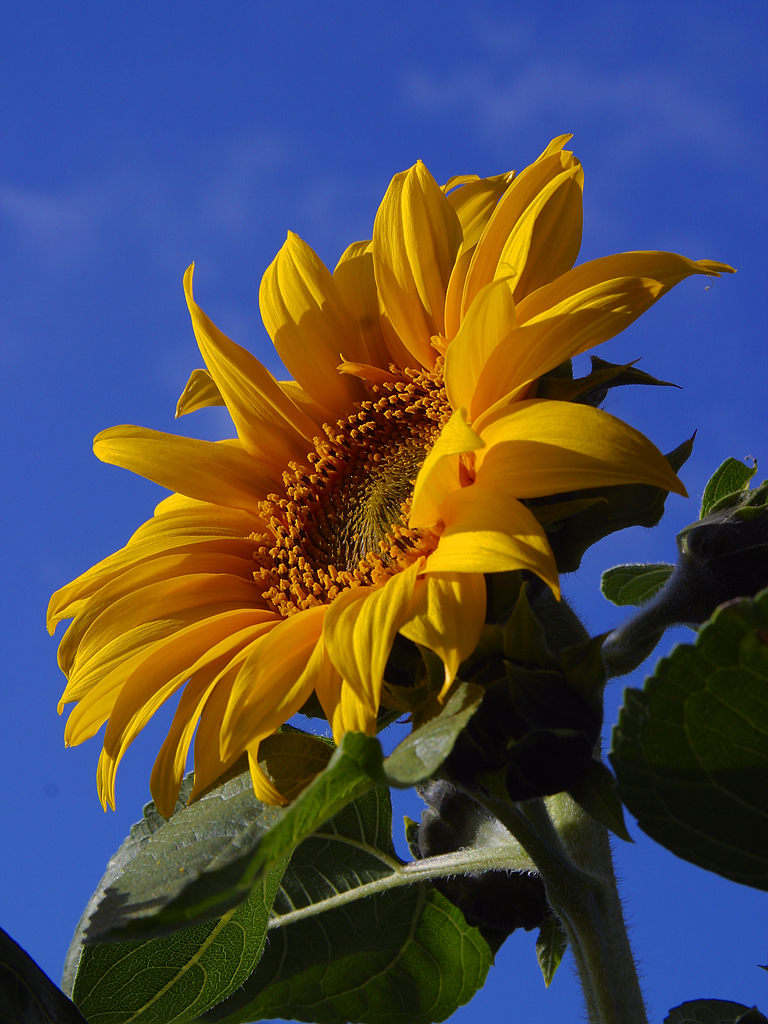 Common sunflowerHelianthus annuus
A tall annual plant grown for its large yellow flower heads and edible seeds
🇨🇦 Canada and 4 more · Wildflower
Common sunflowerHelianthus annuus
A tall annual plant grown for its large yellow flower heads and edible seeds
🇨🇦 Canada and 4 more · Wildflower
 CactusCactaceae
Succulent plants with spines, native to the Americas
🇲🇽 Mexico and 7 more · Wildflower
CactusCactaceae
Succulent plants with spines, native to the Americas
🇲🇽 Mexico and 7 more · Wildflower
 HawthornCrataegus
A thorny shrub or tree with white or pink spring flowers and small edible fruits
🇮🇪 Ireland and 7 more · Wildflower
HawthornCrataegus
A thorny shrub or tree with white or pink spring flowers and small edible fruits
🇮🇪 Ireland and 7 more · Wildflower
 Dahlia
A bushy perennial with tuberous roots and bright, star-shaped blooms
🇲🇽 Mexico and 1 more · Garden flower
Dahlia
A bushy perennial with tuberous roots and bright, star-shaped blooms
🇲🇽 Mexico and 1 more · Garden flower