Cannabis
An Asian annual herb cultivated for durable fibre, edible seeds and resinous flowers
Cannabis is an annual flowering herb indigenous to Asia, known for its finger-like serrated leaves and wind-pollinated blooms. People cultivate different strains to harvest tough textile fibres, nutritious seeds, and resinous female flowers used in traditional medicine and recreational preparations.
- Cannabis is indigenous to Asia and gets its name from an ancient Scythian word.
- Male and female flowers usually develop on separate plants and are pollinated by the wind.
- The plant produces over 80 cannabinoids, concentrated in glands on female flower bracts.
- Strains selected for fibre and seeds are commonly known as hemp.
What does Cannabis look like?
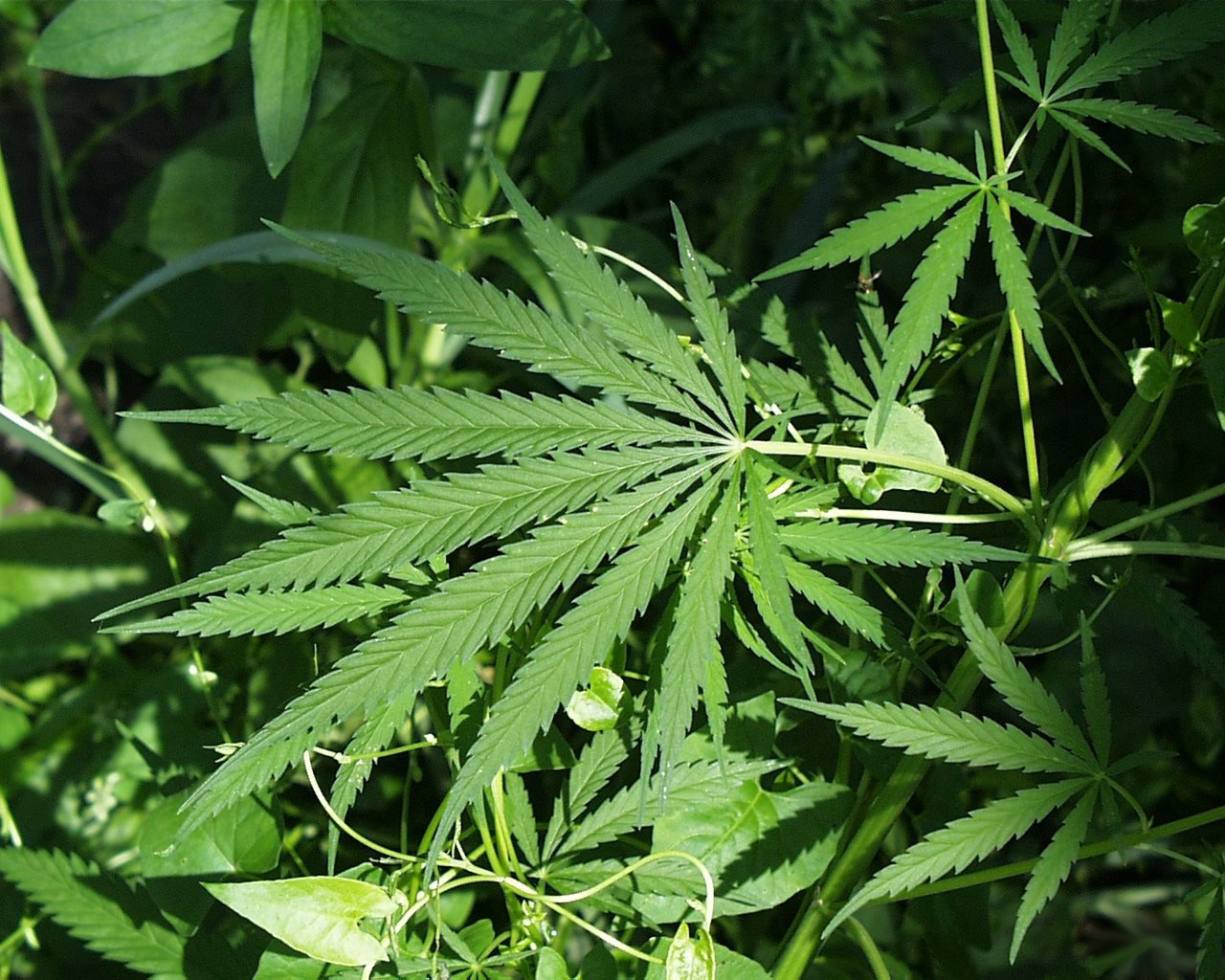
Cannabis grows as an annual herb with slender stems and divided, hand-shaped foliage. Each leaf contains several pointed leaflets with notched margins, usually numbering seven or nine on mature growth. The lowest leaves sit in opposite pairs, while higher leaves alternate along the main stem.
The plant produces small, wind-pollinated flowers that usually separate by sex on distinct plants. Male plants develop loose branching sprays of staminate blooms. Female plants form compact spikes known as racemes. Tiny resin glands cover the female floral bracts and protective calyxes, where the plant stores chemical compounds.
Where does Cannabis come from?
Cannabis is indigenous to Asia, where it has grown for thousands of years. Its botanical name derives from an ancient Scythian word. Greek observers first recorded the plant after witnessing Scythian funeral customs where it was burned or ingested.
Botanists previously classified the genus in the nettle or mulberry families. Today, researchers place it inside the hemp family, Cannabaceae, alongside hops. Human cultivation over millennia has dispersed different strains across the globe, leading to both farmed crops and wild or escaped populations.
When and how Cannabis blooms
Cannabis relies on the wind to carry pollen between plants. Most varieties begin flowering in response to shortening daylight hours, though certain wild types bloom regardless of day length.
The herb is primarily dioecious, meaning individual plants produce either male or female blossoms. Environmental conditions, hormones, and genetic factors all shape this balance. Growers sometimes treat plants with silver compounds or plant hormones to reverse blossom sex. This allows breeders to produce single-sex seeds, ensuring crops yield the resin-rich female flower clusters required for harvesting.


How Cannabis is used
People cultivate cannabis for a broad array of practical and therapeutic purposes. Varieties known as hemp yield tough bast fibres used in textiles, ropes, paper, and industrial pulp. The nutritious seeds are pressed for oil or eaten directly, while fresh leaves can serve as vegetables and juicing ingredients.
Specific cultivars are grown for their chemical secretions. Glands on the female flowers contain cannabinoids such as THC and CBD. These resinous floral parts are harvested for traditional medicine, extracted into oils and hashish, or consumed for recreational effects.
Kinds of Cannabis
Botanists debate the exact classification within the genus. Some recognize three distinct species: Cannabis sativa, Cannabis indica, and Cannabis ruderalis. Others view these as subspecies or regional varieties of a single species. Cultivars are frequently grouped into chemotypes based on chemical composition. Non-drug varieties, or industrial hemp, produce high fibre and low levels of psychoactive substances, while drug varieties are bred for elevated cannabinoid yields.
What Cannabis means
Ancient societies paid close attention to the biology of cannabis. In China, scholars recognized the plant's sexual dimorphism by the third century BCE, recording distinct terms for male and female plants in the Erya dictionary. Classical Greek authors noted its consumption among nomadic Scythians during funeral ceremonies. In modern times, the legal distinctions between industrial hemp crops and drug varieties often depend on plant sex ratios and chemical potency.
Questions people ask about Cannabis
Where does cannabis come from?
Cannabis originates from the continent of Asia. Over thousands of years of human trade, farming, and migration, different varieties spread across the world, where they now grow in cultivated fields and as wild or escaped populations.
What are the main uses of cannabis?
Cannabis varieties known as hemp produce strong fibre for textiles and paper, as well as edible seeds and oil. Other strains are cultivated for the resin on female flowers, which is used in traditional medicine, chemical extractions, and recreational products.
How do male and female cannabis plants differ?
Male cannabis plants bear staminate flowers in loose panicles to release airborne pollen. Female plants develop dense flower clusters called racemes, which are coated with glandular structures that secrete resin and cannabinoids.
How is cannabis pollinated?
All known strains of cannabis rely on wind pollination rather than insects. Pollen released from the loose floral clusters of male plants drifts through the air to fertilize the female blossoms, which then develop single-seeded achene fruits.
Good reading and sources
- Encyclopaedia BritannicaArticle
- USDA Plants DatabaseUS Department of Agriculture, Article
- Plants of the World OnlineRoyal Botanic Gardens, Kew, Plant database
- Where it has been recordedGBIF, Plant database
- Sightings and photos by naturalistsiNaturalist, Plant database
The facts on this page come from the Wikipedia article "Cannabis", written by its contributors and used under the CC BY-SA 4.0 licence, and from its Wikidata record (CC0). EveryPhool rewrote the text in its own words, with AI assistance, and compares every page with the article to make sure no passage is copied. It may be reused under the same CC BY-SA 4.0 licence with a link back.
It may contain mistakes. It is not medical or foraging advice: many flowers are poisonous, and traditional uses are reported, not recommended. If something is wrong, tell us. Last refreshed 2026-10-04.
Others in the family Cannabaceae
The whole family HempCannabis sativa
An aromatic annual herb grown across the world for fiber, seeds, and resinous blooms
🇨🇳 China and 3 more · Herb or useful flower
HempCannabis sativa
An aromatic annual herb grown across the world for fiber, seeds, and resinous blooms
🇨🇳 China and 3 more · Herb or useful flower
 Hemp familyCannabaceae
A flowering plant family of trees, climbers, and herbs including hops and hemp
🇨🇳 China and 1 more · Herb or useful flower
Hemp familyCannabaceae
A flowering plant family of trees, climbers, and herbs including hops and hemp
🇨🇳 China and 1 more · Herb or useful flower
 HopHumulus
Twining climbing plants valued for the fragrant cones used in brewing
Humulus · Climber
HopHumulus
Twining climbing plants valued for the fragrant cones used in brewing
Humulus · Climber
 European Nettle TreeCeltis australis
A hardy Mediterranean tree with subtle green blooms, sweet purple drupes, and tough wood
🇮🇱 Israel and 2 more · Flowering tree
European Nettle TreeCeltis australis
A hardy Mediterranean tree with subtle green blooms, sweet purple drupes, and tough wood
🇮🇱 Israel and 2 more · Flowering tree