
Hemp family
Cannabaceae, family Cannabaceae
A flowering plant family of trees, climbers, and herbs including hops and hemp
The hemp family, known scientifically as Cannabaceae, includes around 170 species of trees, herbs, and climbing vines such as hops and hackberries. Native originally to East Asia, these wind-pollinated plants are widely cultivated for brewing, textiles, shade, and traditional medicine.
- Contains roughly 170 species, ranging from twining hop vines to towering hackberry trees.
- Fossil pollen reveals the family emerged in East Asia more than 90 million years ago.
- Hop flower resins provide the essential bitterness and natural preservative in beer.
- Ritual and medicinal use dates back to at least 494 BC in Xinjiang, China.
What does Hemp family look like?
Cannabaceae is a botanical family composed of roughly one hundred and seventy species across eleven genera. These plants take diverse forms, including upright herbs, climbing vines, and canopy trees. Because wind carries their pollen, their blossoms lack showy petals. Male and female reproductive parts usually develop on separate plants, a trait known as dioecy. Male blooms appear in long, branching clusters, whereas female flowers grow in shorter, denser groupings. Individual flowers have a simple cup-shaped scale around the ovary instead of colourful petals. Leaves are typically divided into finger-like lobes and always feature small paired flaps called stipules at their base. The plants develop either hard nuts called achenes or fleshy fruits containing a single seed.
Where does Hemp family come from?
Fossil records indicate this plant lineage arose in East Asia during the Late Cretaceous epoch, between ninety and ninety-four million years ago. Early pollen samples dating from that era have been uncovered in Sarawak on the island of Borneo. Over the early Cenozoic era, members of the family spread broadly across the Northern Hemisphere. As global climates shifted in subsequent epochs, many species adapted and moved toward tropical environments. Early classification systems grouped these plants within the order Urticales alongside elms and nettles. Later genetic studies during the nineteen-nineties placed them squarely inside Rosales, linking them into a broader evolutionary branch known as urticalean rosids.
When and how Hemp family blooms
Pollination in this family relies entirely on air currents rather than visiting insects. Because of this, the plants do not expend energy producing nectar or vibrant petals. Instead, male plants produce abundant airborne pollen from loose clusters of stamens. In cultivated strains of Cannabis, growers often induce seedless flower development, a method called parthenocarpy, by preventing female blooms from being pollinated. Selective breeding programs also allow growers to target specific concentrations of aromatic compounds like terpenes, which impart distinctive scent notes reminiscent of citrus, strawberry, or blueberry.


How Hemp family is used
Archaeological evidence from Xinjiang in western China shows that humans used these plants in spiritual rites and healing traditions as far back as 494 BC. Hop blossoms have served for centuries as the primary flavouring and preservative in brewing beer, where resinous compounds provide a characteristic bitter taste and protect against spoilage. Young hop shoots are also harvested as table greens. Cannabis varieties supply strong bast fibres for textiles, nutritious seeds, pressable seed oils, edible foliage, and dried flower clusters used in traditional medicines and modern extracts. Additionally, hackberry trees are planted along streets and in gardens for shade.
Kinds of Hemp family
The genus Celtis forms the largest group in the family, comprising around one hundred species of deciduous and evergreen trees known as hackberries. The genus Humulus contains three species of twining climbing vines, including common hops. Cannabis likewise contains three recognized species of upright annual herbs. Other lesser-known genera include Trema, which holds up to forty-two tropical species, and Pteroceltis, a single-species tree whose peeled bark supplies raw material for traditional Chinese paper making. Small woody genera like Aphananthe, Gironniera, Lozanella, and Parasponia round out the family.
What Hemp family means
Plants in this family have held cultural and practical value across Eurasia for thousands of years. Early societies in northwestern China integrated them into burial customs and ritual ceremonies. In brewing heritage, hop cones became an essential element of beer craft, valued both for flavour balance and for keeping beverages fresh during storage. Today, hackberries are widely planted in public spaces as durable urban shade trees, while specialty craft artisans prize the durable fibres of Pteroceltis bark for manufacturing fine calligraphy paper in China.
Questions people ask about Hemp family
Where does the hemp family come from?
Fossil evidence indicates the family originated in East Asia during the Late Cretaceous epoch, over ninety million years ago. Early pollen has been found in Sarawak, Borneo. The plants later spread across the Northern Hemisphere before shifting toward tropical zones.
What are plants in this family used for?
People use hop flowers to flavour and preserve beer, while Cannabis yields textiles, seed oil, food, and medicinal extracts. Hackberry trees provide landscape ornament, and Pteroceltis bark is used to craft traditional Chinese paper. Ancient cultures also used them in spiritual ceremonies.
What do the flowers of the hemp family look like?
The blossoms are small and lack showy petals because they are pollinated by the wind. Male flowers grow in long, loose sprays, while female flowers form shorter clusters surrounded by a protective bract.
Which plant group is the largest in the family?
The hackberry genus, Celtis, is the largest group in Cannabaceae. It includes around one hundred species of woody trees and large shrubs, making up more than half of the family's roughly 170 total species.
Good reading and sources
- Encyclopaedia BritannicaArticle
- 'It's like eating a hedgerow': why do hop shoots cost €1,000 a kilo? | VegetablesThe Guardian, Article
- Plants of the World OnlineRoyal Botanic Gardens, Kew, Plant database
- Where it has been recordedGBIF, Plant database
- Sightings and photos by naturalistsiNaturalist, Plant database
The facts on this page come from the Wikipedia article "Cannabaceae", written by its contributors and used under the CC BY-SA 4.0 licence, and from its Wikidata record (CC0). EveryPhool rewrote the text in its own words, with AI assistance, and compares every page with the article to make sure no passage is copied. It may be reused under the same CC BY-SA 4.0 licence with a link back.
It may contain mistakes. It is not medical or foraging advice: many flowers are poisonous, and traditional uses are reported, not recommended. If something is wrong, tell us. Last refreshed 2026-10-04.
Others in the family Cannabaceae
The whole family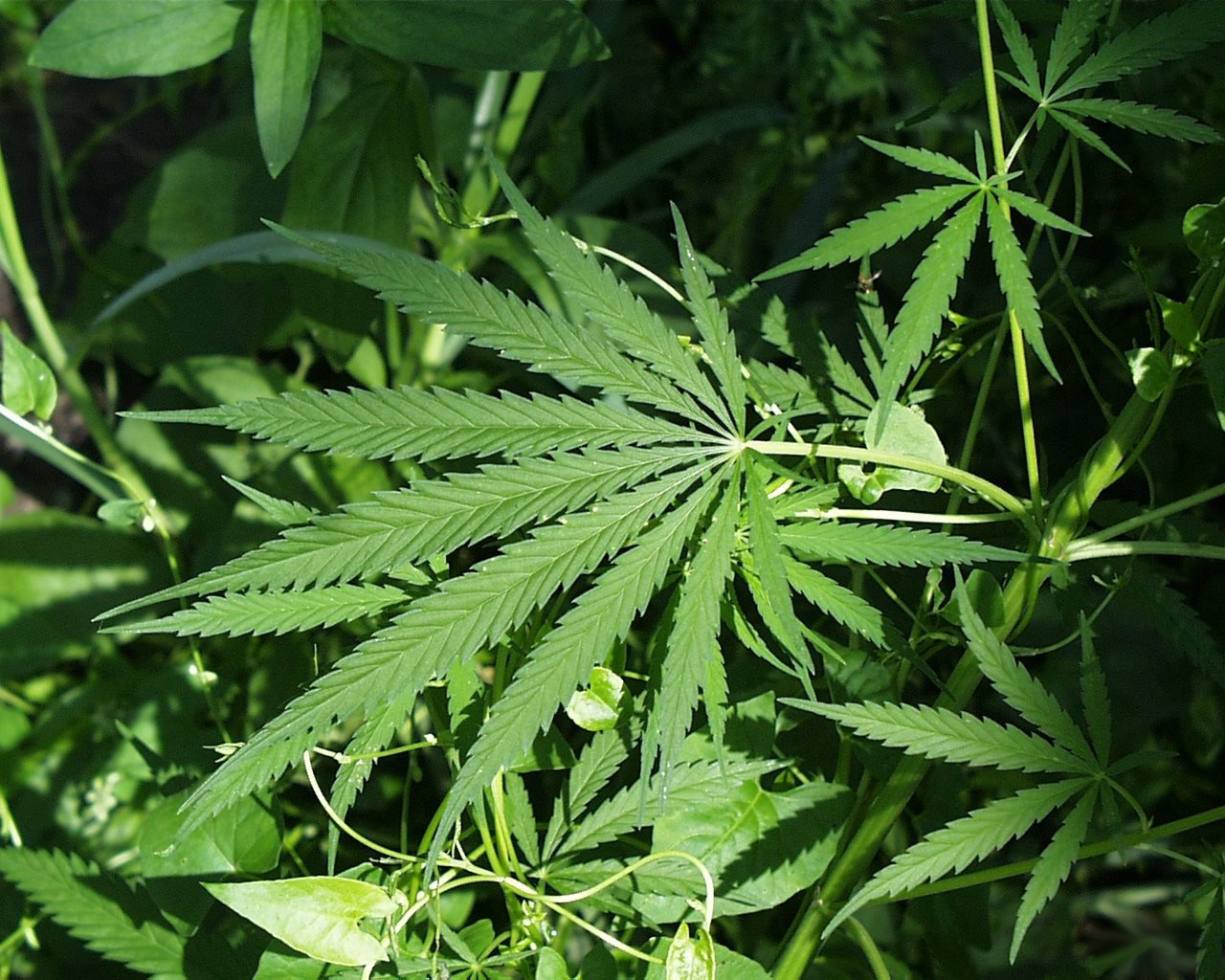 Cannabis
An Asian annual herb cultivated for durable fibre, edible seeds and resinous flowers
Cannabis · Herb or useful flower
Cannabis
An Asian annual herb cultivated for durable fibre, edible seeds and resinous flowers
Cannabis · Herb or useful flower
 HempCannabis sativa
An aromatic annual herb grown across the world for fiber, seeds, and resinous blooms
🇨🇳 China and 3 more · Herb or useful flower
HempCannabis sativa
An aromatic annual herb grown across the world for fiber, seeds, and resinous blooms
🇨🇳 China and 3 more · Herb or useful flower
 HopHumulus
Twining climbing plants valued for the fragrant cones used in brewing
Humulus · Climber
HopHumulus
Twining climbing plants valued for the fragrant cones used in brewing
Humulus · Climber
 European Nettle TreeCeltis australis
A hardy Mediterranean tree with subtle green blooms, sweet purple drupes, and tough wood
🇮🇱 Israel and 2 more · Flowering tree
European Nettle TreeCeltis australis
A hardy Mediterranean tree with subtle green blooms, sweet purple drupes, and tough wood
🇮🇱 Israel and 2 more · Flowering tree
More from China
All the flowers of China RoseRosa
Prickly flowering shrubs grown across the world for fragrant blossoms and rose hips
🇨🇳 China and 7 more · Flowering shrub
RoseRosa
Prickly flowering shrubs grown across the world for fragrant blossoms and rose hips
🇨🇳 China and 7 more · Flowering shrub
 PeachPrunus persica
A flowering fruit tree from China, grown for its pink blossoms and sweet fruit
🇨🇳 China and 7 more · Flowering tree
PeachPrunus persica
A flowering fruit tree from China, grown for its pink blossoms and sweet fruit
🇨🇳 China and 7 more · Flowering tree
 BirchBetula
Slender trees with papery bark found across the northern world
🇨🇳 China and 7 more · Wildflower
BirchBetula
Slender trees with papery bark found across the northern world
🇨🇳 China and 7 more · Wildflower
 ApricotPrunus armeniaca
A small fruit tree with early white to pink blossoms and golden-orange fruit
🇨🇳 China and 6 more · Flowering tree
ApricotPrunus armeniaca
A small fruit tree with early white to pink blossoms and golden-orange fruit
🇨🇳 China and 6 more · Flowering tree