
Cluj-Napoca Botanical Garden
In its own language: Grădina Botanică Alexandru Borza a Universității Cluj-Napoca
A 14-hectare botanical garden with over 10,000 plant species in Cluj-Napoca, Romania
Cluj-Napoca Botanical Garden is a large public garden and research center in southern Cluj-Napoca, Romania. It holds more than 10,000 plant species from around the world, arranged in themed sections such as ornamental, geobotanical, economic, and medicinal gardens, as well as special areas like a Japanese Garden and a Roman Garden.
- Over 10,000 plant species from around the world
- Features a Japanese Garden with traditional design and lake
- Roman Garden displays ancient artifacts and Roman-era plants
- Six greenhouses house tropical, aquatic, and succulent plants
- Recognized as a historical monument since 2010
What is Cluj-Napoca Botanical Garden?
The Cluj-Napoca Botanical Garden covers 14 hectares and features more than 10,000 plant species from across the globe. Visitors find themed areas including ornamental gardens, a Japanese Garden with a lake and traditional structures, a Roman Garden with ancient artifacts, and greenhouses for tropical, aquatic, and succulent plants. The grounds also include a rosarium, Mediterranean garden, and sectors dedicated to economic and medicinal plants. Paths wind through varied landscapes, offering both open and shaded spots for exploration.
The history of Cluj-Napoca Botanical Garden
The garden began in 1872 alongside the founding of Franz Josef University in Cluj, with early efforts focused on assembling a collection of trees and shrubs. Over the years, it underwent several changes in leadership and purpose, at times serving as a site for scientific study and even as a refuge during World War I. After 1919, the garden was reorganized under Alexandru Borza and the university, with new land acquired and major landscaping projects begun. Officially inaugurated in 1925, it has since expanded and modernized, becoming a recognized historical monument and an important center for botanical research and education.
What there is to see
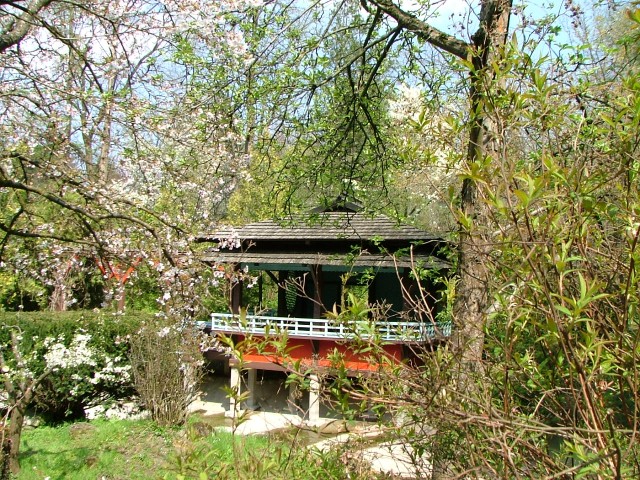
The garden is divided into sectors to suit different plant needs: ornamental beds, systematic collections grouped by plant family, and areas for economic and medicinal species. Greenhouses allow for the cultivation of tropical, aquatic, and desert plants, including palms, orchids, bromeliads, and the Amazonian lotus. The Japanese Garden features a lake, bridges, lanterns, and plants from East Asia. The Roman Garden displays archaeological finds and plants typical of ancient Roman gardens. Seasonal displays and themed areas are maintained year-round by a dedicated staff.



When to go
Open to the public, the garden serves as a destination for visitors, students, and researchers. It is part of Babeș-Bolyai University and supports teaching and scientific study. The garden is best visited from spring through autumn, when most plants are in bloom and the outdoor sections are at their most vibrant. Special attractions include the Japanese and Roman Gardens, as well as the extensive greenhouse complex, which can be enjoyed in any weather.
Parts and collections
The garden is organized into several themed sections: the ornamental sector with decorative plants; the phytogeographical sector with plants grouped by their native regions; the systematic sector arranged by botanical family; the economic sector with useful plants; and the medicinal sector. The greenhouse complex includes six houses for tropical, aquatic, Mediterranean, Australian, orchid, bromeliad, and succulent plants. The Japanese Garden is styled after the gyo-no-niwa tradition, and the Roman Garden features archaeological relics.
Why Cluj-Napoca Botanical Garden matters
Recognized as a historical monument by the Romanian Ministry of Culture, the garden is a symbol of Cluj-Napoca’s scientific and cultural life. It plays a key role in botanical education and research, hosting collections that represent both Romanian and global plant diversity. The Japanese Garden and Roman Garden reflect international and historical influences. The garden’s status as a university institution and its rich history connect it to the academic and civic life of Transylvania.
Questions people ask about Cluj-Napoca Botanical Garden
Where is the Cluj-Napoca Botanical Garden located?
It is in the southern part of Cluj-Napoca, a city in Transylvania, Romania. The garden covers 14 hectares and is part of Babeș-Bolyai University.
What can visitors see at the garden?
Visitors can explore themed sections such as the Japanese Garden, Roman Garden, ornamental beds, and greenhouses with tropical, aquatic, and succulent plants. There are also collections of Romanian flora and plants from around the world.
When was the garden founded?
The original garden dates to 1872, but the modern Cluj-Napoca Botanical Garden was established in 1919 and officially inaugurated in 1925.
What makes the Japanese Garden special?
The Japanese Garden is arranged in the gyo-no-niwa style, with a lake, island, curved bridge, stone lanterns, and plants from East Asia, creating a contemplative landscape.
Is the garden used for research or education?
Yes, it is part of Babeș-Bolyai University and serves as a center for teaching and botanical research, in addition to being open to the public.
Good reading and sources
- Cluj-Napoca Botanical Garden on WikipediaEncyclopedia
- More photos on Wikimedia CommonsPhotos
- Wikidata recordOpen data
The facts on this page come from the Wikipedia article "Cluj-Napoca Botanical Garden", written by its contributors and used under the CC BY-SA 4.0 licence, and from its Wikidata record (CC0). Phool rewrote the text in its own words, with AI assistance, and compares every page with the article to make sure no passage is copied. It may be reused under the same CC BY-SA 4.0 licence with a link back.
It may contain mistakes. Opening times, prices and bloom dates change: check with the place before you travel. If something is wrong, tell us. Last refreshed 2026-10-03.
More of the same kind
 Place
Tropical Botanical Garden and Research Institute
A major botanical garden and research centre in Thiruvananthapuram, Kerala
Thiruvananthapuram, 🇮🇳 India · Botanical garden
Place
Tropical Botanical Garden and Research Institute
A major botanical garden and research centre in Thiruvananthapuram, Kerala
Thiruvananthapuram, 🇮🇳 India · Botanical garden
 Place
Baldha Gardenবলধা গার্ডেন
A historic botanical garden in Old Dhaka with hundreds of plant species
Dhaka, 🇧🇩 Bangladesh · Botanical garden
Place
Baldha Gardenবলধা গার্ডেন
A historic botanical garden in Old Dhaka with hundreds of plant species
Dhaka, 🇧🇩 Bangladesh · Botanical garden
 Place
Hakone Botanical Garden of Wetlands箱根湿生花園
A garden of wetland and alpine plants in Hakone, Japan
Hakone, 🇯🇵 Japan · Botanical garden
Place
Hakone Botanical Garden of Wetlands箱根湿生花園
A garden of wetland and alpine plants in Hakone, Japan
Hakone, 🇯🇵 Japan · Botanical garden
 Place
Sim's Park, Coonoor
A century-old botanical garden in the Nilgiri hills of Tamil Nadu
Coonoor, 🇮🇳 India · Botanical garden, May
Place
Sim's Park, Coonoor
A century-old botanical garden in the Nilgiri hills of Tamil Nadu
Coonoor, 🇮🇳 India · Botanical garden, May
More from Romania
All the flowers of Romania Place
Iași Botanical GardenGrădina Botanică "Anastasie Fătu"
Romania’s oldest and largest botanical garden, founded in 1856 in Iași
Iași, 🇷🇴 Romania · Botanical garden
Place
Iași Botanical GardenGrădina Botanică "Anastasie Fătu"
Romania’s oldest and largest botanical garden, founded in 1856 in Iași
Iași, 🇷🇴 Romania · Botanical garden
 Place
Bucharest Botanical GardenGrădina Botanică "Dimitrie Brândză" a Universității din București
A historic 18-hectare plant garden in Bucharest with over 10,000 species
Bucharest, 🇷🇴 Romania · Botanical garden
Place
Bucharest Botanical GardenGrădina Botanică "Dimitrie Brândză" a Universității din București
A historic 18-hectare plant garden in Bucharest with over 10,000 species
Bucharest, 🇷🇴 Romania · Botanical garden
 Common poppyPapaver rhoeas
The vivid red wildflower of fields and remembrance
🇨🇳 China and 7 more · Wildflower
Common poppyPapaver rhoeas
The vivid red wildflower of fields and remembrance
🇨🇳 China and 7 more · Wildflower
 Sour cherryPrunus cerasus
The small, tart cherry tree grown for its sour red fruit
🇹🇷 Turkey and 7 more · Flowering tree
Sour cherryPrunus cerasus
The small, tart cherry tree grown for its sour red fruit
🇹🇷 Turkey and 7 more · Flowering tree