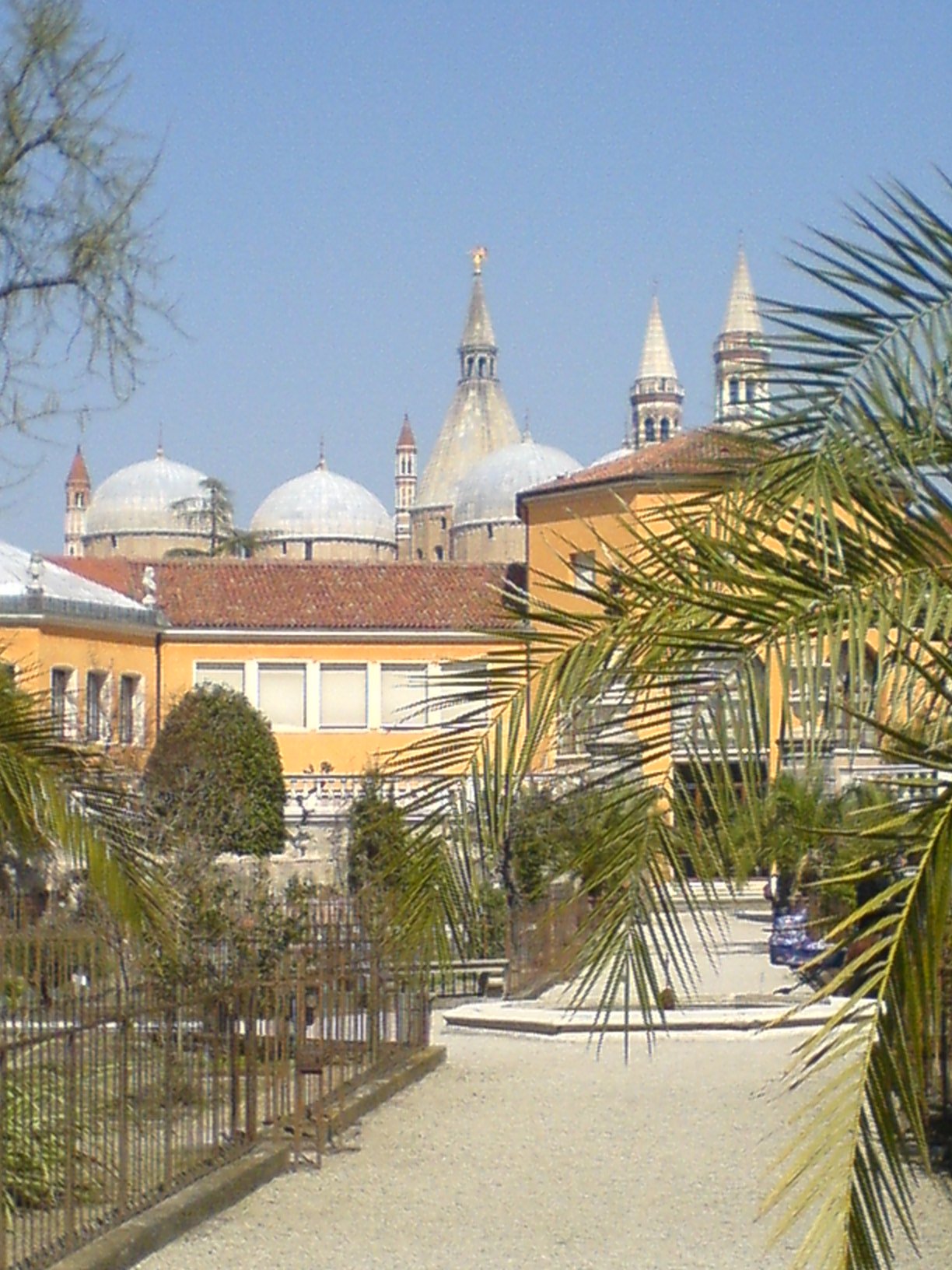
Padova botanical garden
In its own language: Orto botanico di Padova
A historic botanical garden in Padua, Italy, with rare plants and unique collections
Padova botanical garden, founded in 1545 in Padua, Italy, is a historic site known for its diverse plant collections and original Renaissance layout. Managed by the University of Padua, it features medicinal, exotic, and rare plants, and is recognized as a UNESCO World Heritage Site.
- Founded in 1545 for the study of medicinal plants
- Holds over 6,000 plant species from around the world
- Home to Goethe’s palm, planted in 1585
- UNESCO World Heritage Site since 1997
- Features historic greenhouses and Renaissance architecture
What is Padova botanical garden?
Padova botanical garden covers about 22,000 square meters in the city of Padua. Visitors find a geometric layout with a circular central area divided by paths, surrounded by historic walls and gates. The garden holds over 6,000 plant types, including medicinal, poisonous, alpine, aquatic, and Mediterranean species. Notable old trees, such as Goethe’s palm from 1585 and a ginkgo from 1750, are highlights. The grounds also feature greenhouses, a botanic theatre, fountains, sundials, and a central pool for aquatic plants.
The history of Padova botanical garden
The garden was established in 1545 by the Venetian Republic to help students identify medicinal plants and avoid dangerous mistakes. Its design, attributed to Daniele Barbaro, follows a Renaissance pattern of a square within a circle. Over time, the garden expanded its collections through global trade, adding plants from many regions. It became a center for botanical research and teaching, and its layout and collections influenced later gardens across Europe. In 1997, UNESCO recognized it for its role in the development of science and botany.
What there is to see
The garden’s structure is organized around a central circle, divided into four sections by paths aligned to the cardinal points. Flowerbeds are arranged by plant family, use, or habitat. Collections are mostly outdoors, with some plants in greenhouses that maintain historic architectural features. Specialized areas include Mediterranean scrub, alpine gardens, freshwater habitats, and spaces for succulents and orchids. Each plant is labeled with its scientific name and main properties.


When to go
Padova botanical garden serves as a center for research, education, and conservation. University students and researchers use it for studying plant science, while visitors can explore its collections and learn about plant diversity. The garden preserves rare and endangered species and maintains a focus on medicinal and poisonous plants. It is open to the public, offering guided tours and educational activities throughout the year.
Parts and collections
The garden’s collections include plants from the Euganean Hills and the Triveneto region, tropical orchids, insect-eating plants, and a section for endangered species. Historic trees such as the Mediterranean dwarf palm, ancient ginkgo, magnolia, and plane tree are notable. The garden also displays a sectioned elm trunk with visible growth rings and features plants from various climates, including Mediterranean, alpine, and desert habitats.
Why Padova botanical garden matters
Padova botanical garden is recognized by UNESCO for its impact on science, especially botany, medicine, and ecology. It played a key role in the exchange of plant knowledge and the study of medicinal herbs. The garden’s design and collections have influenced botanical gardens worldwide. Statues, fountains, and portraits of famous botanists, such as Linnaeus and Theophrastus, reflect its long academic tradition and cultural heritage.
Questions people ask about Padova botanical garden
Where is the Padova botanical garden located?
The garden is in Padua, a city in the Veneto region of northeastern Italy. It is close to the Basilica of Sant’Antonio and is managed by the University of Padua.
What makes this garden historically important?
It was established in 1545 to teach students about medicinal plants and is the oldest university botanical garden still at its original site. Its collections and design have influenced botanical gardens worldwide.
What can visitors see at the garden?
Visitors can explore collections of medicinal, poisonous, alpine, aquatic, and Mediterranean plants, as well as historic trees, greenhouses, fountains, and educational displays.
Why is it a UNESCO World Heritage Site?
UNESCO recognized the garden for its role in the development of science and its influence on the relationship between nature and culture, as well as its contribution to botany and medicine.
Are there any famous plants in the garden?
Yes, the garden is home to Goethe’s palm, planted in 1585, a ginkgo from 1750, and other ancient trees considered among the oldest of their kind in Europe.
Good reading and sources
- Orto botanico di Padova on WikipediaEncyclopedia
- More photos on Wikimedia CommonsPhotos
- Wikidata recordOpen data
The facts on this page come from the Wikipedia article "Orto botanico di Padova", written by its contributors and used under the CC BY-SA 4.0 licence, and from its Wikidata record (CC0). Phool rewrote the text in its own words, with AI assistance, and compares every page with the article to make sure no passage is copied. It may be reused under the same CC BY-SA 4.0 licence with a link back.
It may contain mistakes. Opening times, prices and bloom dates change: check with the place before you travel. If something is wrong, tell us. Last refreshed 2026-10-03.
More of the same kind
 Place
Tropical Botanical Garden and Research Institute
A major botanical garden and research centre in Thiruvananthapuram, Kerala
Thiruvananthapuram, 🇮🇳 India · Botanical garden
Place
Tropical Botanical Garden and Research Institute
A major botanical garden and research centre in Thiruvananthapuram, Kerala
Thiruvananthapuram, 🇮🇳 India · Botanical garden
 Place
Baldha Gardenবলধা গার্ডেন
A historic botanical garden in Old Dhaka with hundreds of plant species
Dhaka, 🇧🇩 Bangladesh · Botanical garden
Place
Baldha Gardenবলধা গার্ডেন
A historic botanical garden in Old Dhaka with hundreds of plant species
Dhaka, 🇧🇩 Bangladesh · Botanical garden
 Place
Hakone Botanical Garden of Wetlands箱根湿生花園
A garden of wetland and alpine plants in Hakone, Japan
Hakone, 🇯🇵 Japan · Botanical garden
Place
Hakone Botanical Garden of Wetlands箱根湿生花園
A garden of wetland and alpine plants in Hakone, Japan
Hakone, 🇯🇵 Japan · Botanical garden
 Place
Sim's Park, Coonoor
A century-old botanical garden in the Nilgiri hills of Tamil Nadu
Coonoor, 🇮🇳 India · Botanical garden, May
Place
Sim's Park, Coonoor
A century-old botanical garden in the Nilgiri hills of Tamil Nadu
Coonoor, 🇮🇳 India · Botanical garden, May
More from Italy
All the flowers of Italy Place
Hanbury botanical gardens
A historic Mediterranean botanical garden on the Italian Riviera
Ventimiglia, 🇮🇹 Italy · Botanical garden
Place
Hanbury botanical gardens
A historic Mediterranean botanical garden on the Italian Riviera
Ventimiglia, 🇮🇹 Italy · Botanical garden
 Place
Giardino Botanico Fondazione André Heller
A hillside botanical garden above Lake Garda with plants and modern sculpture
Gardone Riviera, 🇮🇹 Italy · Botanical garden
Place
Giardino Botanico Fondazione André Heller
A hillside botanical garden above Lake Garda with plants and modern sculpture
Gardone Riviera, 🇮🇹 Italy · Botanical garden
 Place
Orto botanico di Pisa
Europe’s first university botanical garden, founded in 1544 in Pisa, Italy
Pisa, 🇮🇹 Italy · Botanical garden
Place
Orto botanico di Pisa
Europe’s first university botanical garden, founded in 1544 in Pisa, Italy
Pisa, 🇮🇹 Italy · Botanical garden
 Place
Orto Botanico di Brera
A historic botanical garden in the heart of Milan
Milan, 🇮🇹 Italy · Botanical garden
Place
Orto Botanico di Brera
A historic botanical garden in the heart of Milan
Milan, 🇮🇹 Italy · Botanical garden