
Shalimar Bagh
A Mughal-era garden of terraces, fountains and chinar trees by Dal Lake, Srinagar
Shalimar Bagh is a historic Mughal garden in Srinagar, India, set on the northeast shore of Dal Lake. Laid out in 1619, it features three main terraces with flowing water, fountains, and avenues of chinar trees. Visitors come to see its Persian-inspired design, marble pavilion, and seasonal leaf colours.
- Built in 1619 as a royal Mughal garden by Dal Lake in Srinagar
- Features three terraces, 410 fountains, and chinar tree avenues
- Known for its marble pavilions and arched niches behind waterfalls
- Inspired later Shalimar gardens in Lahore and Delhi
What is Shalimar Bagh?
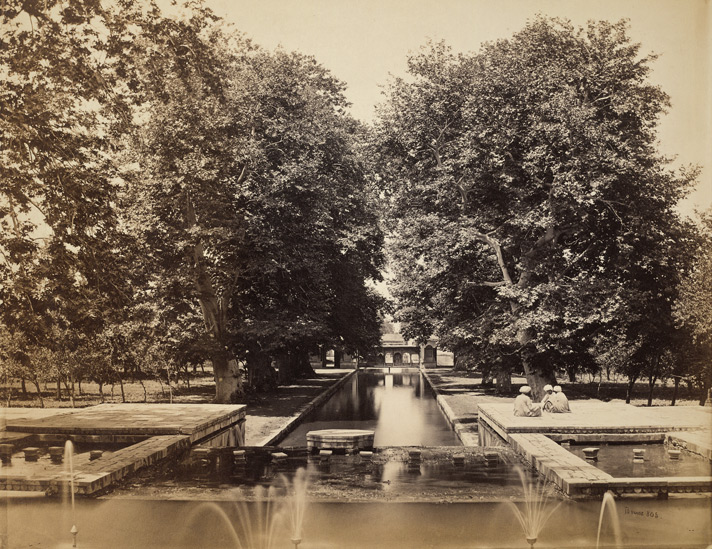
Shalimar Bagh is a large formal garden covering over 12 hectares, laid out in three main terraces linked by a central water channel. Each terrace has its own fountains and is lined with tall chinar (oriental plane) trees, which turn brilliant colours in autumn and spring. The garden includes marble pavilions, carved stone platforms, and arched niches behind waterfalls, which once held oil lamps and now display flower pots. Broad walkways, water features, and views of the surrounding mountains make it a striking place to visit.
The history of Shalimar Bagh
The garden was created in 1619 by Jahangir, a Mughal emperor, who expanded an older site into a royal retreat called Farah Baksh. Later, under Shah Jahan, the garden was enlarged and renamed Faiz Baksh. Over time, it served as a summer residence for Mughal rulers and their courts, and later as a pleasure ground for Sikh and Dogra rulers. The name 'Shalimar' may come from Persian or Kashmiri words, though its exact origin is uncertain. The garden's design adapts Persian garden principles to the local landscape.
What there is to see
Shalimar Bagh is built on flat land with a rectangular plan, shaped by a central water channel called the Shah Nahar. Water flows from the highest terrace down through each level, feeding hundreds of fountains. The garden is divided into three main terraces, each with its own purpose and architecture, including halls for public and private audiences and a secluded area for the royal women. Chinar and aspen trees line the paths, and canals connect the garden to Dal Lake.



When to go
Today, Shalimar Bagh is a public park managed by the Jammu and Kashmir Tourism Department. It draws visitors throughout the year, but especially in spring and autumn when the chinar leaves change colour. The garden's layout, water features, and pavilions are admired for their beauty and historical significance. In the past, it was a royal retreat and a place for court gatherings and receptions.
Parts and collections
Other gardens with the name 'Shalimar' were later built in Lahore (1641) and Delhi (1653), following the example of Srinagar's garden. While each has its own features, the Srinagar Shalimar Bagh is the oldest and served as a model for later Mughal gardens in the region.
Why Shalimar Bagh matters
Shalimar Bagh has inspired poetry and literature, including the well-known 'Kashmiri Song' and Salman Rushdie's novel 'Shalimar the Clown.' The garden is famous for its Persian inscription, which speaks of paradise on earth. Its design and atmosphere have made it a symbol of Mughal garden art and a landmark of Srinagar.
Plan a visit

Questions people ask about Shalimar Bagh
Where is Shalimar Bagh located?
Shalimar Bagh is in Srinagar, in the Indian union territory of Jammu and Kashmir, on the northeast side of Dal Lake.
Who built Shalimar Bagh and when?
The garden was created in 1619 by Mughal emperor Jahangir, who expanded an older site into a royal retreat.
What is special about the garden's design?
It has three main terraces connected by a central water channel, with hundreds of fountains, marble pavilions, and tree-lined walkways, following Persian garden traditions.
When is the best time to visit Shalimar Bagh?
Spring and autumn are especially popular, as the chinar trees display vivid leaf colours during these seasons.
Has Shalimar Bagh influenced other gardens?
Yes, it served as a model for later Mughal gardens named Shalimar in Lahore and Delhi.
Good reading and sources
- Shalimar Bagh, Srinagar on WikipediaEncyclopedia
- More photos on Wikimedia CommonsPhotos
- Wikidata recordOpen data
The facts on this page come from the Wikipedia article "Shalimar Bagh, Srinagar", written by its contributors and used under the CC BY-SA 4.0 licence, and from its Wikidata record (CC0). Phool rewrote the text in its own words, with AI assistance, and compares every page with the article to make sure no passage is copied. It may be reused under the same CC BY-SA 4.0 licence with a link back.
It may contain mistakes. Opening times, prices and bloom dates change: check with the place before you travel. If something is wrong, tell us. Last refreshed 2026-10-03.
More of the same kind
 Place
AlhambraLa Alhambra
Medieval palace and fortress complex overlooking Granada, Spain
Granada, 🇪🇸 Spain · Flower garden
Place
AlhambraLa Alhambra
Medieval palace and fortress complex overlooking Granada, Spain
Granada, 🇪🇸 Spain · Flower garden
 Place
Achabal Gardens
A historic Mughal garden with springs and a waterfall in Achabal, Jammu and Kashmir
Achabal, 🇮🇳 India · Flower garden
Place
Achabal Gardens
A historic Mughal garden with springs and a waterfall in Achabal, Jammu and Kashmir
Achabal, 🇮🇳 India · Flower garden
 Place
Ward's LakeNan Polok
A man-made lake and garden in the heart of Shillong, Meghalaya
Shillong, 🇮🇳 India · Flower garden
Place
Ward's LakeNan Polok
A man-made lake and garden in the heart of Shillong, Meghalaya
Shillong, 🇮🇳 India · Flower garden
 Place
International Garden Festival
Britain’s first major international garden festival, held in Liverpool in 1984
Liverpool, 🇬🇧 United Kingdom · Festival or show, May to Oct
Place
International Garden Festival
Britain’s first major international garden festival, held in Liverpool in 1984
Liverpool, 🇬🇧 United Kingdom · Festival or show, May to Oct
More from India
All the flowers of India Place
Chashme Shahi
A Mughal garden built around a spring in Srinagar, Kashmir
Srinagar, 🇮🇳 India · Flower garden, Mar to Nov
Place
Chashme Shahi
A Mughal garden built around a spring in Srinagar, Kashmir
Srinagar, 🇮🇳 India · Flower garden, Mar to Nov
 Place
Sim's Park, Coonoor
A century-old botanical garden in the Nilgiri hills of Tamil Nadu
Coonoor, 🇮🇳 India · Botanical garden, May
Place
Sim's Park, Coonoor
A century-old botanical garden in the Nilgiri hills of Tamil Nadu
Coonoor, 🇮🇳 India · Botanical garden, May
 Place
Rose garden
A public garden devoted to growing and displaying many kinds of roses
L'Haÿ-les-Roses, 🇫🇷 France · Flower garden
Place
Rose garden
A public garden devoted to growing and displaying many kinds of roses
L'Haÿ-les-Roses, 🇫🇷 France · Flower garden
 Place
Yadavindra Gardens
A 17th-century Mughal garden with seven terraces in Pinjore, Haryana
Panchkula, 🇮🇳 India · Flower garden, Apr to Dec
Place
Yadavindra Gardens
A 17th-century Mughal garden with seven terraces in Pinjore, Haryana
Panchkula, 🇮🇳 India · Flower garden, Apr to Dec