
Yadavindra Gardens
A 17th-century Mughal garden with seven terraces in Pinjore, Haryana
Yadavindra Gardens, or Pinjore Gardens, is a historic Mughal-style garden in Pinjore, Haryana, India. Built in the 17th century and restored by the Patiala dynasty, it features seven terraced levels, palaces, fountains, tree groves, and hosts annual festivals like Baisakhi and the Mango Mela.
- Seven terraced garden built in the 17th century
- Hosts the annual Pinjore Mango Mela and Baisakhi Festival
- Features Mughal and Rajasthani-style palaces and fountains
- Restored by the Patiala dynasty and named after Maharaja Yadavindra Singh
- Includes a heritage train and open-air museum
What is Yadavindra Gardens?
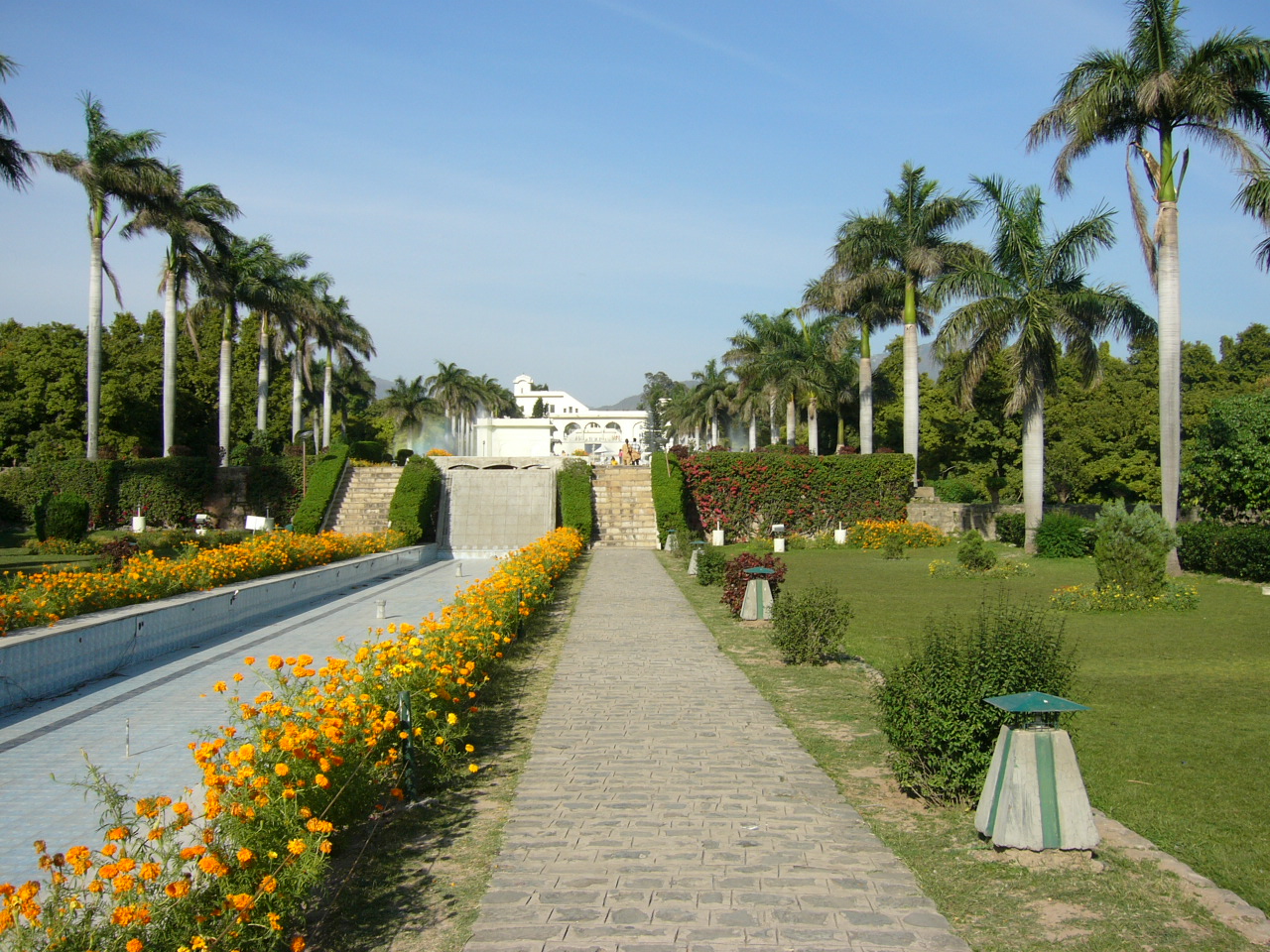
Yadavindra Gardens is a large, historic Mughal-style garden spread over seven terraces at the foothills of the Himalayas in Pinjore. Visitors enter through the main gate onto the highest terrace, where palaces like the Shish Mahal (palace of glass) and Hawa Mahal (airy palace) stand. The garden features arched gateways, painted pavilions, cypress-lined flowerbeds, fruit tree groves, fountains, and an open-air theatre. At night, the entire complex is illuminated. There is also a heritage train and an open-air site museum.
The history of Yadavindra Gardens
The garden was built in the 17th century by Fidai Khan Koka, foster-brother to Mughal Emperor Aurangzeb, as a summer retreat. Its design follows the Mughal garden tradition, with pavilions and terraces reserved for royalty. A local legend tells how the original Mughal owners were tricked into abandoning the garden by being led to believe the area caused illness. The Patiala dynasty later acquired and restored the garden, which had become overgrown, and used its terraces to grow roses for perfume. It was renamed for Maharaja Yadavindra Singh, who restored it in the 20th century.
What there is to see
The garden is laid out in seven terraces, each with distinct features. The first terrace has palaces, the second has arched doorways and painted halls, and the third is planted with cypress trees and flowerbeds. Lower terraces contain fruit groves, fountains, and a water palace. The lowest terrace has an open-air theatre. Pathways connect the garden to the adjacent Bhima Devi Temple Complex and the site museum. At night, the gardens are lit up for visitors.


When to go
Yadavindra Gardens is open to visitors year-round, but is especially lively during its three main festivals: the Baisakhi Festival in April, the Mango Mela in July, and the Heritage Festival in December. These events feature cultural performances, craft bazaars, food courts, and competitions. The Mango Mela draws mango growers and enthusiasts from across India for contests and exhibitions. The garden is also a popular filming location and a site for local recreation.
Parts and collections
The garden’s layout is modeled after other famous Mughal gardens like Shalimar Bagh in Kashmir, but is unique for its seven terraces and the blend of Rajasthani and Mughal architectural styles in its palaces. Over time, the garden has been restored and adapted, with new features like the heritage train and the open-air museum added for visitors.
Why Yadavindra Gardens matters
Yadavindra Gardens is an important example of Mughal garden design in northern India and reflects the region’s history of royal patronage and cultural exchange. Its festivals celebrate local agriculture, especially mangoes, and showcase regional arts and crafts. The garden’s restoration and continued use for public events highlight its role as a living heritage site.
Questions people ask about Yadavindra Gardens
Where is Yadavindra Gardens located?
Yadavindra Gardens is in Pinjore, Haryana, India, near Panchkula and close to the Chandigarh-Shimla Expressway. It is about 22 km from Chandigarh and easily accessible by road, rail, and air.
What is special about the garden’s design?
The garden is laid out in seven terraces, each with its own features such as palaces, fountains, flowerbeds, and an open-air theatre. Its architecture blends Mughal and Rajasthani styles.
What festivals are held at Yadavindra Gardens?
Major festivals include the Pinjore Baisakhi Festival in April, the Mango Mela in July, and the Heritage Festival in December. These feature cultural performances, competitions, and food and craft bazaars.
Who built Yadavindra Gardens?
The garden was built in the 17th century by Fidai Khan Koka, foster-brother to Mughal Emperor Aurangzeb, as a summer retreat.
What is the historical significance of the garden?
Yadavindra Gardens is a notable example of Mughal garden architecture, later restored by the Patiala dynasty. It reflects the region’s royal history and is now a site for cultural festivals and heritage tourism.
Good reading and sources
- Yadavindra Gardens on WikipediaEncyclopedia
- More photos on Wikimedia CommonsPhotos
- Wikidata recordOpen data
The facts on this page come from the Wikipedia article "Yadavindra Gardens", written by its contributors and used under the CC BY-SA 4.0 licence, and from its Wikidata record (CC0). Phool rewrote the text in its own words, with AI assistance, and compares every page with the article to make sure no passage is copied. It may be reused under the same CC BY-SA 4.0 licence with a link back.
It may contain mistakes. Opening times, prices and bloom dates change: check with the place before you travel. If something is wrong, tell us. Last refreshed 2026-10-03.
More of the same kind
 Place
AlhambraLa Alhambra
Medieval palace and fortress complex overlooking Granada, Spain
Granada, 🇪🇸 Spain · Flower garden
Place
AlhambraLa Alhambra
Medieval palace and fortress complex overlooking Granada, Spain
Granada, 🇪🇸 Spain · Flower garden
 Place
Garden of Morning Calm아침고요수목원
A large Korean garden with themed sections and seasonal festivals
Gapyeong, 🇰🇷 South Korea · Flower garden
Place
Garden of Morning Calm아침고요수목원
A large Korean garden with themed sections and seasonal festivals
Gapyeong, 🇰🇷 South Korea · Flower garden
 Place
Hakone Botanical Garden of Wetlands箱根湿生花園
A garden of wetland and alpine plants in Hakone, Japan
Hakone, 🇯🇵 Japan · Botanical garden
Place
Hakone Botanical Garden of Wetlands箱根湿生花園
A garden of wetland and alpine plants in Hakone, Japan
Hakone, 🇯🇵 Japan · Botanical garden
 Place
Rikugi-en六義園
An Edo-period landscape garden with pond, hill, and seasonal displays in Tokyo
Bunkyō, 🇯🇵 Japan · Flower garden
Place
Rikugi-en六義園
An Edo-period landscape garden with pond, hill, and seasonal displays in Tokyo
Bunkyō, 🇯🇵 Japan · Flower garden
More from India
All the flowers of India Place
Chashme Shahi
A Mughal garden built around a spring in Srinagar, Kashmir
Srinagar, 🇮🇳 India · Flower garden, Mar to Nov
Place
Chashme Shahi
A Mughal garden built around a spring in Srinagar, Kashmir
Srinagar, 🇮🇳 India · Flower garden, Mar to Nov
 Place
Shalimar Bagh
A Mughal-era garden of terraces, fountains and chinar trees by Dal Lake, Srinagar
Srinagar, 🇮🇳 India · Flower garden
Place
Shalimar Bagh
A Mughal-era garden of terraces, fountains and chinar trees by Dal Lake, Srinagar
Srinagar, 🇮🇳 India · Flower garden
 Place
Sim's Park, Coonoor
A century-old botanical garden in the Nilgiri hills of Tamil Nadu
Coonoor, 🇮🇳 India · Botanical garden, May
Place
Sim's Park, Coonoor
A century-old botanical garden in the Nilgiri hills of Tamil Nadu
Coonoor, 🇮🇳 India · Botanical garden, May
 Place
Achabal Gardens
A historic Mughal garden with springs and a waterfall in Achabal, Jammu and Kashmir
Achabal, 🇮🇳 India · Flower garden
Place
Achabal Gardens
A historic Mughal garden with springs and a waterfall in Achabal, Jammu and Kashmir
Achabal, 🇮🇳 India · Flower garden