
Takatō Castle
In its own language: 高遠城
A historic Japanese castle ruin famed for spring cherry blossoms in Ina, Nagano
Takatō Castle is a 16th-century Japanese hilltop castle in Ina, Nagano Prefecture. Though now mostly ruins, its grounds are known for cherry blossoms planted in the Meiji period, drawing visitors each spring to the Takato Castle Ruins Park.
- Site of a 16th-century Japanese castle built by Takeda Shingen
- Famous for cherry blossoms planted in the Meiji period
- Listed as a National Historic Site of Japan
- One of Japan’s top three cherry blossom viewing spots
What is Takatō Castle?
Takatō Castle is now a historic park with remnants of its original moats, stone ramparts, and reconstructed gates. The site sits on a hill overlooking the Ina Valley and rivers, surrounded by thousands of cherry trees that bloom in spring. Visitors find walking paths, the restored Ōtemon gate, and the Shintokukan, a former han school from the 19th century. Most original castle buildings are gone, but the landscape and seasonal blossoms create a striking scene.
The history of Takatō Castle
The castle was built in the 16th century during the Sengoku period by Takeda Shingen, a powerful warlord. Its hilltop location was chosen for strategic control over southern Shinano Province. The site had earlier fortifications held by the Takatō clan. Over centuries, the castle changed hands between major clans, including the Takeda, Oda, Tokugawa, and Naitō, reflecting the turbulent history of feudal Japan. After the Meiji Restoration, the castle was dismantled and cherry trees were planted, turning the site into a park.
What there is to see
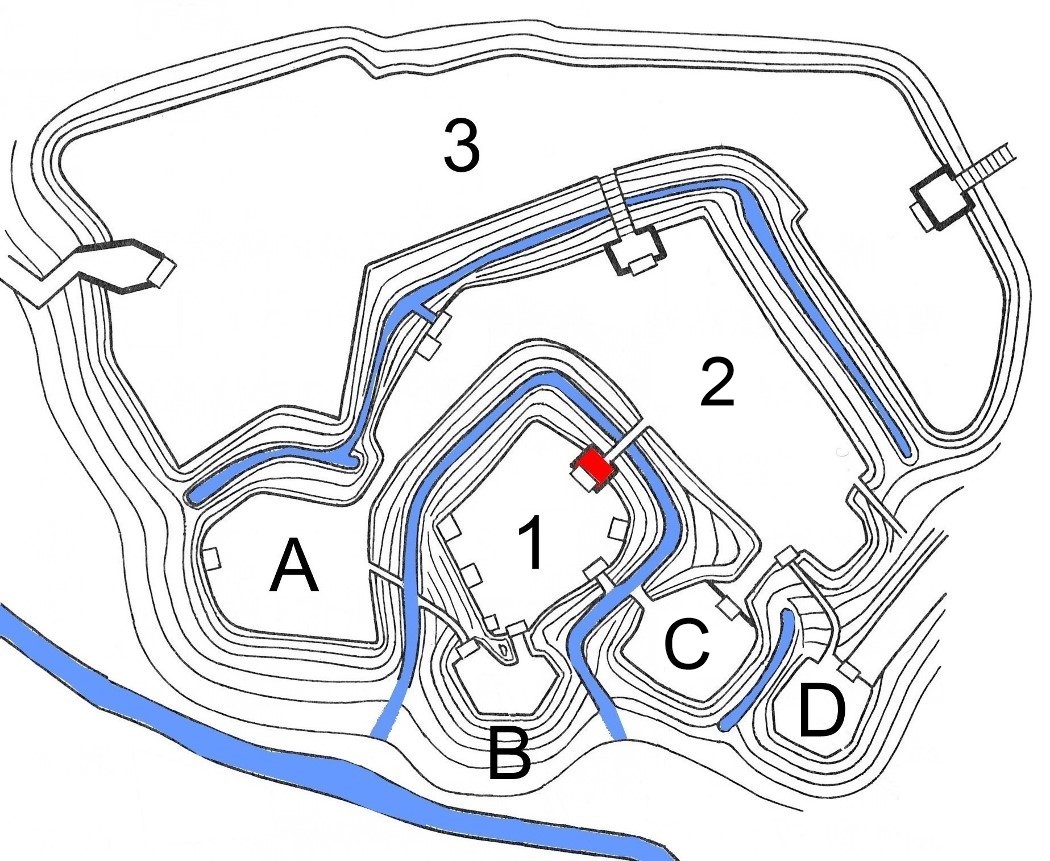
Today, the park is best known for its cherry blossoms, planted in the Meiji period after the castle's demolition. The grounds feature original earthworks, moats, and some reconstructed structures. The main gate, once relocated, was returned to its original position in 1984. The park layout follows the old castle’s defensive rings, with paths winding through the cherry trees and historic remains.
When to go
The main attraction is the cherry blossom season in spring, when thousands visit for hanami (flower viewing). The park is open to the public year-round, but the best time to visit is during the sakura bloom, considered among Japan’s top three cherry blossom spots. Outside of blossom season, visitors can explore the ruins, the restored gate, and the historic school building.
Parts and collections
Takatō Castle is also known as Kabuto Castle. The park’s cherry trees are a distinctive local variety. The castle’s defensive layout included several baileys and enclosures, some of which are still visible as earthworks. Surviving gates and the han school represent different periods of the site’s long history.
Why Takatō Castle matters
Takatō Castle Ruins Park is celebrated as one of Japan’s three best cherry blossom viewing spots, alongside Hirosaki Castle and Mount Yoshino. It is listed as a National Historic Site and was named one of the 100 Fine Castles of Japan. The annual cherry blossom season is a major cultural event, drawing visitors from across the country.
The flowers of Takatō Castle

Questions people ask about Takatō Castle
Where is Takatō Castle located?
Takatō Castle is in Ina city, in southern Nagano Prefecture, Japan. The site sits on a hill overlooking the Ina Valley and two rivers.
What is Takatō Castle known for today?
Today, it is best known for its cherry blossoms, which attract many visitors each spring to the Takato Castle Ruins Park.
What remains of the original castle?
Most original structures are gone, but parts of the moats, stone ramparts, and some gates remain. The main gate has been restored, and the former han school still stands.
When is the best time to visit Takatō Castle Ruins Park?
The best time to visit is in spring during the cherry blossom season, when the park is filled with blooming sakura trees.
What is the historical significance of Takatō Castle?
Takatō Castle played a key role in regional power struggles during the Sengoku and Edo periods, changing hands among major clans such as the Takeda, Oda, Tokugawa, and Naitō.
Good reading and sources
- Takatō Castle on WikipediaEncyclopedia
- More photos on Wikimedia CommonsPhotos
- Wikidata recordOpen data
The facts on this page come from the Wikipedia article "Takatō Castle", written by its contributors and used under the CC BY-SA 4.0 licence, and from its Wikidata record (CC0). Phool rewrote the text in its own words, with AI assistance, and compares every page with the article to make sure no passage is copied. It may be reused under the same CC BY-SA 4.0 licence with a link back.
It may contain mistakes. Opening times, prices and bloom dates change: check with the place before you travel. If something is wrong, tell us. Last refreshed 2026-10-03.
More of the same kind
 Place
Hallim Park한림공원
A large botanical park with lava caves and themed gardens on Jeju Island
Hallim, 🇰🇷 South Korea · Botanical garden
Place
Hallim Park한림공원
A large botanical park with lava caves and themed gardens on Jeju Island
Hallim, 🇰🇷 South Korea · Botanical garden
 Place
Phu Hin Rong Kla National Parkอุทยานแห่งชาติภูหินร่องกล้า
A cool, mountainous national park in northern Thailand with forests and waterfalls
Loei, 🇹🇭 Thailand · Bloom site
Place
Phu Hin Rong Kla National Parkอุทยานแห่งชาติภูหินร่องกล้า
A cool, mountainous national park in northern Thailand with forests and waterfalls
Loei, 🇹🇭 Thailand · Bloom site
 Place
West Lake西湖
The historic lakeside landscape at the heart of Hangzhou, China
Hangzhou, 🇨🇳 China · Flower garden
Place
West Lake西湖
The historic lakeside landscape at the heart of Hangzhou, China
Hangzhou, 🇨🇳 China · Flower garden
 Place
Deosai National Parkدیوسائی نیشنل پارک
A vast alpine plateau in northern Pakistan, famed for wildflowers and wildlife
Astore, 🇵🇰 Pakistan · Bloom site
Place
Deosai National Parkدیوسائی نیشنل پارک
A vast alpine plateau in northern Pakistan, famed for wildflowers and wildlife
Astore, 🇵🇰 Pakistan · Bloom site
More from Japan
All the flowers of Japan Place
Biei美瑛町
A Hokkaido town famous for its flower fields and rolling hills
Patchwork Road, 🇯🇵 Japan · Bloom site, Jul to Aug
Place
Biei美瑛町
A Hokkaido town famous for its flower fields and rolling hills
Patchwork Road, 🇯🇵 Japan · Bloom site, Jul to Aug
 Place
Huis Ten Boschハウステンボス
A Dutch-themed park with canals, windmills, and seasonal flower gardens in Nagasaki, Japan
Sasebo, 🇯🇵 Japan · Flower garden
Place
Huis Ten Boschハウステンボス
A Dutch-themed park with canals, windmills, and seasonal flower gardens in Nagasaki, Japan
Sasebo, 🇯🇵 Japan · Flower garden
 Place
Rikugi-en六義園
An Edo-period landscape garden with pond, hill, and seasonal displays in Tokyo
Bunkyō, 🇯🇵 Japan · Flower garden
Place
Rikugi-en六義園
An Edo-period landscape garden with pond, hill, and seasonal displays in Tokyo
Bunkyō, 🇯🇵 Japan · Flower garden
 Place
Tsuruma Park鶴舞公園
Nagoya’s city park known for cherry blossoms and a historic fountain tower
Nagoya, 🇯🇵 Japan · Flower garden
Place
Tsuruma Park鶴舞公園
Nagoya’s city park known for cherry blossoms and a historic fountain tower
Nagoya, 🇯🇵 Japan · Flower garden