
Cherry blossom
Prunus subgenus Cerasus
In its own language: 桜
The spring-blooming flower of ornamental cherry trees, central to Japan’s hanami custom
Cherry blossom, or sakura, is the flower of ornamental cherry trees in the Prunus subgenus Cerasus. Most common in Japan, these trees are grown for their showy spring flowers, which range from white to deep pink and sometimes have a light vanilla-like scent. Cherry blossom viewing, known as hanami, is a major tradition in Japan.
- Cherry blossom is Japan’s national flower and central to hanami festivals.
- Most ornamental cherry trees are cultivars bred for their flowers, not fruit.
- The Yoshino cherry is the most widely planted variety for viewing.
- Blooming season moves northward across Japan, tracked by forecasts.
- Some cherry trees in Japan are over 1,000 years old and considered sacred.
What does Cherry blossom look like?
Cherry blossoms are the flowers of ornamental cherry trees, mainly from the Prunus subgenus Cerasus. The flowers are usually white or pink, sometimes deep pink, and can be single or double-petalled. Some have a light vanilla-like scent due to coumarin. Blossoms grow in clusters along the branches, often covering the whole tree in spring. The trees themselves can become large, with spreading crowns, and are planted in parks, gardens, and along streets.
Where does Cherry blossom come from?
Wild cherry trees are native to East Asia, especially Japan, where several species with large, showy flowers grow close to human settlements. Cultivation for ornamental blossoms began in Japan, with many varieties selected and bred since at least the 14th century. The Oshima cherry, native to Japan, was especially important in developing new cultivars. Cherry blossom trees were later introduced to Europe and North America, notably after Japan gifted trees to the United States in 1912.
When and how Cherry blossom blooms
Cherry blossom trees bloom mainly in spring, with some rare varieties flowering in winter. Most are propagated by grafting, which preserves the traits of selected cultivars. Trees are grown in parks, gardens, and along streets, requiring space for their wide crowns. The main blooming season moves northward through Japan from January in Okinawa to April in Hokkaido, tracked by forecasts.


How Cherry blossom is used
Cherry blossoms are central to hanami, the Japanese custom of gathering under blooming trees for picnics and celebrations. The trees are planted outside schools, public buildings, and in parks. Some old trees are regarded as sacred, especially at shrines and temples. The flowers are also symbols in art and poetry, and are sometimes used in religious contexts in Shinto and Buddhist traditions.
Kinds of Cherry blossom
There are hundreds of cherry blossom cultivars, especially in Japan. Notable types include the Yoshino cherry, widely planted for hanami, and Kanzan, popular in Western countries. Some cultivars have single flowers, others double; some bloom early, others late. The Oshima cherry and Yamazakura are important wild species. Newer cultivars like Jindai-akebono and Yoko are being planted for their disease resistance and different flower colors.
What Cherry blossom means
Cherry blossoms are a national symbol of Japan and central to the tradition of hanami. They appear in poetry, art, and as emblems of schools and public spaces. The blooming season is widely anticipated, with forecasts tracking its progress. Some ancient trees are revered as sacred. The cherry blossom is also a symbol of the fleeting nature of life in Japanese culture.
Where Cherry blossom is used and seen
 National Cherry Blossom FestivalSpring festival in Washington, D.C. celebrating Japanese cherry trees and friendship
 International Cherry Blossom FestivalA ten-day spring festival in Macon, Georgia celebrating blooming cherry trees
 Yuyuantan ParkA large Beijing park famous for its cherry blossom in spring
 Yangmingshan National ParkTaipei’s volcanic park with cherry blossoms, hot springs, and hiking trails
 Da LatVietnam’s highland city famous for flowers, cool climate, and French villas
 KanzashiTraditional Japanese hair ornaments, often crafted as folded silk flowers
 HanafudaJapanese playing cards with flower designs used for traditional games
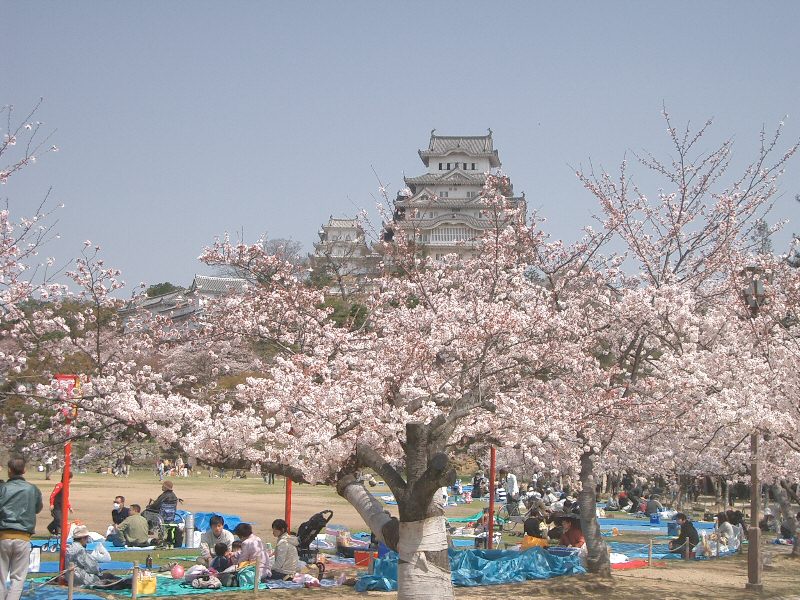 HanamiThe Japanese tradition of gathering to enjoy cherry blossoms in spring
Traditions that use it
Where to see Cherry blossom
 🇮🇳 Shillong · NovemberAutumn cherry blossom in ShillongWild Himalayan cherry trees turn the hill capital of Meghalaya pink in November.
🇯🇵 Tokyo · Mar to AprCherry blossom season in TokyoAbout a week of pale pink along moats, rivers and parks, and the picnics that go with it.
🇮🇳 Shillong · NovemberAutumn cherry blossom in ShillongWild Himalayan cherry trees turn the hill capital of Meghalaya pink in November.
🇯🇵 Tokyo · Mar to AprCherry blossom season in TokyoAbout a week of pale pink along moats, rivers and parks, and the picnics that go with it. 🇯🇵 Tokyo · Feb to NovShinjuku Gyoen through the seasonsA large former imperial garden in central Tokyo with a long cherry season and an autumn chrysanthemum show.
 🇯🇵 Kyoto · Mar to AprPhilosopher's Path in cherry seasonA canal-side walk of about two kilometres in eastern Kyoto, lined with cherry trees.
 🇯🇵 Hirosaki · Apr to MayHirosaki Castle cherry blossomA northern castle park with thousands of cherry trees and moats that turn pink with fallen petals.
 🇯🇵 Kanazawa · All yearKenroku-enOne of Japan's most celebrated landscape gardens, with something in flower in almost every season.
Days and festivals
Questions people ask about Cherry blossom
Where do cherry blossoms come from?
Cherry blossoms are native to East Asia, especially Japan, where wild species with large, showy flowers grow. The tradition of cultivating ornamental cherry trees for their blossoms began in Japan and later spread to other countries.
What do cherry blossoms symbolise?
In Japanese culture, cherry blossoms symbolise the fleeting nature of life, beauty, and renewal. They are central to the custom of hanami and are widely used in art and poetry.
When do cherry blossoms bloom?
Most cherry blossoms bloom in spring, with the season starting in southern Japan in January and reaching northern regions like Hokkaido by April. Some rare varieties bloom in winter.
How are cherry blossom trees used?
Cherry blossom trees are planted in parks, gardens, and along streets for their flowers. They are central to hanami celebrations and are also found at schools, shrines, and temples.
What are some well-known cherry blossom varieties?
The Yoshino cherry is the most common for viewing in Japan. Kanzan is popular in Western countries. Other important types include Oshima cherry, Yamazakura, and newer cultivars like Jindai-akebono and Yoko.
Good reading and sources
- The Japan Times - News On Japan, Business News, Opinion, Sports, Entertainment And MoreThe Japan Times, Article
- Sakura: Cherry Blossoms in Japanese Cultural History - Sakura: Cherry Blossoms as Living Symbols of Friendship | ExhibitionsLibrary of Congress, Article
- Japan's cherry blossom 'earliest peak since 812'BBC, Article
- Cherry blossom on WikipediaEncyclopedia
- More photos on Wikimedia CommonsPhotos
- Wikidata recordOpen data
The facts on this page come from the Wikipedia article "Cherry blossom", written by its contributors and used under the CC BY-SA 4.0 licence, and from its Wikidata record (CC0). EveryPhool rewrote the text in its own words, with AI assistance, and compares every page with the article to make sure no passage is copied. It may be reused under the same CC BY-SA 4.0 licence with a link back.
It may contain mistakes. It is not medical or foraging advice: many flowers are poisonous, and traditional uses are reported, not recommended. If something is wrong, tell us. Last refreshed 2026-10-03.
More of the same kind
 WillowSalix
Deciduous trees and shrubs with early spring catkin flowers
Salix · Wildflower
WillowSalix
Deciduous trees and shrubs with early spring catkin flowers
Salix · Wildflower
 AlmondPrunus amygdalus
A Mediterranean tree grown for its fragrant spring flowers and edible seeds
🇮🇷 Iran and 6 more · Flowering tree
AlmondPrunus amygdalus
A Mediterranean tree grown for its fragrant spring flowers and edible seeds
🇮🇷 Iran and 6 more · Flowering tree
 ApricotPrunus armeniaca
A small fruit tree with early white to pink blossoms and golden-orange fruit
🇨🇳 China and 6 more · Flowering tree
ApricotPrunus armeniaca
A small fruit tree with early white to pink blossoms and golden-orange fruit
🇨🇳 China and 6 more · Flowering tree
 AlderAlnus
Deciduous trees and shrubs with cone-like catkins, found near water in cooler regions
Alnus · Flowering tree
AlderAlnus
Deciduous trees and shrubs with cone-like catkins, found near water in cooler regions
Alnus · Flowering tree
More from Japan
All the flowers of Japan RoseRosa
Prickly flowering shrubs grown across the world for fragrant blossoms and rose hips
🇨🇳 China and 7 more · Flowering shrub
RoseRosa
Prickly flowering shrubs grown across the world for fragrant blossoms and rose hips
🇨🇳 China and 7 more · Flowering shrub
 PeachPrunus persica
A flowering fruit tree from China, grown for its pink blossoms and sweet fruit
🇨🇳 China and 7 more · Flowering tree
PeachPrunus persica
A flowering fruit tree from China, grown for its pink blossoms and sweet fruit
🇨🇳 China and 7 more · Flowering tree
 BirchBetula
Slender trees with papery bark found across the northern world
🇨🇳 China and 7 more · Wildflower
BirchBetula
Slender trees with papery bark found across the northern world
🇨🇳 China and 7 more · Wildflower
 Chrysanthemum菊花
Autumn-blooming flower with thousands of varieties, cherished in East Asia and beyond
🇨🇳 China and 6 more · Wildflower
Chrysanthemum菊花
Autumn-blooming flower with thousands of varieties, cherished in East Asia and beyond
🇨🇳 China and 6 more · Wildflower