
Willow
Salix, family Salicaceae
Deciduous trees and shrubs with early spring catkin flowers
Willows are a group of about 350 species of trees and shrubs in the genus Salix, found mainly in moist, cold and temperate regions. Their long, slender leaves and early spring catkin flowers make them familiar in landscapes and gardens, and their flexible wood and bark have been used for weaving, tools, and traditional remedies.
- Willows include about 350 species of trees and shrubs in the genus Salix.
- They flower early in spring, often before the leaves appear.
- Willows are easily grown from cuttings or broken branches.
- Their bark and leaves have a long history in folk medicine.
- The weeping willow is a well-known ornamental hybrid.
What does Willow look like?
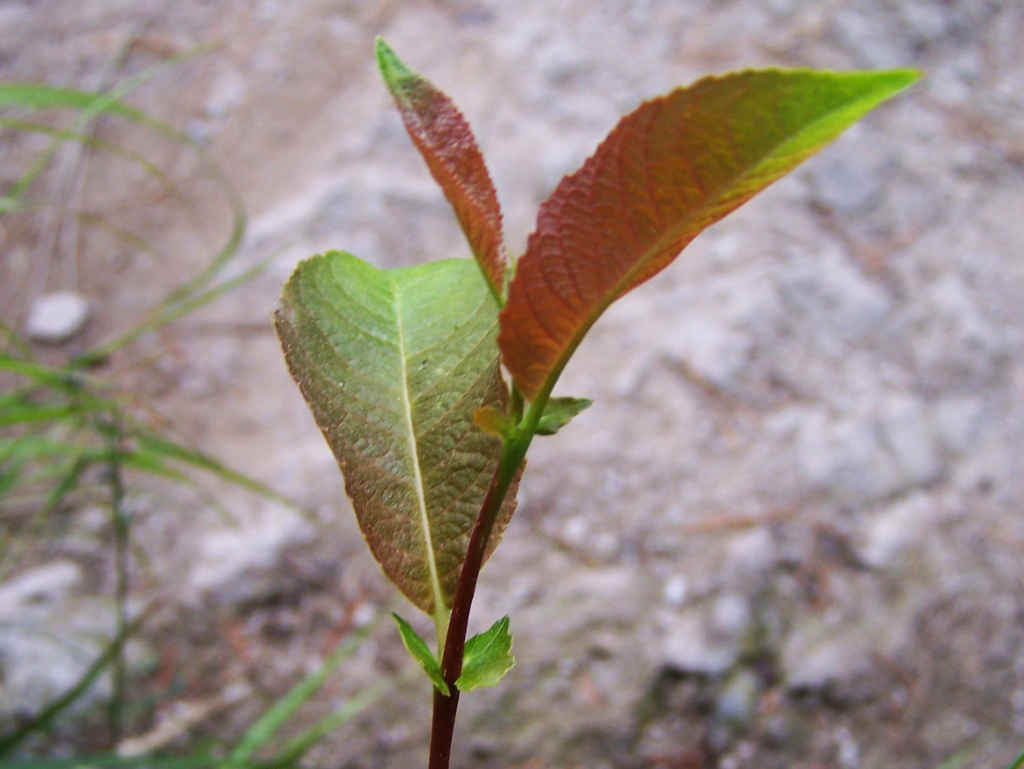
Willows are mostly deciduous trees and shrubs, with some species growing as low, creeping plants and others reaching the size of large trees. Their leaves are usually long and narrow, but can also be oval or round, with serrated edges and a range of green shades. The branches are slender and flexible, and the roots are tough and fibrous. Willows produce catkin flowers in early spring, before or just as the leaves appear; male and female flowers grow on separate plants, and the catkins are often drooping and covered in fine hairs.
Where does Willow come from?
The genus Salix, named by Linnaeus in 1753, has ancient roots, with fossils dating to the early Eocene in North America and the Early Oligocene in Europe. The Latin name 'salix' was used by the Romans, possibly from Celtic words meaning 'near water', reflecting the plant's preference for moist habitats. Willows are native to cold and temperate regions, thriving along rivers, lakes, and wetlands. Over time, they have spread widely and hybridised, resulting in many species and varieties.
When and how Willow blooms
Willows leaf out very early in spring, sometimes as soon as daytime temperatures reach 10°C for several days. They flower before or with the first leaves, producing catkins on separate male and female plants. Willows grow easily from cuttings or broken branches that touch moist ground, and their seeds, though short-lived, are dispersed by wind and water. They are cultivated for landscaping, hedges, and basketry, and are often found along watercourses.



How Willow is used
People have used willows for centuries. Native Americans wove baskets and made tools from the shoots and bark. In gardens and cities, willows are planted for their graceful shape and early spring flowers. The bark and leaves have a long history in folk medicine, mentioned in ancient Egyptian, Greek, and Roman texts for various remedies. In some regions, willows are planted for erosion control, though they can become invasive outside their native range.
Kinds of Willow
There are around 350 species of willow, with many hybrids and cultivars. Some, like the dwarf willow, grow just a few centimetres tall, while others, such as the weeping willow (a hybrid of Salix babylonica and Salix alba), are large and widely planted for ornament. The genus is divided into several subgenera, though the classification is still debated. Many cultivars have been selected for their technical or ornamental traits.
What Willow means
Willows are valued for their early spring flowers, which provide pollen for bees. They feature in legends and stories, and their wood and bark have been important in traditional crafts and medicine. In Japan, willow-lined streets are a noted feature of the Ginza district. In Australia, willows have become invasive and are now controlled to protect native ecosystems. The genus has also been important in the development of bioenergy and ecosystem services.
Where Willow is used and seen
 KanzashiTraditional Japanese hair ornaments, often crafted as folded silk flowers
 WreathA ring-shaped decoration made from flowers, leaves, or other materials
 Palm SundayChristian festival with palms or local branches marking Jesus’s entry into Jerusalem
 Qingming FestivalThe Chinese spring festival for honoring ancestors with tomb sweeping and offerings
 Easter palmA decorated willow or juniper branch for Palm Sunday in Poland and Lithuania
 Chinese gardenA walled landscape of water, rocks, plants and pavilions shaped by Chinese aesthetics
Questions people ask about Willow
Where do willows come from?
Willows are native to cold and temperate regions, especially in moist soils along rivers and wetlands. Fossils show they have ancient origins in North America and Europe.
What do willow flowers look like?
Willow flowers grow in catkins, which are drooping, often hairy clusters that appear in early spring. Male and female flowers are on separate plants and lack petals.
How are willows used by people?
Willows have been used for weaving baskets, making tools, and landscaping. Their bark and leaves have a long history in traditional medicine, and they are planted for erosion control and ornament.
Are willows important for wildlife?
Yes, willows provide early pollen for bees, food for browsing animals, and shelter for many insects. Beavers use willow branches for building dams.
What do willows symbolise?
Willows are often associated with early spring and renewal, and their flexible wood and graceful shape have made them symbols in various cultures, though the sources do not give a single meaning.
Good reading and sources
- Encyclopaedia BritannicaArticle
- USDA Plants DatabaseUS Department of Agriculture, Article
- Plants of the World OnlineRoyal Botanic Gardens, Kew, Plant database
- Where it has been recordedGBIF, Plant database
- Sightings and photos by naturalistsiNaturalist, Plant database
The facts on this page come from the Wikipedia article "Willow", written by its contributors and used under the CC BY-SA 4.0 licence, and from its Wikidata record (CC0). Phool rewrote the text in its own words, with AI assistance, and compares every page with the article to make sure no passage is copied. It may be reused under the same CC BY-SA 4.0 licence with a link back.
It may contain mistakes. It is not medical or foraging advice: many flowers are poisonous, and traditional uses are reported, not recommended. If something is wrong, tell us. Last refreshed 2026-10-03.