
Qingming Festival
In its own language: 清明节
The Chinese spring festival for honoring ancestors with tomb sweeping and offerings
Qingming Festival, also called Tomb-Sweeping Day, is a traditional Chinese spring festival when families visit ancestral graves to clean them and make offerings. Observed in China and by Chinese communities in East and Southeast Asia, it centers on ancestor veneration with rituals like burning joss paper, offering food, and carrying flowers.
- Families sweep and clean ancestral graves each spring
- Offerings include food, incense, and burning joss paper for ancestors
- Willow branches are used to ward off misfortune during the festival
- Qingming is observed in China and by Chinese communities across Asia
- The festival dates back to at least the Tang dynasty
What is Qingming Festival?
Qingming Festival is a springtime custom where families visit the graves of their ancestors. People clean the tombstones, sweep the area, and make offerings such as food, incense, and joss paper—paper items burned as gifts for the afterlife. Some bring flowers or willow branches, which are believed to ward off misfortune. The rituals are performed with respect and often followed by family outings or picnics.
Where does Qingming Festival come from?
The festival traces its roots to ancient China, with links to the Hanshi (Cold Food) Festival and stories of filial piety, such as the tale of Jie Zitui. In the Tang dynasty, Emperor Xuanzong formalized the practice in 732 to limit extravagant ancestor ceremonies to one day a year. Over time, the festival became a widespread tradition among Chinese people, both in China and in overseas communities.
How Qingming Festival is made
On Qingming, families gather at ancestral graves, usually in the morning. They sweep the tomb, clear weeds, and sometimes repaint inscriptions. Offerings of food, tea, and wine are placed before the grave, along with incense and joss paper. Some burn paper replicas of daily items for ancestors to use in the afterlife. Willow branches or flowers may be carried or placed at the site.


When and where Qingming Festival is used
Qingming is observed by Chinese people in China, Taiwan, Hong Kong, Macau, Malaysia, Singapore, and other countries with Chinese communities. The festival is a time for family reunions, remembrance, and honoring the dead. Some also pay respects to national heroes. After the rituals, families often share a meal or picnic together, and activities like kite flying are popular.
Forms of Qingming Festival
In Malaysia and Singapore, the festival is a major family event, sometimes organized by clan associations. Overseas Chinese may visit graves on the weekend nearest to Qingming. In Taiwan, special foods like caozaiguo are eaten. Some communities use flowers instead of burning incense or joss paper. The Ryukyu Islands have a related festival called Shīmī.
What Qingming Festival means
Qingming embodies the Chinese value of filial piety and the importance of honoring ancestors. The festival is deeply rooted in Confucian and Buddhist traditions. Willow branches are used as symbols of purity and protection. The day is also significant in Chinese tea culture, marking the division for prized pre-Qingming teas. It is a time for reflection, remembrance, and family unity.
The flowers of Qingming Festival


Questions people ask about Qingming Festival
What is the Qingming Festival?
Qingming Festival is a traditional Chinese spring festival for honoring ancestors. Families visit graves to clean them, offer food, burn incense and joss paper, and sometimes bring flowers or willow branches.
Where did Qingming Festival originate?
The festival began in ancient China, influenced by the Hanshi Festival and formalized during the Tang dynasty. It has been practiced for over a thousand years as a day to pay respects to ancestors.
How is Qingming Festival observed?
Families gather at ancestral graves to sweep and clean the site, make offerings of food and joss paper, and sometimes burn paper replicas of daily items. The rituals are followed by family meals or outings.
What does Qingming Festival symbolize?
Qingming represents filial piety, remembrance, and respect for ancestors. It is a time for families to honor their heritage and maintain connections with past generations.
Where is Qingming Festival celebrated?
Qingming is observed in mainland China, Taiwan, Hong Kong, Macau, Malaysia, Singapore, and other countries with Chinese communities, as well as in the Ryukyu Islands.
Good reading and sources
- Qingming Festival on WikipediaEncyclopedia
- More photos on Wikimedia CommonsPhotos
- Wikidata recordOpen data
The facts on this page come from the Wikipedia article "Qingming Festival", written by its contributors and used under the CC BY-SA 4.0 licence, and from its Wikidata record (CC0). Phool rewrote the text in its own words, with AI assistance, and compares every page with the article to make sure no passage is copied. It may be reused under the same CC BY-SA 4.0 licence with a link back.
It may contain mistakes. If something is wrong, tell us. Last refreshed 2026-10-03.
More of the same kind
 Decoration
Tokonoma床の間
A Japanese alcove for displaying scrolls and flower arrangements
🇯🇵 Japan · Arrangement
Decoration
Tokonoma床の間
A Japanese alcove for displaying scrolls and flower arrangements
🇯🇵 Japan · Arrangement
 Decoration
Floriculture
The science and business of growing flowers and ornamental plants
Arrangement
Decoration
Floriculture
The science and business of growing flowers and ornamental plants
Arrangement
 Decoration
Corn dolly
Straw figures shaped for harvest customs across Europe
🇮🇪 Ireland and 3 more · Flower craft
Decoration
Corn dolly
Straw figures shaped for harvest customs across Europe
🇮🇪 Ireland and 3 more · Flower craft
 Decoration
Sōgetsu草月流
A modern school of Japanese ikebana open to all materials and styles
🇯🇵 Japan · Arrangement
Decoration
Sōgetsu草月流
A modern school of Japanese ikebana open to all materials and styles
🇯🇵 Japan · Arrangement
More from China
All the flowers of China Decoration
Bonsai盆栽
The Japanese art of shaping miniature trees in shallow pots
🇯🇵 Japan and 7 more · Art or design
Decoration
Bonsai盆栽
The Japanese art of shaping miniature trees in shallow pots
🇯🇵 Japan and 7 more · Art or design
 Decoration
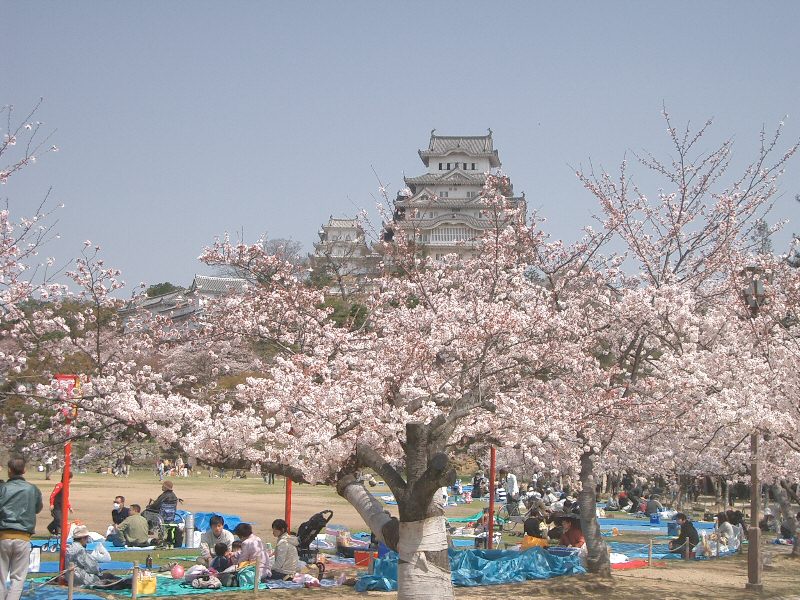
Hanami花見
The Japanese tradition of gathering to enjoy cherry blossoms in spring
🇯🇵 Japan and 7 more · Custom, Jan to May
Decoration
Hanami花見
The Japanese tradition of gathering to enjoy cherry blossoms in spring
🇯🇵 Japan and 7 more · Custom, Jan to May
 Decoration
Bouquet
A creative arrangement of flowers, given or displayed for many occasions
🇨🇳 China and 1 more · Arrangement
Decoration
Bouquet
A creative arrangement of flowers, given or displayed for many occasions
🇨🇳 China and 1 more · Arrangement
 Decoration
Famille rose粉彩
Pink-enamel style of Chinese porcelain decoration
🇨🇳 China and 1 more · Art or design
Decoration
Famille rose粉彩
Pink-enamel style of Chinese porcelain decoration
🇨🇳 China and 1 more · Art or design