
Corn dolly
Straw figures shaped for harvest customs across Europe
Corn dollies are straw figures made from the last sheaf of grain at harvest, shaped into forms like women or animals. These were part of old European rituals, believed to shelter the spirit of the crop through winter, and are now crafted as folk art and for festivals.
- Made from the last sheaf of grain at harvest
- Shapes include women, animals, and abstract forms
- Believed to hold the spirit of the crop through winter
- Craft revived in Britain in the 1950s and 60s
- Listed as endangered by the Heritage Crafts Association
What is Corn dolly?
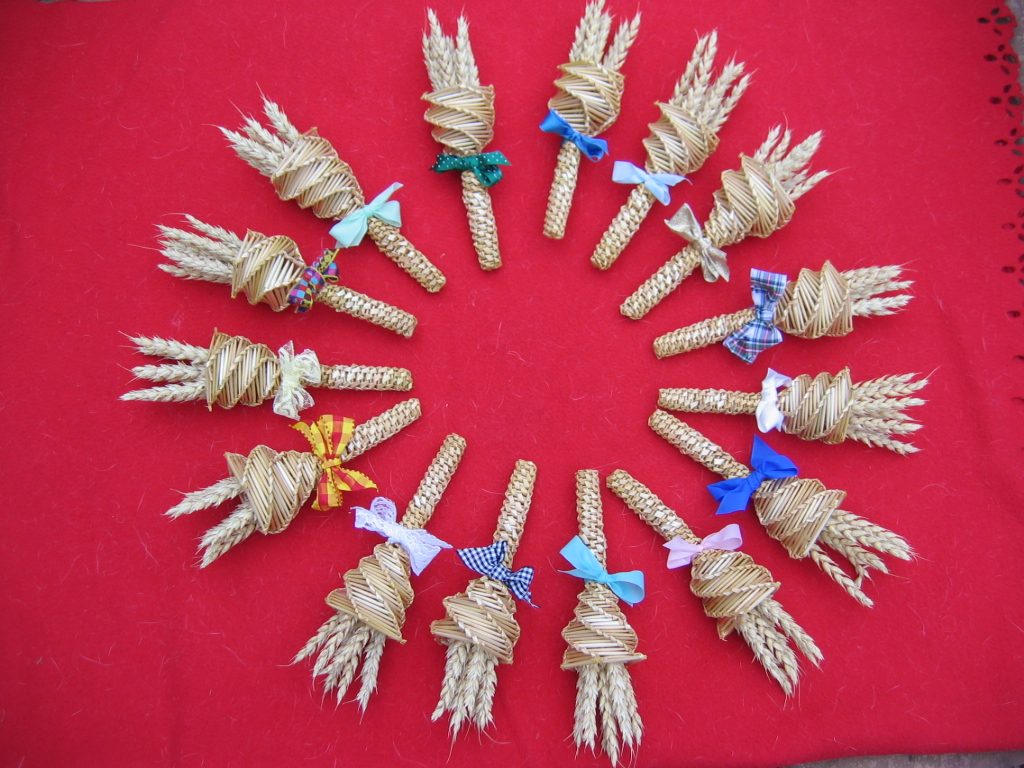
A corn dolly is a figure made by weaving or plaiting straw, often shaped like a woman, animal, or abstract form. The straw is usually taken from the last sheaf of grain harvested, and the finished piece may be simple or highly decorative. Some are small and heart-shaped, while others are large enough to be carried or displayed at community gatherings. The natural yellow or cream color of the straw gives them a warm, earthy look.
Where does Corn dolly come from?
Corn dollies come from old European harvest traditions, where people believed the spirit of the grain lived in the crop. When the fields were cut, the spirit was thought to need a new home, so the last sheaf was fashioned into a figure. These customs were found in places like Germany, Scotland, and Flanders, and similar figures appear in Ireland, France, Turkey, and Israel. The practice faded with modern farming but saw a revival in Britain in the mid-20th century as a craft.
How Corn dolly is made
To make a corn dolly, long-stemmed straw from wheat, oats, rye, or barley is soaked and then woven or plaited into shapes. Some regions use rushes or palm leaves. The straw is bent and tied into forms such as women, animals, or abstract designs. Traditional styles are named after places, and some are decorated with flowers or ribbons. The work is done by hand, often at the end of harvest.


When and where Corn dolly is used
Corn dollies were kept in homes or barns through winter, sometimes placed in a special spot or used in community celebrations. In some customs, the dolly was returned to the fields in spring, symbolizing the return of the crop's spirit. Today, they are made for folk festivals, as emblems of rural heritage, and as decorative crafts. Museums in England hold collections of these figures.
Forms of Corn dolly
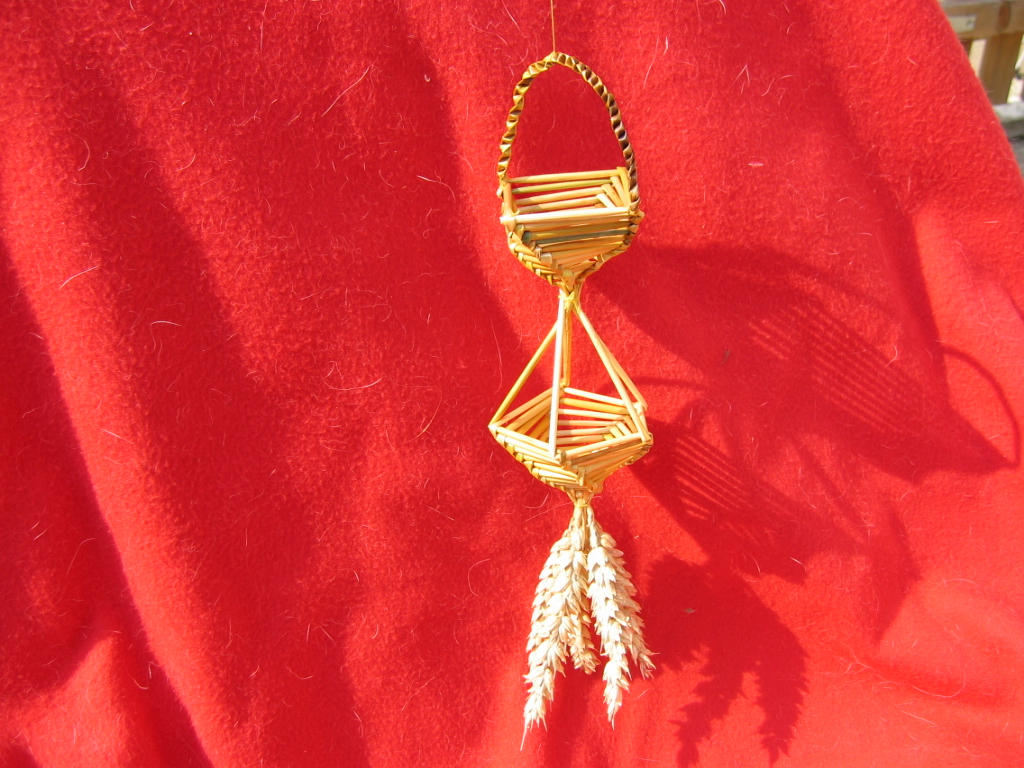
There are many regional styles, such as the Anglesey Rattle, Suffolk Bell, and Oxford Crown in Britain, or the Kusa Dasi from Turkey. Some are simple plaits, like the countryman's favour, while others are large figures like the Straw Bear of Whittlesey. In Ireland, rushes are used, and in southern France, palm leaves. Each area has its own shapes and names.
What Corn dolly means
Corn dollies are tied to beliefs about the cycle of crops and the spirit of the land. The figures have been called Corn Mother, Old Woman, or Carlin, and sometimes linked to local legends or rain charms. The craft is now considered endangered, but it remains a symbol of harvest and rural tradition, with examples preserved in museums and revived in festivals.
Questions people ask about Corn dolly
Where do corn dollies come from?
Corn dollies began as part of harvest rituals in Europe, especially in countries like Germany, Scotland, Ireland, and France. The tradition spread across many rural areas before modern farming changed harvest practices.
What are corn dollies made from?
They are made from straw, usually from wheat, oats, rye, or barley. In Ireland, rushes are used, and in southern France, palm leaves. The straw is woven or plaited into different shapes.
What do corn dollies symbolise?
Corn dollies were thought to house the spirit of the grain after harvest, keeping it safe through winter. They represent the hope for a good crop in the next season and are now seen as emblems of rural heritage.
Are corn dollies still made today?
Yes, though less common, corn dollies are still crafted for festivals, as folk art, and for display in museums. The craft saw a revival in Britain in the mid-20th century but is now considered endangered.
How are corn dollies used?
Traditionally, they were kept in homes or barns over winter and sometimes returned to the fields in spring. Today, they are made for decoration, as symbols at harvest festivals, and as part of folk traditions.
Good reading and sources
The facts on this page come from the Wikipedia article "Corn dolly", written by its contributors and used under the CC BY-SA 4.0 licence, and from its Wikidata record (CC0). Phool rewrote the text in its own words, with AI assistance, and compares every page with the article to make sure no passage is copied. It may be reused under the same CC BY-SA 4.0 licence with a link back.
It may contain mistakes. If something is wrong, tell us. Last refreshed 2026-10-03.
More of the same kind
 Decoration
Paisleyبته
A curved teardrop motif from Iran and India, now used worldwide on textiles
🇮🇷 Iran and 8 more · Art or design
Decoration
Paisleyبته
A curved teardrop motif from Iran and India, now used worldwide on textiles
🇮🇷 Iran and 8 more · Art or design
 Decoration
Butaبوته
A curved floral motif found in Persian, Indian, and Central Asian art and textiles
🇮🇷 Iran and 5 more · Art or design
Decoration
Butaبوته
A curved floral motif found in Persian, Indian, and Central Asian art and textiles
🇮🇷 Iran and 5 more · Art or design
 Decoration
Pomander
A scented ball or container worn or carried to perfume the air
Worn flowers
Decoration
Pomander
A scented ball or container worn or carried to perfume the air
Worn flowers
 Decoration
Vase
An open container for holding and displaying cut flowers
Arrangement
Decoration
Vase
An open container for holding and displaying cut flowers
Arrangement
More from Ireland
All the flowers of Ireland Decoration
May devotions to the Blessed Virgin Mary
Month-long Catholic customs honouring Mary with flowers, altars, and processions
🇮🇹 Italy and 7 more · Custom, May
Decoration
May devotions to the Blessed Virgin Mary
Month-long Catholic customs honouring Mary with flowers, altars, and processions
🇮🇹 Italy and 7 more · Custom, May
 Decoration
May Day Festival
A spring festival with flowers, greenery, maypoles and bonfires on the first of May
🇮🇪 Ireland and 5 more · Custom, May
Decoration
May Day Festival
A spring festival with flowers, greenery, maypoles and bonfires on the first of May
🇮🇪 Ireland and 5 more · Custom, May
 Decoration
BeltaneBealtaine / Là Bealltainn / Boaltinn
The Gaelic May Day festival with bonfires and yellow flower decorations
🇮🇪 Ireland and 1 more · Custom, May
Decoration
BeltaneBealtaine / Là Bealltainn / Boaltinn
The Gaelic May Day festival with bonfires and yellow flower decorations
🇮🇪 Ireland and 1 more · Custom, May
 Decoration
Remembrance poppy
An artificial red poppy worn to honour those lost in war
🇬🇧 United Kingdom and 7 more · Worn flowers, Apr to Nov
Decoration
Remembrance poppy
An artificial red poppy worn to honour those lost in war
🇬🇧 United Kingdom and 7 more · Worn flowers, Apr to Nov