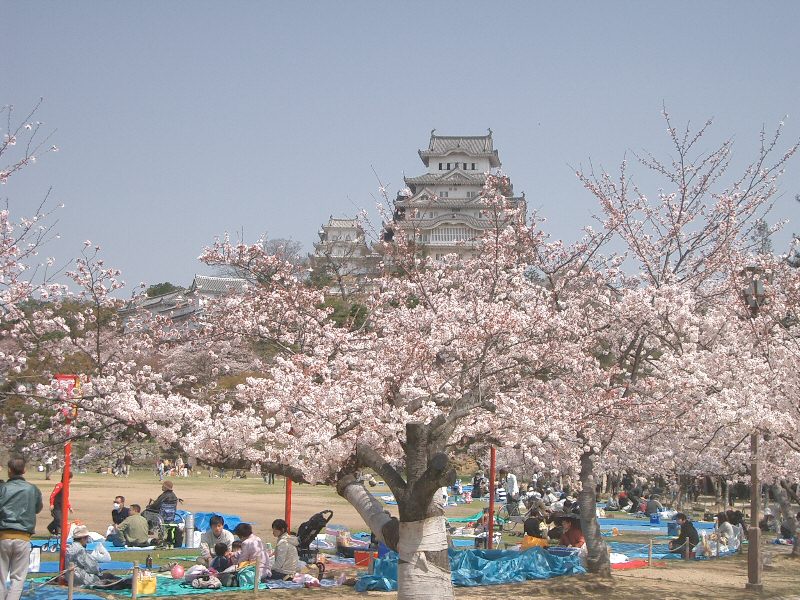
Hanami
In its own language: 花見
The Japanese tradition of gathering to enjoy cherry blossoms in spring
Hanami is the Japanese custom of gathering under blooming cherry or plum trees to enjoy their brief beauty, usually with picnics and parties. The practice dates back centuries and is now celebrated across Japan and in many countries, often marking the arrival of spring.
- Hanami means 'flower viewing', mainly of cherry blossoms.
- The tradition dates back over a thousand years in Japan.
- Blossoms last only a week or two, so timing is important.
- Nighttime viewing with lanterns is called yozakura.
- Hanami festivals are now held in many countries.
What is Hanami?
Hanami is the Japanese tradition of gathering to appreciate flowers, especially cherry blossoms (sakura), and sometimes plum blossoms (ume). People spread picnic mats under the flowering trees in parks, gardens, or temple grounds, often sharing food, drinks, and music. The trees are covered with pink or white blossoms, and in some places, lanterns are hung for night viewing, called yozakura. The atmosphere can be lively or calm, depending on the group and location.
Where does Hanami come from?
Hanami began in Japan during the Nara period, first focusing on plum blossoms, inspired by Chinese customs of poetry and wine under flowering trees. By the Heian period, cherry blossoms became the main focus, and the practice spread from the imperial court to samurai and then to common people. Cherry trees were planted in public spaces to encourage hanami. The custom has continued for over a thousand years, with the term 'hanami' now mainly referring to cherry blossom viewing.
How Hanami is made
Hanami is organized around the short blooming period of cherry or plum trees, usually from late March to early May, depending on the region. People check blossom forecasts to plan gatherings. Groups reserve spots in parks, bring picnic food and drinks, and sometimes decorate with lanterns for evening enjoyment. In Okinawa, the season starts as early as January. The event is shaped by the timing and location of the blossoms.


When and where Hanami is used
Hanami is celebrated by families, friends, and coworkers, who gather under the blossoms for picnics and parties. Special foods like dango and bento are enjoyed, and sake is often shared. The tradition marks the start of spring and sometimes coincides with the beginning of the school or work year. Hanami is also observed in other countries with cherry trees, often as a symbol of friendship or cultural exchange.
Forms of Hanami
Nighttime hanami, called yozakura, features illuminated trees with paper or electric lanterns. Umemi is the quieter tradition of viewing plum blossoms, popular among older people. Outside Japan, cities like Washington, D.C., Macon, and Vancouver hold their own cherry blossom festivals, each with local customs and events. Some places focus on specific cherry cultivars or historic trees.
What Hanami means
Hanami symbolizes the fleeting nature of life, as the blossoms last only a short time. The flowers are celebrated in poetry and art, and the custom is deeply woven into Japanese identity. Hanami parties are both a social event and a time for reflection. The proverb 'dumplings rather than flowers' jokes about people enjoying the food more than the blossoms. In recent years, climate change has caused the bloom to arrive earlier.
Traditions that use it
Where to see Hanami
Days and festivals
Questions people ask about Hanami
What is hanami?
Hanami is the Japanese custom of gathering under blooming cherry or plum trees to enjoy their beauty, usually with picnics, food, and drinks. It is a major spring tradition in Japan and has spread to other countries.
Where did hanami originate?
Hanami began in Japan during the Nara period, first with plum blossoms and later with cherry blossoms. The custom was inspired by Chinese traditions and spread from the imperial court to the general public.
When does hanami take place?
Hanami usually happens from late March to early May in Japan, depending on the region and the timing of the cherry blossoms. In Okinawa, it can start as early as January.
What do people do during hanami?
People gather in parks or gardens under the flowering trees, sharing food, drinks, and sometimes music. Some groups hang lanterns for night viewing, and special seasonal foods are enjoyed.
What does hanami symbolize?
Hanami represents the fleeting nature of life, as cherry blossoms bloom for only a short time. The tradition is celebrated in poetry and art and is an important part of Japanese culture.
Good reading and sources
- Japan cherry blossom season wilted by the coronavirus pandemicBBC, Article
- The Japan Times - News On Japan, Business News, Opinion, Sports, Entertainment And MoreThe Japan Times, Article
- Best places to see blossomNational Trust, Article
The facts on this page come from the Wikipedia article "Hanami", written by its contributors and used under the CC BY-SA 4.0 licence, and from its Wikidata record (CC0). Phool rewrote the text in its own words, with AI assistance, and compares every page with the article to make sure no passage is copied. It may be reused under the same CC BY-SA 4.0 licence with a link back.
It may contain mistakes. If something is wrong, tell us. Last refreshed 2026-10-03.
More of the same kind
 Decoration
Corn dolly
Straw figures shaped for harvest customs across Europe
🇮🇪 Ireland and 3 more · Flower craft
Decoration
Corn dolly
Straw figures shaped for harvest customs across Europe
🇮🇪 Ireland and 3 more · Flower craft
 Decoration
Varamalaवरमाला
A flower garland exchanged by bride and groom in Hindu weddings
🇮🇳 India · Garland or wreath
Decoration
Varamalaवरमाला
A flower garland exchanged by bride and groom in Hindu weddings
🇮🇳 India · Garland or wreath
 Decoration
Rangoliरंगोली
Indian floor art made with coloured powders, rice, or petals for festivals and daily welcome
🇮🇳 India and 1 more · Carpet or floor pattern
Decoration
Rangoliरंगोली
Indian floor art made with coloured powders, rice, or petals for festivals and daily welcome
🇮🇳 India and 1 more · Carpet or floor pattern
 Decoration
Floriculture
The science and business of growing flowers and ornamental plants
Arrangement
Decoration
Floriculture
The science and business of growing flowers and ornamental plants
Arrangement
More from Japan
All the flowers of Japan Decoration
Bonsai盆栽
The Japanese art of shaping miniature trees in shallow pots
🇯🇵 Japan and 7 more · Art or design
Decoration
Bonsai盆栽
The Japanese art of shaping miniature trees in shallow pots
🇯🇵 Japan and 7 more · Art or design
 Decoration
Tokonoma床の間
A Japanese alcove for displaying scrolls and flower arrangements
🇯🇵 Japan · Arrangement
Decoration
Tokonoma床の間
A Japanese alcove for displaying scrolls and flower arrangements
🇯🇵 Japan · Arrangement
 Decoration
Bouquet
A creative arrangement of flowers, given or displayed for many occasions
🇨🇳 China and 1 more · Arrangement
Decoration
Bouquet
A creative arrangement of flowers, given or displayed for many occasions
🇨🇳 China and 1 more · Arrangement
 Decoration
Sōgetsu草月流
A modern school of Japanese ikebana open to all materials and styles
🇯🇵 Japan · Arrangement
Decoration
Sōgetsu草月流
A modern school of Japanese ikebana open to all materials and styles
🇯🇵 Japan · Arrangement