Viewing and flower tours
Hanami, cherry blossom viewing
The Japanese custom of gathering under cherry trees in bloom to eat, drink and watch the petals fall, by day and by lantern light.
Presented by ClearTrust Free for gardeners, florists, travellers and the curious.
Hanami means flower viewing, and in practice it means cherry blossom. For a week or two each spring, people across Japan spread mats under the trees and share food and drink with family, friends or workmates. The blossom lasts only days, and that shortness is the point. Forecasts track its progress up the country so that nobody misses it.
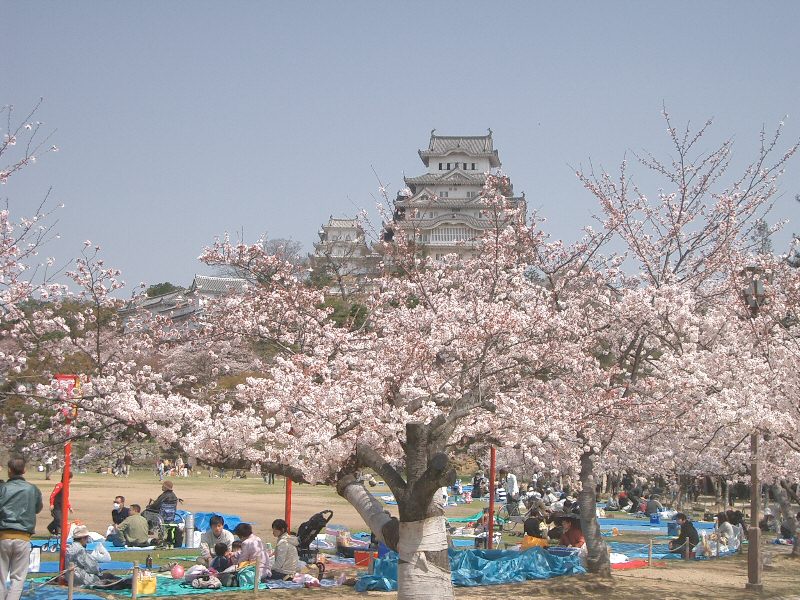
What it is
A hanami party is a picnic under flowering cherry trees, in a park, along a river or in a castle moat. Groups claim a spot with a plastic sheet, sometimes hours ahead. They bring boxed lunches, rice dumplings on skewers, beer and sake. Many people simply walk through instead. After dark, lanterns or floodlights are switched on for night viewing, called yozakura. The most widely planted tree is the pale pink Somei Yoshino, which flowers before its leaves appear.
Where it comes from
Flower viewing began at the imperial court more than a thousand years ago, at first for plum blossom, a taste borrowed from China. Cherry took over during the Heian period and has dominated Japanese poetry ever since. In the 1590s the warlord Toyotomi Hideyoshi held vast blossom parties at Yoshino and at Daigo-ji in Kyoto. In the 1700s the shogun Tokugawa Yoshimune had cherries planted in public places in Edo, now Tokyo, so that ordinary townspeople could join in.
The blossom forecast
Blossom opens first in the warm south and moves north. Okinawa's cherries flower in January. Kyushu, Osaka, Kyoto and Tokyo usually follow in late March and early April, northern Honshu in mid to late April, and Hokkaido in early May. This advancing line is called the cherry blossom front. Weather companies publish forecasts from winter onward and revise them weekly. The national weather agency declares the start of flowering in each city by watching a chosen sample tree.
How it works
From first flowers to full bloom takes about a week, and full bloom holds for a few days more, less if there is wind or rain. Timing a visit is therefore a gamble. The usual answer is to stay flexible and travel north or uphill if the blossom has passed. Late varieties with double flowers extend the season by a week or two. Famous sites are very crowded at weekends, and some parks ban alcohol or charge an entrance fee.
How to take part
- Check a blossom forecast in the weeks before travelling, and again a few days ahead.
- Go early on a weekday morning for space and quiet.
- Bring a mat, food, drinks and a bag for your rubbish.
- Stay on after dusk at a site with lanterns to see the trees lit.
Good manners
- Do not shake branches, pick blossom or climb the trees. Keep mats off the roots where signs ask you to.
- Take all rubbish away with you if the bins are full.
- Keep your group's mat to the space you need, and keep noise down late in the evening.
The flowers
 Cherry blossomThe spring-blooming flower of ornamental cherry trees, central to Japan’s hanami custom
 Japanese flowering cherryThe cherry tree grown for its spring blossom in Japan and beyond
 Prunus mumeThe fragrant plum blossom tree that blooms in winter across East Asia
Also part of it, and being written: Prunus × yedoensis.
Sources and further reading
Original text by the Phool desk, written with AI assistance. Customs vary from place to place. If we have something wrong, tell us.
Photo credits on this page
The small pictures above come from Wikimedia Commons under free licences. Some are cropped to fit.
- Hanami: Unknown author, CC BY-SA 3.0, source
- Prunus mume: Kakidai, CC BY-SA 3.0, source
- Prunus 'Kanzan': Myrabella, CC BY-SA 3.0, source
- Cherry blossom: W. Bulach, CC BY-SA 4.0, source