Garlands, wreaths and flowers that are worn
Gajra, flowers in the hair
A string of jasmine buds worn around a bun or along a plait by women across South Asia, bought fresh each day.
Presented by ClearTrust Free for gardeners, florists, travellers and the curious.
A gajra is a short garland made to be worn in the hair or around the wrist. It is usually jasmine, tied bud by bud so that the flowers open through the evening and release their scent. In southern India many women wear one every day. Elsewhere it belongs to weddings, festivals and classical dance.
What it is
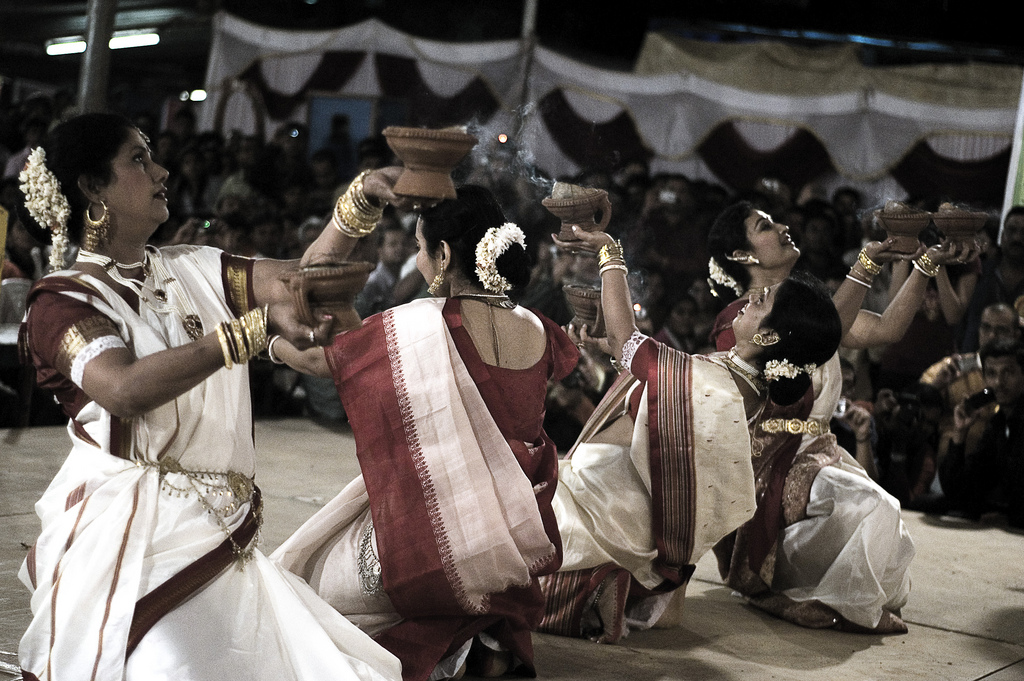
The basic form is a white string of jasmine buds an arm's length or less. It may be coiled around a bun, pinned across the top of a plait, or left to hang down its length. A veni is a flatter, wider band for the bun, often worked with roses or coloured flowers. Bharatanatyam dancers wear both. In Pakistan and northern India, gajras of jasmine or rosebuds are also slipped over the wrists like bracelets at weddings and on Eid.
How it is made
Jasmine is picked as closed buds in the early morning. The stringer lays two buds across a thread, stalks pointing inward, and locks them with a twist and a knot, then repeats, so that the buds sit in two neat rows. No needle is used. In Tamil Nadu the strings are sold by the muzham, the length from elbow to fingertip, measured against the seller's own arm. Orange crossandra, pink roses and green fragrant leaves are often tied in at intervals for colour.
Where it comes from
Flowers in women's hair appear in the earliest Tamil poetry and in temple sculpture across India. The custom stayed strongest in the south, where jasmine is grown on a large scale. The jasmine of Madurai, known as Madurai malli, has thick petals and a strong scent, and its name is protected as a geographical indication. So is Mysore mallige from Karnataka. Flowers are flown from these districts to cities abroad where South Asian families live.
How to take part
- Buy a string from a flower seller outside a temple or at a market in the late afternoon.
- Pin one end at the top of a plait or bun with a hairpin and let the rest hang or wrap around.
- Keep a spare string wrapped in a damp cloth in the fridge. It will stay fresh until the next day.
Good manners
- In some communities widows traditionally do not wear flowers, so offer a gajra as a gift with a little care.
- Sellers measure by their own arm. Agree the length and price before the string is cut.
The flowers
GajraA floral hair garland worn by women in South Asia for celebrations and daily wear Arabian jasmineA small white jasmine with a strong, sweet scent, treasured in Asia for garlands and ceremonies
 RoseWoody perennial plants with showy, often fragrant flowers in many colours
Also part of it, and being written: Jasminum grandiflorum, Crossandra infundibuliformis, Madurai Malli.
Sources and further reading
Original text by the Phool desk, written with AI assistance. Customs vary from place to place. If we have something wrong, tell us.
Photo credits on this page
The small pictures above come from Wikimedia Commons under free licences. Some are cropped to fit.
- Rose: User:Tigerente, CC BY-SA 3.0, source
- Gajra: Amarnath, CC BY-SA 2.0, source
- Arabian jasmine: Taken by Fanghong, CC BY-SA 3.0, source