🇿🇦 The flowers of South Africa
121 pages from South Africa: its flowers, the things made with them and the places to see them, across 60 cities and regions.
South Africa is home to over 23,000 species of vascular plants, making it the richest country in Africa for plant diversity. Its flora is shaped by varied climates and landscapes, from grasslands to the unique fynbos shrublands. The country is especially known for endemic flowers like proteas and aloes, and the Cape Floristic Region's extraordinary diversity.
The plant life of South Africa
South Africa’s plant life is shaped by its mix of climates and landscapes. The country has vast grasslands, dry shrublands, and the fynbos—a shrubland unique to the Cape region. Most of the land is open grassland or savanna, with few forests. Rainfall varies widely, leading to lush areas in the east and arid zones in the west. The country is a global hotspot for plant diversity, with more than 23,000 vascular plant species, many found nowhere else. Succulents, bulbs, and shrubs are common, especially in drier regions.
From region to region in South Africa
Plant life changes sharply across South Africa. The Highveld is dominated by grasses and bulbs, while the northwest is drier, with succulents like aloes and euphorbias. The Karoo is a semi-desert with many dwarf succulents. The fynbos of the Western and Eastern Cape stands out for its dense, low shrubs and high number of unique species. Forests are rare and mostly found on wet mountain slopes or riverbanks. The northeast’s bush savanna supports denser growth and iconic trees like the baobab.
Flowers to know in South Africa
The fynbos region is famous for its proteas, ericas, and restios. The silver tree, which grows only on Table Mountain, is a notable endemic. Aloes and euphorbias thrive in the dry west. The Cape Floristic Region, a UNESCO World Heritage Site, holds nearly 20% of Africa’s plant species in a tiny area, with about 70% of its 9,000 species found nowhere else. Baobab trees are prominent in the northeast.
When it blooms in South Africa
Most of South Africa receives summer rainfall, except the Western Cape, which has a Mediterranean climate with winter rains. Many fynbos plants flower after summer fires, as fire triggers seed germination. Succulents in the Karoo and Namaqualand bloom after rare rains, often carpeting the land with flowers.
Threats and protection in South Africa
The Cape Floristic Region faces rapid species loss due to habitat destruction, land degradation, and invasive plants. 153 plant species in South Africa are considered threatened. Large protected areas, including the Cape Floral Region Protected Areas, help safeguard this unique flora. Fire plays a role in both threatening and renewing plant communities, especially in fynbos.
The facts in this overview come from the Wikipedia article "Wildlife of South Africa", written by its contributors and used under the CC BY-SA 4.0 licence. Phool rewrote the text in its own words, with AI assistance, and compares every page with the article to make sure no passage is copied. It may be reused under the same CC BY-SA 4.0 licence with a link back.
Flower experiences in South Africa
 🇿🇦 Pretoria · Oct to NovJacaranda season in PretoriaTens of thousands of street trees turn South Africa's capital purple each October.
 🇿🇦 Cape Town · All yearKirstenbosch National Botanical GardenA garden of South African plants on the slopes of Table Mountain, at its best from late winter to spring.
 🇿🇦 Cape Town · All yearAdderley Street flower sellersA covered lane off Cape Town's main street where families have sold flowers for generations.
 🇿🇦 Cape Town · Aug to NovFynbos walks on the Cape Peninsula and at HermanusDay walks through the Cape floral kingdom, the smallest and one of the richest plant regions on earth.
 🇿🇦 Plettenberg Bay · Aug to NovGarden Route coastal fynbos walksCoastal paths along South Africa's southern shore, through fynbos and old forest.
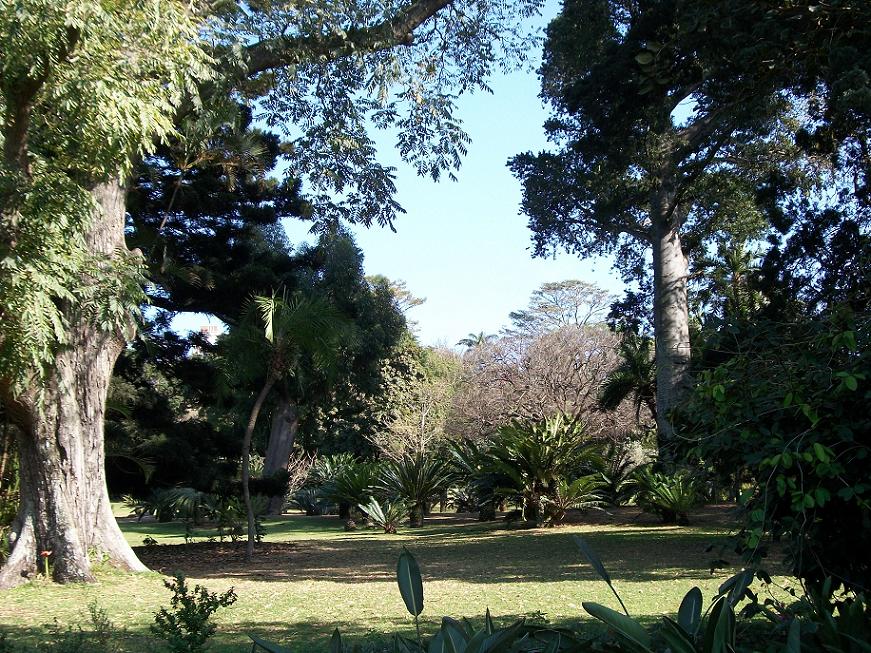 🇿🇦 Durban · All yearDurban Botanic GardensA subtropical garden founded in 1849, with an orchid house and a famous collection of cycads.
Cities and regions of South Africa
Nothing matches those filters yet. Take one off, or check back: new pages are written every day.
Photo credits on this page
The small pictures above come from Wikimedia Commons under free licences. Some are cropped to fit.
- Durban Botanic Gardens: Purves, M. ( Michaelwild at en.wikipedia ), CC BY-SA 3.0, source
- Kirstenbosch National Botanical Garden: Didier B ( Sam67fr ), CC BY 2.5, source
- Pretoria Jacarandas: Petrus Potgieter, Petrus at en.wikipedia, Public domain, source
- Adderley Street Flower Sellers: HelenOnline, CC BY-SA 4.0, source
- Cape Fynbos Walks: Rialfver at nl.wikipedia, CC BY-SA 3.0, source
- Garden Route Fynbos: Diriye Amey, CC BY 2.0, source
- South Africa: Luca Galuzzi ( Lucag ), CC BY-SA 2.5, source