
King Protea
Protea cynaroides, family Proteaceae
South Africa’s national flower with the largest bloom in its genus
The king protea is a shrub from South Africa’s fynbos region, known for its huge, artichoke-like flower heads surrounded by colourful bracts. It survives wildfires by resprouting from underground stems and is pollinated by birds and insects.
- Largest flower head in the Protea genus
- National flower of South Africa
- Resprouts after fire from underground stems
- Pollinated by sunbirds and sugarbirds
- First genome sequenced in the Proteales order (2022)
What does King Protea look like?
This shrub bears the biggest flower head in its genus, up to 30 cm wide. What looks like a single bloom is actually many small flowers packed together, wrapped in large, showy bracts. These bracts range from creamy white through soft pink to deep red, sometimes with silvery highlights.
Where does King Protea come from?
It grows naturally only in South Africa’s fynbos, especially the Western Cape. Its name comes from the Greek god Proteus, reflecting the family’s varied forms, while 'cynaroides' points to its resemblance to an artichoke. The plant belongs to the ancient Gondwanan Proteaceae family.
When and how King Protea blooms
Mature plants stand between 35 cm and 2 m tall. They thrive in dry, hot summers and wet winters, using leathery leaves and deep taproots to conserve water. After fire, new shoots emerge from dormant buds on a thick underground stem.


How King Protea is used
As South Africa’s national flower, it appears on emblems and gives its name to the national cricket team. Its long-lasting blooms are used in fresh and dried arrangements. Over eighty garden varieties have been developed, though some have been planted unsuitably within its wild range.
Kinds of King Protea
Bract colour varies widely, from pale cream to rich crimson. Some cultivated forms show yellow instead of pink, and leaf margins may shift from red to green. Horticulturists have selected 81 named garden varieties based on these differences.
What King Protea means
It symbolises South Africa as the national flower. In the 1990s, there was public discussion about adding it to the rugby team’s jersey. It also served as the flagship species for the Protea Atlas Project, which mapped protea distributions across southern Africa.
Traditions that use it
Where to see King Protea
 🇿🇦 Cape Town · All yearKirstenbosch National Botanical GardenA garden of South African plants on the slopes of Table Mountain, at its best from late winter to spring.
 🇿🇦 Cape Town · All yearAdderley Street flower sellersA covered lane off Cape Town's main street where families have sold flowers for generations.
Questions people ask about King Protea
Where does the king protea come from?
It is native to the fynbos region of South Africa’s Western Cape, where it grows in dry, nutrient-poor soils.
Why is it called 'cynaroides'?
The name refers to its flower heads’ resemblance to an artichoke, which belongs to the genus Cynara.
What does it symbolise?
It is the national flower of South Africa and lends its name to the country’s national cricket team, the Proteas.
How does it survive wildfires?
It resprouts from dormant buds on a thick underground stem after a fire, rather than relying solely on seeds.
Is it used in flower arrangements?
Yes, its blooms last a long time in vases and dry well for decorative use, making them popular in floral design.
Good reading and sources
- IUCN Red List of Threatened SpeciesIUCN Red List, Article
- Plants of the World OnlineRoyal Botanic Gardens, Kew, Plant database
- Where it has been recordedGBIF, Plant database
- Sightings and photos by naturalistsiNaturalist, Plant database
- Protea cynaroides on WikipediaEncyclopedia
- More photos on Wikimedia CommonsPhotos
- Wikidata recordOpen data
The facts on this page come from the Wikipedia article "Protea cynaroides", written by its contributors and used under the CC BY-SA 4.0 licence, and from its Wikidata record (CC0). Phool rewrote the text in its own words, with AI assistance, and compares every page with the article to make sure no passage is copied. It may be reused under the same CC BY-SA 4.0 licence with a link back.
It may contain mistakes. It is not medical or foraging advice: many flowers are poisonous, and traditional uses are reported, not recommended. If something is wrong, tell us. Last refreshed 2026-10-03.
Others in the family Proteaceae
The whole family Bull banksiaBanksia grandis
A tall, fire-resistant tree with large lobed leaves and pale yellow flower spikes
🇦🇺 Australia · Flowering tree
Bull banksiaBanksia grandis
A tall, fire-resistant tree with large lobed leaves and pale yellow flower spikes
🇦🇺 Australia · Flowering tree
 Grevillea 'Robyn Gordon'Grevillea ‘Robyn Gordon’
A red-flowered Australian shrub named for a gardener’s daughter
🇦🇺 Australia · Flowering shrub
Grevillea 'Robyn Gordon'Grevillea ‘Robyn Gordon’
A red-flowered Australian shrub named for a gardener’s daughter
🇦🇺 Australia · Flowering shrub
 Protea neriifolia
A South African shrub with cone-shaped flower heads and hairy-tipped bracts
🇿🇦 South Africa and 3 more · Wildflower
Protea neriifolia
A South African shrub with cone-shaped flower heads and hairy-tipped bracts
🇿🇦 South Africa and 3 more · Wildflower
 Swamp banksiaBanksia robur
A tough coastal shrub with large serrated leaves and green-gold flower spikes
🇦🇺 Australia · Wildflower
Swamp banksiaBanksia robur
A tough coastal shrub with large serrated leaves and green-gold flower spikes
🇦🇺 Australia · Wildflower
More from South Africa
All the flowers of South Africa Eucalyptus
The tall, aromatic trees and shrubs known as gum trees or eucalypts
🇦🇺 Australia and 7 more · Flowering tree
Eucalyptus
The tall, aromatic trees and shrubs known as gum trees or eucalypts
🇦🇺 Australia and 7 more · Flowering tree
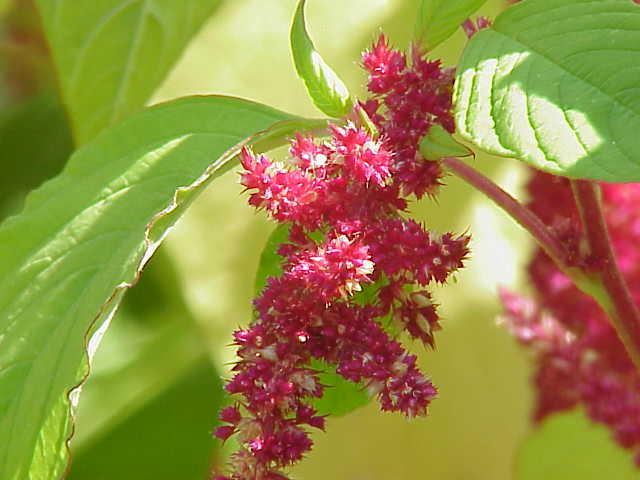 AmaranthAmaranthus
A tall, colourful plant grown for its flowers, leaves and edible seeds
🇲🇽 Mexico and 7 more · Wildflower
AmaranthAmaranthus
A tall, colourful plant grown for its flowers, leaves and edible seeds
🇲🇽 Mexico and 7 more · Wildflower
 Acacia
Shrubs and trees with golden or cream puffball flowers, native mostly to Australia
🇦🇺 Australia and 6 more · Wildflower
Acacia
Shrubs and trees with golden or cream puffball flowers, native mostly to Australia
🇦🇺 Australia and 6 more · Wildflower
 Sensitive PlantMimosa pudica
A touch-sensitive plant whose leaves fold up when disturbed
🇧🇷 Brazil and 8 more · Wildflower
Sensitive PlantMimosa pudica
A touch-sensitive plant whose leaves fold up when disturbed
🇧🇷 Brazil and 8 more · Wildflower