
Protea neriifolia
A South African shrub with cone-shaped flower heads and hairy-tipped bracts
Protea neriifolia is a large shrub or small tree native to South Africa's southern coastal mountains. Its oblong, cone-shaped flower heads have bracts edged with a distinctive black fringe, and it is widely grown for gardens and cut flowers in several countries.
- Native to South Africa's southern coastal mountains
- Flower heads have bracts with a black fringe of hairs
- Widely grown for gardens and as a cut flower
- Blooms in all seasons, mainly spring and summer
- Not considered threatened in the wild
What does Protea neriifolia look like?
Protea neriifolia grows as a large, upright shrub or small tree, reaching three to five metres tall. Its leaves are narrow, elliptic, and curve upwards, with a green or blue-grey colour. The flower heads are long and cone-shaped, about 13 by 8 cm, and sit singly at the end of branches. Each head is surrounded by colourful bracts—ranging from carmine and pink to creamy-green or whitish—tipped with a striking black fringe of hairs. The inner bracts are oblong and also bearded with fuzzy hairs. The plant produces small, hairy nuts as fruit.
Where does Protea neriifolia come from?
This species is native to the southern coastal mountain ranges of South Africa, from Cape Town to Port Elizabeth. It grows wild in fynbos, a shrubland habitat, often on south-facing slopes and sandy or sandstone-derived soils. European botanists first recorded it in the late 16th century, but it was formally described as a species in 1810 by Robert Brown. Today, it is found in regions such as the Hottentots Holland, Langeberg, and Kogelberg mountains.
When and how Protea neriifolia blooms
Protea neriifolia blooms mainly in spring and summer, but flowers can appear in other seasons too. It grows best in well-drained, sandy or sandstone soils, often at altitudes from sea level up to 1,300 metres. The plant is propagated for gardens and commercial cut flower production, with several cultivars and hybrids available. Seeds are released after fire, as the dried flower heads remain on the plant until the nuts are dispersed by wind.
How Protea neriifolia is used
This protea is widely grown in gardens for its striking flower heads and is a popular cut flower in floristry. It is cultivated not only in South Africa but also in Australia, New Zealand, and the United States. In its native habitat, the flowers attract birds and insects for pollination. The species is not considered threatened and is valued for its adaptability and ornamental appeal.
Kinds of Protea neriifolia
Several cultivars of Protea neriifolia are grown, such as 'Green Ice', 'Margaret Watling', and 'Silvertips'. It has also been crossed with other protea species to produce hybrids like 'Carnival' and possibly 'Pink Mink'. A similar species, Protea laurifolia, can be told apart by its shorter leaf stalks and more silvery leaves.
What Protea neriifolia means
Protea neriifolia is a familiar plant in South African gardens and landscapes, and is among the most widely cultivated proteas. Its flower heads are used in the cut flower industry. The plant's national number in South Africa is 93.1. Conservation assessments list it as 'least concern', with stable populations in the wild.
Questions people ask about Protea neriifolia
Where does Protea neriifolia come from?
Protea neriifolia is native to the southern coastal mountain ranges of South Africa, particularly in the Western and Eastern Cape provinces between Cape Town and Port Elizabeth.
What does Protea neriifolia look like?
It is a large shrub or small tree with narrow, upward-curving leaves and cone-shaped flower heads. The bracts around the flowers come in shades of pink, cream, green, or white, and are edged with a black fringe of hairs.
How is Protea neriifolia used?
It is grown in gardens for its ornamental flowers and is widely cultivated for the cut flower trade in South Africa and other countries with suitable climates.
Is Protea neriifolia endangered?
No, Protea neriifolia is not considered threatened. Its populations are stable, and it is listed as 'least concern' by the South African National Biodiversity Institute.
What does Protea neriifolia symbolise?
The sources do not mention any specific symbolism for Protea neriifolia.
Good reading and sources
- IUCN Red List of Threatened SpeciesIUCN Red List, Article
- Plants of the World OnlineRoyal Botanic Gardens, Kew, Plant database
- Where it has been recordedGBIF, Plant database
- Sightings and photos by naturalistsiNaturalist, Plant database
- Protea neriifolia on WikipediaEncyclopedia
- More photos on Wikimedia CommonsPhotos
- Wikidata recordOpen data
The facts on this page come from the Wikipedia article "Protea neriifolia", written by its contributors and used under the CC BY-SA 4.0 licence, and from its Wikidata record (CC0). Phool rewrote the text in its own words, with AI assistance, and compares every page with the article to make sure no passage is copied. It may be reused under the same CC BY-SA 4.0 licence with a link back.
It may contain mistakes. It is not medical or foraging advice: many flowers are poisonous, and traditional uses are reported, not recommended. If something is wrong, tell us. Last refreshed 2026-10-03.
Others in the family Proteaceae
The whole family Bull banksiaBanksia grandis
A tall, fire-resistant tree with large lobed leaves and pale yellow flower spikes
🇦🇺 Australia · Flowering tree
Bull banksiaBanksia grandis
A tall, fire-resistant tree with large lobed leaves and pale yellow flower spikes
🇦🇺 Australia · Flowering tree
 Grevillea 'Robyn Gordon'Grevillea ‘Robyn Gordon’
A red-flowered Australian shrub named for a gardener’s daughter
🇦🇺 Australia · Flowering shrub
Grevillea 'Robyn Gordon'Grevillea ‘Robyn Gordon’
A red-flowered Australian shrub named for a gardener’s daughter
🇦🇺 Australia · Flowering shrub
 Silver treeLeucadendron argenteum
A rare South African tree with silky silver leaves and scented pink flowers
🇿🇦 South Africa · Flowering tree
Silver treeLeucadendron argenteum
A rare South African tree with silky silver leaves and scented pink flowers
🇿🇦 South Africa · Flowering tree
 Swamp banksiaBanksia robur
A tough coastal shrub with large serrated leaves and green-gold flower spikes
🇦🇺 Australia · Wildflower
Swamp banksiaBanksia robur
A tough coastal shrub with large serrated leaves and green-gold flower spikes
🇦🇺 Australia · Wildflower
More from South Africa
All the flowers of South Africa Eucalyptus
The tall, aromatic trees and shrubs known as gum trees or eucalypts
🇦🇺 Australia and 7 more · Flowering tree
Eucalyptus
The tall, aromatic trees and shrubs known as gum trees or eucalypts
🇦🇺 Australia and 7 more · Flowering tree
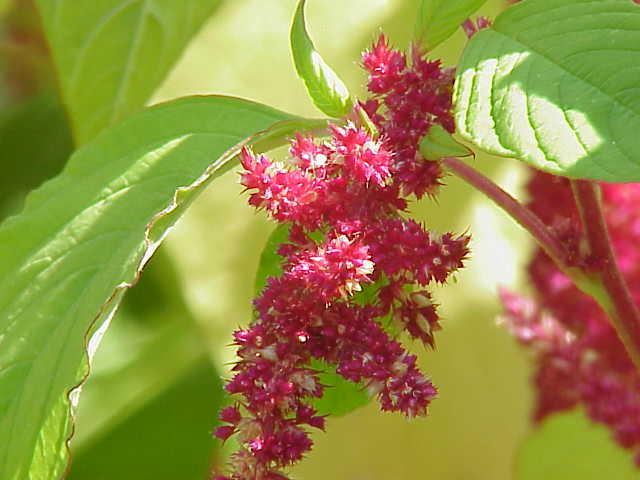 AmaranthAmaranthus
A tall, colourful plant grown for its flowers, leaves and edible seeds
🇲🇽 Mexico and 7 more · Wildflower
AmaranthAmaranthus
A tall, colourful plant grown for its flowers, leaves and edible seeds
🇲🇽 Mexico and 7 more · Wildflower
 Acacia
Shrubs and trees with golden or cream puffball flowers, native mostly to Australia
🇦🇺 Australia and 6 more · Wildflower
Acacia
Shrubs and trees with golden or cream puffball flowers, native mostly to Australia
🇦🇺 Australia and 6 more · Wildflower
 Sensitive PlantMimosa pudica
A touch-sensitive plant whose leaves fold up when disturbed
🇧🇷 Brazil and 8 more · Wildflower
Sensitive PlantMimosa pudica
A touch-sensitive plant whose leaves fold up when disturbed
🇧🇷 Brazil and 8 more · Wildflower