
Silver tree
Leucadendron argenteum, family Proteaceae
In its own language: Witteboom
A rare South African tree with silky silver leaves and scented pink flowers
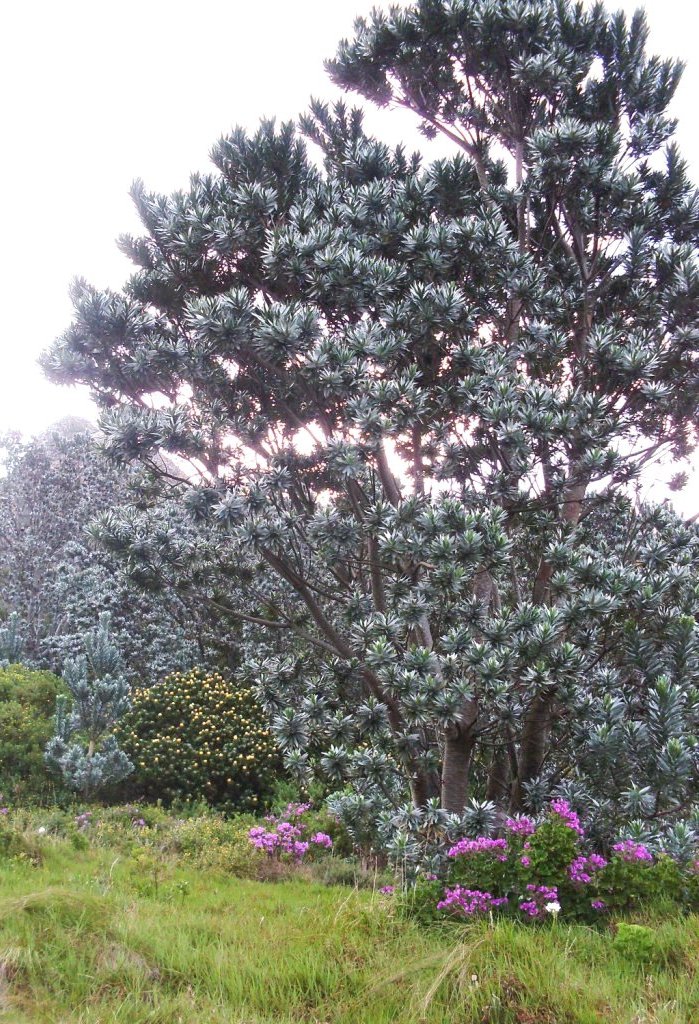
The silver tree is an evergreen tree native to a small area around Cape Town, South Africa. It stands out for its tall, straight trunk and shimmering silver leaves, and produces dense, pleasantly scented pink flower clusters. Once widespread, it is now endangered and grows mainly on Table Mountain and nearby slopes.
- Endemic to the Cape Peninsula near Cape Town, South Africa
- Recognized by its shimmering silver leaves
- Produces dense, pink, pleasantly scented flower clusters
- Endangered and protected in South Africa
- Appears in local heraldry and emblems
What does Silver tree look like?
The silver tree is a tall evergreen, usually 5 to 7 meters high but sometimes reaching 16 meters. It has a straight trunk with grey bark and is best known for its long, narrow leaves that shine with a silvery sheen due to dense, velvety hairs. The tree produces dense, round clusters of pink flowers that are lightly scented. Male and female flowers grow on separate trees. Its fruit is a heavy, woody cone filled with small, silky-haired seeds that float on the wind.
Where does Silver tree come from?
This tree is native only to a small area of the Cape Peninsula in South Africa, especially around Cape Town and the slopes of Table Mountain. It once covered much of Table Mountain but was heavily logged for timber. Today, most natural populations are found near Cape Town, with smaller groups near Stellenbosch, Somerset West, and Paarl. These outlying groups may have been planted by people. The species is now endangered due to habitat loss and competition from invasive trees.
When and how Silver tree blooms
Silver trees flower after about 5 to 7 years. They grow in the fynbos, a fire-prone shrubland, and rely on fire to reproduce. After a fire, seeds are released from the cones and germinate in the soil. The tree prefers the climate and soils of the Cape Peninsula and does not live much beyond 20 years. Seeds can remain viable for many decades, waiting for the right conditions to sprout.


How Silver tree is used
The silver tree is mainly valued as a symbol of the Cape region and appears in local heraldry. It is protected in South Africa and is not widely used for timber or decoration today. Its striking appearance makes it a feature of local landscapes and botanical gardens, especially around Table Mountain and Kirstenbosch.
Kinds of Silver tree
Leucadendron argenteum is a single species, but populations can be found in a few separate areas near Cape Town, such as Stellenbosch and Somerset West. These may differ slightly due to their isolation, but all share the same silvery leaves and pink flowers.
What Silver tree means
The silver tree is a protected species and is considered endangered. It is closely tied to the identity of the Cape Peninsula and appears in the arms of the South Peninsula Municipality. The tree is part of the unique fynbos vegetation and is valued for its beauty and rarity. Conservation efforts focus on protecting its habitat and managing fire cycles.
Questions people ask about Silver tree
Where does the silver tree come from?
The silver tree is native to a small area of the Cape Peninsula in South Africa, mainly around Cape Town and the slopes of Table Mountain. Smaller populations exist near Stellenbosch, Somerset West, and Paarl.
What does the silver tree look like?
It is a tall evergreen tree with a straight trunk and grey bark. Its long, narrow leaves are covered in velvety hairs, giving them a shiny silver appearance. The tree produces dense, round pink flower clusters that are lightly scented.
Why is the silver tree endangered?
The silver tree is endangered due to habitat loss from urban development, poor fire management, and competition from invasive trees. It has lost about 74% of its natural range and is now protected.
What does the silver tree symbolise?
The silver tree is a symbol of the Cape region and appears in the heraldry of the South Peninsula Municipality. It represents the unique flora of the fynbos and is valued for its rarity and beauty.
How does the silver tree reproduce?
The tree relies on fire to release its seeds from woody cones. After a fire, seeds germinate in the soil, and new trees grow. This cycle is essential for its survival in the fynbos ecosystem.
Good reading and sources
- IUCN Red List of Threatened SpeciesIUCN Red List, Article
- Leucadendron argenteumRoyal Horticultural Society, Article
- Plants of the World OnlineRoyal Botanic Gardens, Kew, Plant database
- Where it has been recordedGBIF, Plant database
- Sightings and photos by naturalistsiNaturalist, Plant database
- Leucadendron argenteum on WikipediaEncyclopedia
- More photos on Wikimedia CommonsPhotos
- Wikidata recordOpen data
The facts on this page come from the Wikipedia article "Leucadendron argenteum", written by its contributors and used under the CC BY-SA 4.0 licence, and from its Wikidata record (CC0). Phool rewrote the text in its own words, with AI assistance, and compares every page with the article to make sure no passage is copied. It may be reused under the same CC BY-SA 4.0 licence with a link back.
It may contain mistakes. It is not medical or foraging advice: many flowers are poisonous, and traditional uses are reported, not recommended. If something is wrong, tell us. Last refreshed 2026-10-03.
Others in the family Proteaceae
The whole family Bull banksiaBanksia grandis
A tall, fire-resistant tree with large lobed leaves and pale yellow flower spikes
🇦🇺 Australia · Flowering tree
Bull banksiaBanksia grandis
A tall, fire-resistant tree with large lobed leaves and pale yellow flower spikes
🇦🇺 Australia · Flowering tree
 Grevillea 'Robyn Gordon'Grevillea ‘Robyn Gordon’
A red-flowered Australian shrub named for a gardener’s daughter
🇦🇺 Australia · Flowering shrub
Grevillea 'Robyn Gordon'Grevillea ‘Robyn Gordon’
A red-flowered Australian shrub named for a gardener’s daughter
🇦🇺 Australia · Flowering shrub
 Protea neriifolia
A South African shrub with cone-shaped flower heads and hairy-tipped bracts
🇿🇦 South Africa and 3 more · Wildflower
Protea neriifolia
A South African shrub with cone-shaped flower heads and hairy-tipped bracts
🇿🇦 South Africa and 3 more · Wildflower
 Swamp banksiaBanksia robur
A tough coastal shrub with large serrated leaves and green-gold flower spikes
🇦🇺 Australia · Wildflower
Swamp banksiaBanksia robur
A tough coastal shrub with large serrated leaves and green-gold flower spikes
🇦🇺 Australia · Wildflower
More from South Africa
All the flowers of South Africa Eucalyptus
The tall, aromatic trees and shrubs known as gum trees or eucalypts
🇦🇺 Australia and 7 more · Flowering tree
Eucalyptus
The tall, aromatic trees and shrubs known as gum trees or eucalypts
🇦🇺 Australia and 7 more · Flowering tree
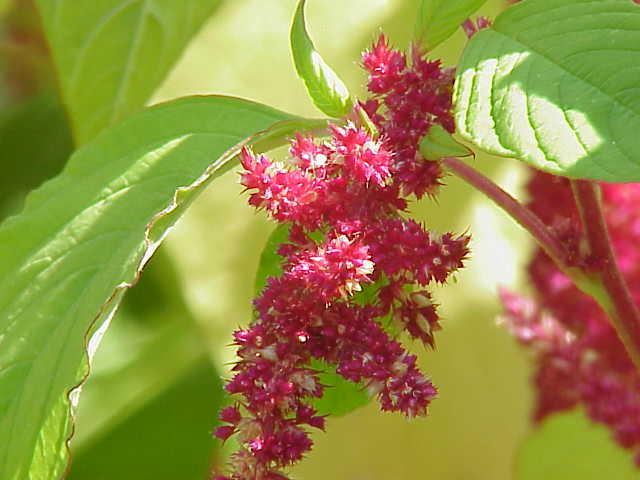 AmaranthAmaranthus
A tall, colourful plant grown for its flowers, leaves and edible seeds
🇲🇽 Mexico and 7 more · Wildflower
AmaranthAmaranthus
A tall, colourful plant grown for its flowers, leaves and edible seeds
🇲🇽 Mexico and 7 more · Wildflower
 Acacia
Shrubs and trees with golden or cream puffball flowers, native mostly to Australia
🇦🇺 Australia and 6 more · Wildflower
Acacia
Shrubs and trees with golden or cream puffball flowers, native mostly to Australia
🇦🇺 Australia and 6 more · Wildflower
 Sensitive PlantMimosa pudica
A touch-sensitive plant whose leaves fold up when disturbed
🇧🇷 Brazil and 8 more · Wildflower
Sensitive PlantMimosa pudica
A touch-sensitive plant whose leaves fold up when disturbed
🇧🇷 Brazil and 8 more · Wildflower