
Rose water
In its own language: گلاب
Flavoured water made by steeping or distilling rose petals
Rose water is a scented water made by steeping or distilling rose petals, often as a by-product of rose oil production. It is widely used in food, cosmetics, and religious rituals, with Iran as the leading producer and Central Iran hosting a spring festival for its harvest.
- Iran supplies about 90% of the world's rose water.
- Rose water is made by steeping or distilling rose petals.
- Central Iran hosts the annual Golabgiri festival for rose water.
- Rose water flavours desserts, drinks, and is used in religious ceremonies.
- It is a by-product of rose oil production for perfumes.
What is Rose water?
Rose water is a clear, fragrant liquid made by steeping or distilling rose petals, most often from Rosa × damascena. It has a strong, sweet floral scent and is bottled for use in food, cosmetics, and rituals. Its aroma comes from compounds like phenylethyl alcohol, though the exact scent can vary with the type of rose and method of production. The finished water is usually colourless and is sold in bottles or used fresh at festivals.
Where does Rose water come from?
Rose water likely began in ancient Persia, where it is called golāb. The process of steam distillation to make rose water was refined by Arab and Persian chemists during the medieval Islamic period, making it more practical for perfume and culinary uses. Before this, rose petals were simply steeped in water or used directly in dishes. Today, Iran is the main producer, supplying most of the world's rose water, and the tradition is celebrated each spring at the Golabgiri festival in Central Iran.
How Rose water is made
To make rose water, fresh rose petals are steeped in water or distilled. In the distillation process, steam passes through the petals, carrying their aromatic oils, and the resulting vapour is condensed and collected as rose water. This is often a by-product of making rose oil for perfumes. The process is timed with the spring rose harvest, when the flowers are at their most fragrant.


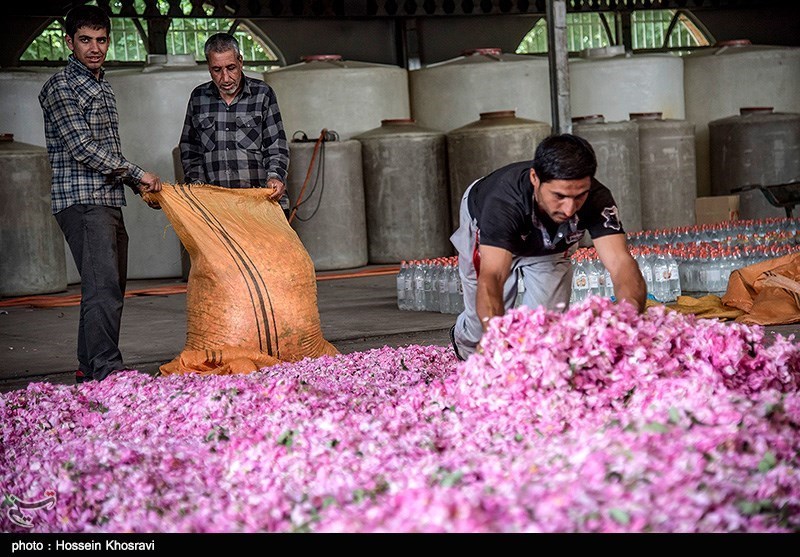
When and where Rose water is used
Rose water is used to flavour drinks, sweets, and desserts in many cuisines, including Persian, South Asian, Southeast Asian, and Mediterranean. It is added to puddings, pastries, and confections, and sometimes replaces alcohol in celebratory toasts. In cosmetics, it has been used for centuries to scent water for washing. Rose water is also important in religious ceremonies in Christianity, Zoroastrianism, and the Baháʼí Faith.
Forms of Rose water
Rose water can differ based on the type of rose used and the method of production. In Southeast Asia, it is the base for sweet drinks like sirap mawar and air bandung. In Cyprus, it flavours local desserts. Some regions use rose water as a non-alcoholic alternative for toasts at major events. The strength and scent can vary, depending on the rose variety and distillation technique.
What Rose water means
Rose water is deeply woven into the culture of Iran, where it is celebrated at the Golabgiri festival. It is used in religious rites across several faiths and is a symbol of hospitality and celebration. In food, it brings a floral note to sweets and drinks, and in rituals, it is valued for its purity and fragrance. Its production and use connect culinary, religious, and social traditions.
Questions people ask about Rose water
Where does rose water come from?
Rose water likely originated in Persia (modern Iran), where it is called golāb. Iran remains the main producer today, especially in Central Iran, which is known for its spring rose harvest and the Golabgiri festival.
How is rose water made?
Rose water is made by steeping rose petals in water or by steam distillation, often as a by-product when making rose oil. The process captures the aromatic compounds from the petals, resulting in a fragrant, clear liquid.
What is rose water used for?
Rose water is used to flavour sweets, drinks, and desserts in many cuisines. It is also added to cosmetics and used in religious ceremonies in Christianity, Zoroastrianism, and the Baháʼí Faith.
What does rose water symbolise?
Rose water is a symbol of hospitality, purity, and celebration in many cultures. It is valued for its fragrance and is an important part of religious and social rituals, especially in Iran and surrounding regions.
When is the best time to see rose water production in Iran?
The best time is in spring, during the annual Golabgiri festival in Central Iran, when the rose harvest takes place and rose water is freshly made.
Good reading and sources
The facts on this page come from the Wikipedia article "Rose water", written by its contributors and used under the CC BY-SA 4.0 licence, and from its Wikidata record (CC0). Phool rewrote the text in its own words, with AI assistance, and compares every page with the article to make sure no passage is copied. It may be reused under the same CC BY-SA 4.0 licence with a link back.
It may contain mistakes. If something is wrong, tell us. Last refreshed 2026-10-03.
More of the same kind
 Decoration
Pushpanjaliपुष्पाञ्जलि
A flower offering in Hindu worship and classical dance
Offering or rite
Decoration
Pushpanjaliपुष्पाञ्जलि
A flower offering in Hindu worship and classical dance
Offering or rite
 Decoration
Day of the DeadDía de (los) Muertos
Mexico’s festival of remembrance with altars, marigolds, and sugar skulls
🇲🇽 Mexico · Custom, November
Decoration
Day of the DeadDía de (los) Muertos
Mexico’s festival of remembrance with altars, marigolds, and sugar skulls
🇲🇽 Mexico · Custom, November
 Decoration
May devotions to the Blessed Virgin Mary
Month-long Catholic customs honouring Mary with flowers, altars, and processions
🇮🇹 Italy and 7 more · Custom, May
Decoration
May devotions to the Blessed Virgin Mary
Month-long Catholic customs honouring Mary with flowers, altars, and processions
🇮🇹 Italy and 7 more · Custom, May
 Decoration
Garland
A string or braid of flowers, leaves, or other materials for decoration or ceremony
🇮🇳 India and 3 more · Garland or wreath
Decoration
Garland
A string or braid of flowers, leaves, or other materials for decoration or ceremony
🇮🇳 India and 3 more · Garland or wreath
More from Iran
All the flowers of Iran Decoration
Suzani textileسوزن
Embroidered dowry textiles from Central Asia, rich in floral and tribal designs
🇹🇯 Tajikistan and 3 more · Flower craft
Decoration
Suzani textileسوزن
Embroidered dowry textiles from Central Asia, rich in floral and tribal designs
🇹🇯 Tajikistan and 3 more · Flower craft
 Decoration
Valentine's Day
A day for expressing love with cards, flowers, and gifts on February 14
🇮🇳 India and 1 more · Custom, February
Decoration
Valentine's Day
A day for expressing love with cards, flowers, and gifts on February 14
🇮🇳 India and 1 more · Custom, February
 Decoration
Butaبوته
A curved floral motif found in Persian, Indian, and Central Asian art and textiles
🇮🇷 Iran and 5 more · Art or design
Decoration
Butaبوته
A curved floral motif found in Persian, Indian, and Central Asian art and textiles
🇮🇷 Iran and 5 more · Art or design
 Decoration
Haft-sinهفتسین
A table of seven symbolic items for Nowruz, the Persian New Year
🇮🇷 Iran · Arrangement, March
Decoration
Haft-sinهفتسین
A table of seven symbolic items for Nowruz, the Persian New Year
🇮🇷 Iran · Arrangement, March