Workshops and hands-on · in season now
An ikebana lesson in Kyoto
Learn the basics of Japanese flower arranging in the city where the art took shape.
Presented by ClearTrust Free for gardeners, florists, travellers and the curious.

What it is
Ikebana is the Japanese art of arranging flowers, branches and leaves. It grew out of flower offerings made at Buddhist altars. The oldest school, Ikenobo, traces its origin to the priests of Rokkaku-do, a small six-sided temple in central Kyoto, and still has its headquarters beside it. Several teachers and schools in the city give short lessons to visitors. You are handed a shallow dish, a kenzan (a heavy pin holder) and a few seasonal stems, and learn how line, space and the angle of each stem matter more than the number of flowers. You leave seeing arrangements in shop windows differently.
Before you go
- Book ahead and say if you need the lesson in English.
- A first lesson takes about an hour to ninety minutes.
- Visit Rokkaku-do before or after. It is a few minutes from Karasuma Oike station.
The flowers you will see

Also part of it, and being written: Iris laevigata, Camellia japonica, Prunus mume.
Read more

More in Kyoto
 🇯🇵 Kyoto · Mar to AprPhilosopher's Path in cherry seasonA canal-side walk of about two kilometres in eastern Kyoto, lined with cherry trees.
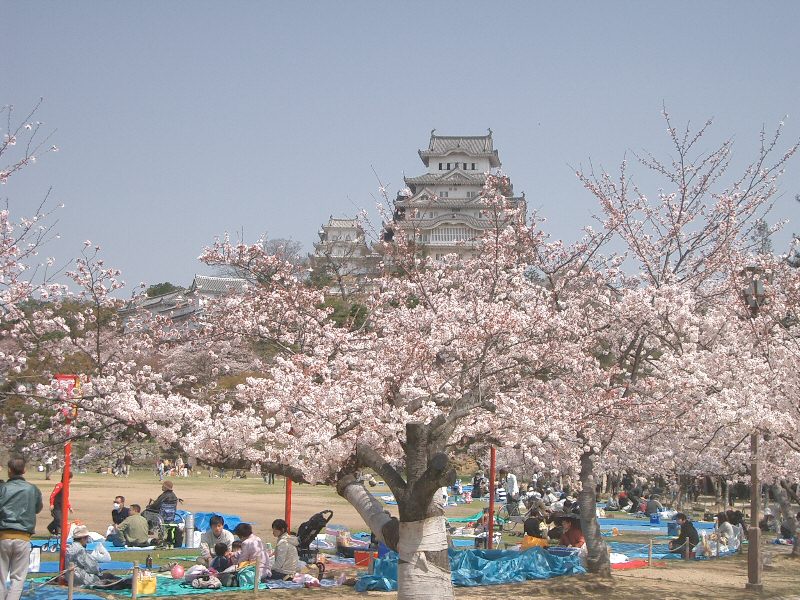 🇯🇵 Tokyo · Mar to AprCherry blossom season in TokyoAbout a week of pale pink along moats, rivers and parks, and the picnics that go with it.
 🇯🇵 Tokyo · Feb to NovShinjuku Gyoen through the seasonsA large former imperial garden in central Tokyo with a long cherry season and an autumn chrysanthemum show.
 🇯🇵 Hirosaki · Apr to MayHirosaki Castle cherry blossomA northern castle park with thousands of cherry trees and moats that turn pink with fallen petals.
 🇯🇵 Hitachinaka · Apr to OctNemophila hill at Hitachi Seaside ParkA hill by the Pacific covered in small sky-blue flowers in spring and red kochia bushes in autumn.
🇯🇵 Ashikaga · Apr to MayWisteria at Ashikaga Flower ParkVast old wisteria vines trained over trellises, with flower trails hanging to head height.
🇯🇵 Hitachinaka · Apr to OctNemophila hill at Hitachi Seaside ParkA hill by the Pacific covered in small sky-blue flowers in spring and red kochia bushes in autumn.
🇯🇵 Ashikaga · Apr to MayWisteria at Ashikaga Flower ParkVast old wisteria vines trained over trellises, with flower trails hanging to head height.Original text by the Phool desk, written with AI assistance. Background: "Ikebana" on Wikipedia. Bloom dates move with the weather, and markets and gardens change their hours: check locally before you travel. If we have something wrong, tell us.
Photo credits on this page
The small pictures above come from Wikimedia Commons under free licences. Some are cropped to fit.
- Hanami: Unknown author, CC BY-SA 3.0, source
- Chrysanthemum: Muhammad Mahdi Karim, GFDL 1.2, source
- Ikebana: Joe Mabel, CC BY-SA 3.0, source
- Shinjuku Gyoen: Kakidai, CC BY-SA 3.0, source
- Philosophers Path Kyoto: David Monniaux, CC BY-SA 3.0, source
- Hirosaki Castle Cherry Blossom: 掬茶, CC BY-SA 4.0, source
- Hitachi Seaside Park Nemophila: Miyuki Meinaka, CC BY-SA 4.0, source