
Columbine
Aquilegia, family Ranunculaceae
A perennial wildflower with spurred, often blue or multicoloured blooms
Columbines are perennial flowering plants found across the Northern Hemisphere, known for their spurred, nodding flowers in blue, purple, red, yellow, or mixed colours. Grown in gardens and wild places, they have a history in traditional medicine, symbolism, and as a food and perfume source, though parts of the plant are toxic.
- Columbine flowers have distinctive nectar spurs of varying shapes and lengths.
- Flower colours include blue, purple, red, yellow, and often combinations of these.
- Some parts of the plant are toxic if eaten, especially seeds and roots.
- Columbines have been grown in gardens since at least Roman times.
- The genus is highly variable and easy to hybridize.
What does Columbine look like?
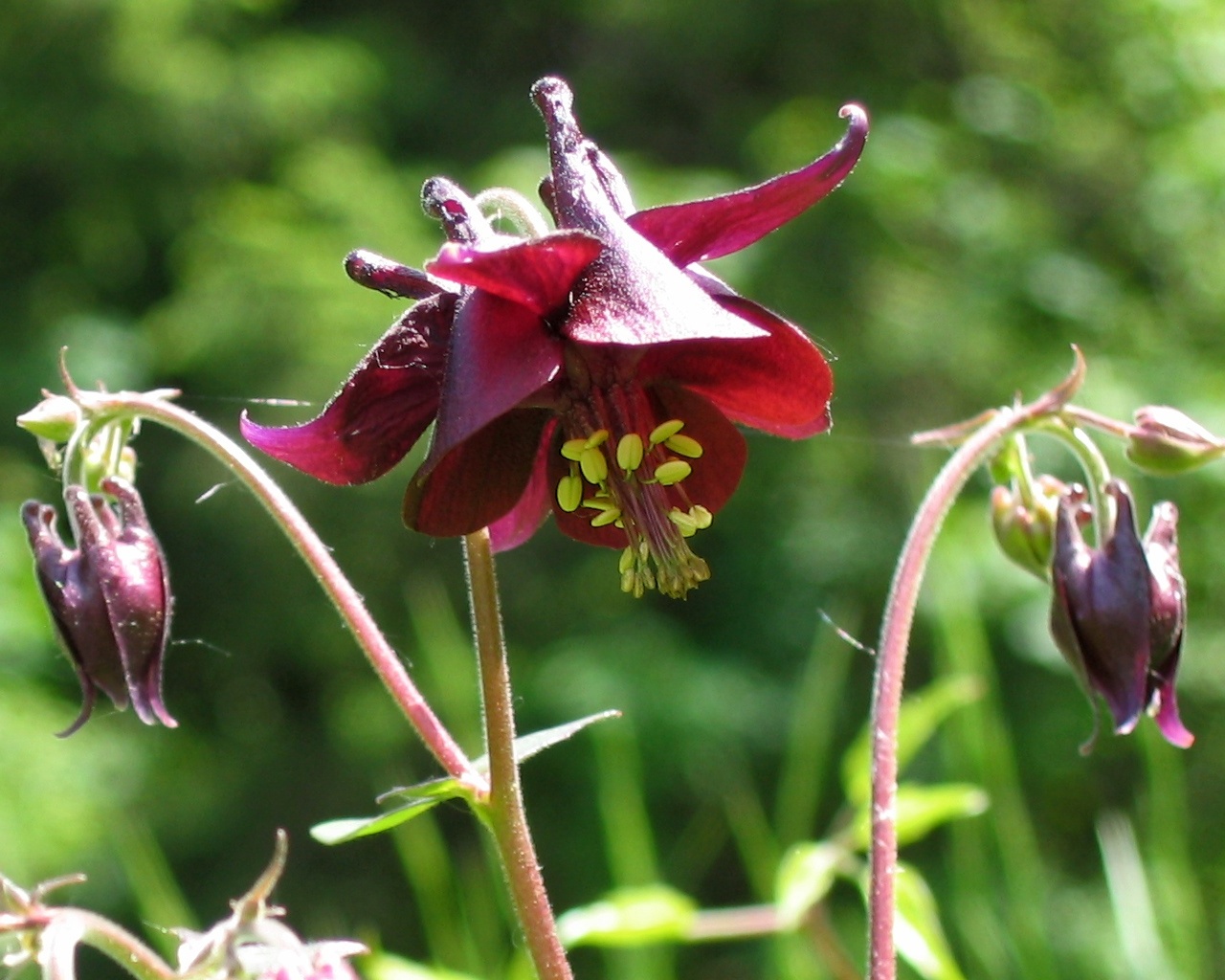
Columbines are herbaceous perennials with stiff stems and leaves divided into three or more leaflets. Their flowers, which appear in spring and summer, are usually nodding and feature five petal-like sepals and five petals, each often ending in a backward-pointing nectar spur. Flower colours range from blue and purple (especially in Europe) to red and yellow (more common in North America), and some species or varieties display several colours at once. The plants grow from woody rootstocks and produce clusters or solitary blooms up to 30 cm long. Some varieties are spurless or have double flowers.
Where does Columbine come from?
Aquilegia grows wild across the Northern Hemisphere, with species native to Europe, Asia, and North America. The genus has been known since ancient times, with archaeological evidence of cultivation in Roman Britain by the 3rd century AD. The name 'columbine' comes from the Latin for 'dove', inspired by the flower's shape, while 'Aquilegia' may refer to 'eagle' or to water collection, both referencing the spurred petals. Over centuries, columbines have been bred and hybridized, leading to many garden varieties.
When and how Columbine blooms
Columbines flower in spring and summer after a winter dormant period. Some bloom the first year from seed, others in their second year. They grow from seed or rootstock, needing a period of cold before germination. The plants produce both basal and stem leaves, and after flowering, seed heads split to release seeds. Gardeners value them for their ease of hybridization and variety of forms.



How Columbine is used
People grow columbines in gardens for their colourful, unusual flowers. Historically, parts of the plant have been used in traditional medicine in Asia, North America, and Europe, and sometimes for perfume or as food, though the plant is often toxic. In the wild, they serve as host plants for certain butterflies and attract a range of pollinators. Some cultures have linked columbines to fertility or religious symbolism.
Kinds of Columbine
There are between 70 and 400 species and subspecies of Aquilegia, with high variability in flower colour, spur length, and form. Some species, like A. ecalcarata, lack spurs entirely. Garden varieties include double-flowered forms and hybrids between Old and New World species, resulting in a wide range of appearances.
What Columbine means
Columbines have symbolized fertility in ancient Greek and Roman traditions and have Christian associations. Their unique shape inspired names in many languages. The plant appears in folklore and has been used as an emblem in various regions. Despite their beauty, their toxicity is well known, and caution is advised in their use.
Questions people ask about Columbine
Where do columbines come from?
Columbines (Aquilegia) are native to the Northern Hemisphere, with species found in Europe, Asia, and North America. They grow wild in a range of climates and have been cultivated since ancient times.
What do columbine flowers look like?
Columbine flowers are usually nodding, with five sepals and five petals, each often ending in a backward-pointing spur. They come in blue, purple, red, yellow, and mixed colours, and some varieties have double or spurless flowers.
Are columbines poisonous?
Yes, parts of the columbine plant, especially the seeds and roots, are toxic if eaten. Ingesting them can cause serious symptoms, so they should not be consumed without expert knowledge.
How are columbines used?
Columbines are mainly grown as garden flowers for their unique appearance. Historically, they have been used in traditional medicine, as perfume, and occasionally as food, but their toxicity means such uses are rare today.
What do columbines symbolize?
Columbines have been linked to fertility in ancient Greek and Roman traditions and have Christian associations. Their dove-like shape has inspired names and symbolism in several cultures.
Good reading and sources
- Encyclopaedia BritannicaArticle
- USDA Plants DatabaseUS Department of Agriculture, Article
- Lady Bird Johnson Wildflower CenterLady Bird Johnson Wildflower Center, Article
- Plants of the World OnlineRoyal Botanic Gardens, Kew, Plant database
- Where it has been recordedGBIF, Plant database
- Sightings and photos by naturalistsiNaturalist, Plant database
The facts on this page come from the Wikipedia article "Aquilegia", written by its contributors and used under the CC BY-SA 4.0 licence, and from its Wikidata record (CC0). Phool rewrote the text in its own words, with AI assistance, and compares every page with the article to make sure no passage is copied. It may be reused under the same CC BY-SA 4.0 licence with a link back.
It may contain mistakes. It is not medical or foraging advice: many flowers are poisonous, and traditional uses are reported, not recommended. If something is wrong, tell us. Last refreshed 2026-10-03.
Others in the family Ranunculaceae
The whole family ButtercupRanunculus
A widespread group of bright, often shiny-petalled wild and garden flowers
Ranunculus · Wildflower
ButtercupRanunculus
A widespread group of bright, often shiny-petalled wild and garden flowers
Ranunculus · Wildflower
 Anemone
Perennial wildflowers with colorful, petal-like sepals known as windflowers
Anemone · Wildflower
Anemone
Perennial wildflowers with colorful, petal-like sepals known as windflowers
Anemone · Wildflower
 MonkshoodAconitum
Tall, hooded wildflowers of mountain meadows, known for beauty and deadly poison
Aconitum · Wildflower
MonkshoodAconitum
Tall, hooded wildflowers of mountain meadows, known for beauty and deadly poison
Aconitum · Wildflower
 Clematis
A climbing vine with showy flowers, prized in gardens worldwide
Clematis · Wildflower
Clematis
A climbing vine with showy flowers, prized in gardens worldwide
Clematis · Wildflower