
Clematis
A climbing vine with showy flowers, prized in gardens worldwide
Clematis is a group of about 380 species of mostly climbing plants in the buttercup family. Native to temperate regions of the Northern Hemisphere, these vines are grown for their striking flowers, which come in many shapes and colours. Gardeners value clematis for covering walls, fences, and trellises.
- Clematis includes about 380 species of mostly climbing plants.
- Flowers come in many shapes and colours, often large and showy.
- Clematis is native to temperate regions of the Northern Hemisphere.
- Garden hybrids like 'Jackmanii' have been popular since the 19th century.
- Some species are known as 'Traveller's Joy' or 'leather flower'.
What does Clematis look like?
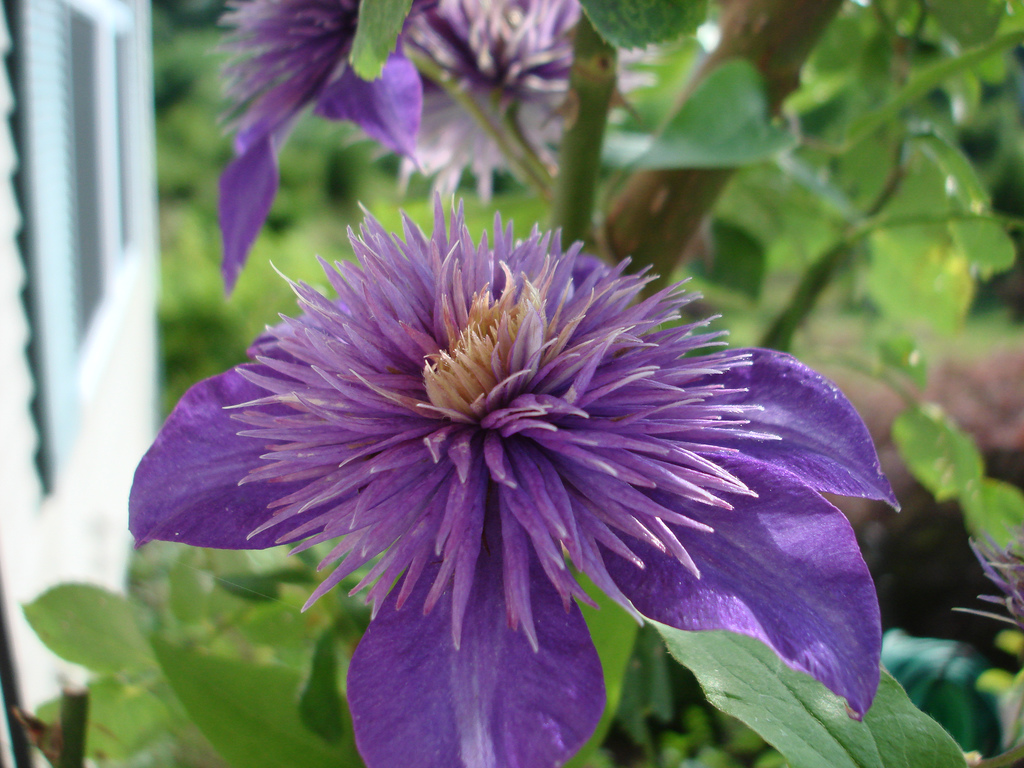
Clematis plants are mostly woody vines, though some are shrubby or herbaceous. Their leaves grow in pairs and often have twisting stalks that help the plant climb. Flowers vary widely in size and shape: some are large and open, others bell-shaped, with colours ranging from white and pink to purple, blue, maroon, and yellow. Some species have fluffy seed heads, earning names like 'old man's beard.'
Where does Clematis come from?
Clematis is native to temperate parts of the Northern Hemisphere. The genus name comes from Ancient Greek, meaning a climbing plant. Clematis species have been grown in gardens for centuries, with Japanese and Chinese forms reaching Europe in the 18th and 19th centuries. Clematis patens from Japan and Clematis florida from China were especially important in developing modern garden varieties.
When and how Clematis blooms
Clematis flowers at different times depending on the species and variety. Some bloom in spring on old stems, others in summer or autumn on new growth, and some do both. They prefer cool, moist soil for their roots and sun for their leaves. Clematis can be grown in the ground or in containers, and many types are trained to climb trellises, fences, or other plants.


How Clematis is used
Gardeners grow clematis for their decorative flowers, using them to cover walls, fences, and pergolas or to climb through shrubs and trees. Some forms are used as ground cover. Clematis is a highlight at flower shows, and many cultivars have won awards. In some regions, wild species are local emblems or feature in festivals.
Kinds of Clematis
There are hundreds of clematis species and even more cultivars. Groups include the large-flowered hybrids like 'Jackmanii', spring-flowering Montana group, and bell-shaped Atragene types. Colours and flower shapes vary widely, with some cultivars bred for double flowers or unusual hues. Certain groups, like Viticella, are especially popular in gardens.
What Clematis means
Clematis has held different meanings in various cultures. In Victorian Europe, it symbolized mental beauty, art, and sometimes poverty. In Japan, species like Clematis patens are well known. The plant is a frequent subject in garden design and is celebrated at flower shows. Some species are local emblems, and many cultivars are prized by collectors.
Where Clematis is used and seen


Where to see Clematis
 🇬🇧 Cranbrook · Apr to SepThe garden rooms of SissinghurstA Kent garden of hedged rooms made by Vita Sackville-West and Harold Nicolson, known above all for its White Garden.
 🇫🇷 Paris · May to SepThe rose garden of BagatelleA park in the Bois de Boulogne with about ten thousand rose bushes and a yearly international contest for new roses.
Questions people ask about Clematis
Where does clematis come from?
Clematis is native to temperate regions of the Northern Hemisphere, with many species found in Asia, Europe, and North America. Some important garden forms originated in Japan and China.
What does clematis look like?
Clematis plants are usually climbing vines with paired leaves and a wide range of flower shapes and colours. Flowers can be large and open or bell-shaped, in colours like white, pink, purple, blue, maroon, and yellow.
How is clematis used?
Clematis is mainly grown for its decorative flowers in gardens, often trained to climb walls, fences, or trellises. It is also featured in flower shows, and some wild species are local emblems.
What does clematis symbolise?
In Victorian Europe, clematis came to symbolise mental beauty, art, and sometimes poverty. It is also valued as a garden plant and local emblem in some regions.
Are there different types of clematis?
Yes, there are hundreds of species and many more cultivars. Groups include large-flowered hybrids, spring-flowering Montana types, and bell-shaped Atragene varieties, each with their own colours and forms.
Good reading and sources
- Encyclopaedia BritannicaArticle
- Lady Bird Johnson Wildflower CenterLady Bird Johnson Wildflower Center, Article
- Plants of the World OnlineRoyal Botanic Gardens, Kew, Plant database
- Where it has been recordedGBIF, Plant database
- Sightings and photos by naturalistsiNaturalist, Plant database
The facts on this page come from the Wikipedia article "Clematis", written by its contributors and used under the CC BY-SA 4.0 licence, and from its Wikidata record (CC0). Phool rewrote the text in its own words, with AI assistance, and compares every page with the article to make sure no passage is copied. It may be reused under the same CC BY-SA 4.0 licence with a link back.
It may contain mistakes. It is not medical or foraging advice: many flowers are poisonous, and traditional uses are reported, not recommended. If something is wrong, tell us. Last refreshed 2026-10-03.
Others in the family Ranunculaceae
The whole family ButtercupRanunculus
A widespread group of bright, often shiny-petalled wild and garden flowers
Ranunculus · Wildflower
ButtercupRanunculus
A widespread group of bright, often shiny-petalled wild and garden flowers
Ranunculus · Wildflower
 Anemone
Perennial wildflowers with colorful, petal-like sepals known as windflowers
Anemone · Wildflower
Anemone
Perennial wildflowers with colorful, petal-like sepals known as windflowers
Anemone · Wildflower
 MonkshoodAconitum
Tall, hooded wildflowers of mountain meadows, known for beauty and deadly poison
Aconitum · Wildflower
MonkshoodAconitum
Tall, hooded wildflowers of mountain meadows, known for beauty and deadly poison
Aconitum · Wildflower
 ColumbineAquilegia
A perennial wildflower with spurred, often blue or multicoloured blooms
Aquilegia · Wildflower
ColumbineAquilegia
A perennial wildflower with spurred, often blue or multicoloured blooms
Aquilegia · Wildflower