
Buttercup
Ranunculus, family Ranunculaceae
A widespread group of bright, often shiny-petalled wild and garden flowers
Buttercups are a large group of flowering plants found mostly in temperate and mountain regions worldwide. Their flowers, often yellow and glossy, grow in fields, gardens, and even water, and some species are considered weeds. All parts are poisonous when fresh.
- Ranunculus includes about 1,750 species worldwide
- Buttercups have shiny petals, often yellow, that reflect light
- All parts of the plant are poisonous when fresh
- Some species grow in water with different leaf shapes
- Buttercups are common in folklore and children's games
What does Buttercup look like?
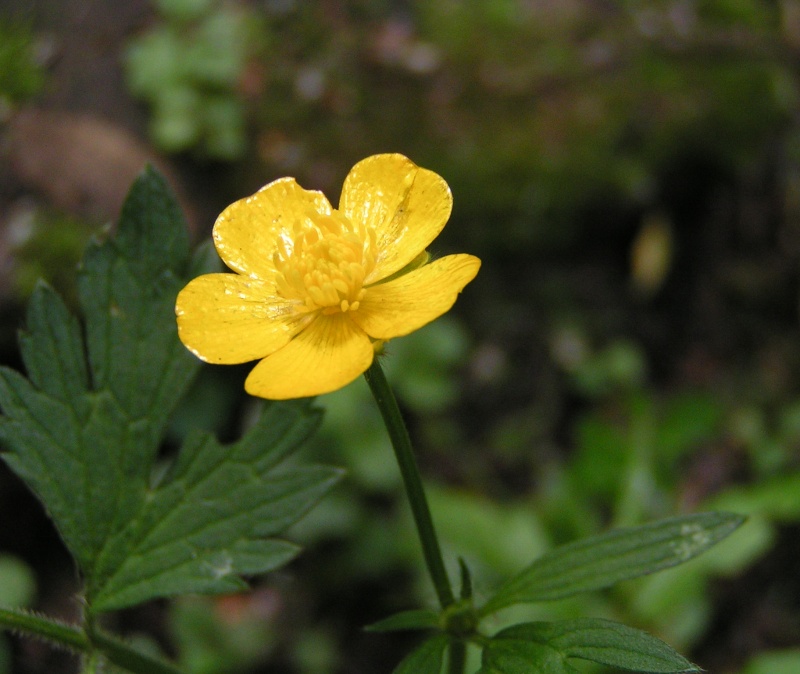
Buttercups are mostly perennial plants, though some live for just one or two years. They can grow on land or in water. Their leaves are usually grouped at the base, sometimes deeply cut or divided, and lack stipules. Buttercup flowers are often yellow, but can also be white, greenish, or tinged with red, purple, or pink. The petals are usually shiny, especially in yellow types, and the flowers may have three to seven sepals and petals. The fruit is a small dry achene, which can be smooth, hairy, or spiny.
Where does Buttercup come from?
The Ranunculus genus is found across the world, mainly in cooler and mountainous areas. Fossil records show that buttercups once grew in places like Antarctica, Germany, and China. The name Ranunculus comes from Latin, meaning 'little frog', likely because many species grow near water. Over time, the group has spread widely, and some species are now common in gardens and fields far from their original homes.
When and how Buttercup blooms
Buttercups usually bloom in spring, but some can flower into summer, especially in disturbed ground. They grow from seed or, in many perennial types, by sending out runners that root and form new plants. Some species thrive in water, with leaves that change shape depending on whether they are submerged or floating. Buttercups can be found in meadows, gardens, and ponds.


How Buttercup is used
While some Ranunculus species are grown for their bright flowers, many are seen as weeds in gardens and lawns. The plants are toxic to livestock and humans if eaten fresh, but dried buttercups in hay lose their harmful effects. In some cultures, buttercups are used in traditional medicine, mainly for joint pain and fever, though their toxins can cause skin irritation.
Kinds of Buttercup
The genus includes about 1,750 species, such as the creeping buttercup (Ranunculus repens), bulbous buttercup (R. bulbosus), and meadow buttercup (R. acris). Water crowfoots, a subgroup, grow in ponds and streams and have both thread-like underwater leaves and broader floating leaves. Some botanists have suggested splitting the genus into several smaller groups, but this is not universally accepted.
What Buttercup means
Buttercups are part of folklore in places like Britain, where children hold the flowers under their chins to see a yellow reflection, said to show a liking for butter. In the Pacific Northwest of the United States, local names and legends connect the plant to the trickster Coyote. The shiny petals help attract insects and may help the flower's reproductive parts stay warm.
Where Buttercup is used and seen

Traditions that use it
Questions people ask about Buttercup
Where do buttercups come from?
Buttercups grow in temperate and mountain regions all over the world. Fossils show they once lived in places like Antarctica, Germany, and China, and today they are found on every continent except Antarctica.
Are buttercups poisonous?
Yes, all fresh parts of buttercup plants are poisonous to humans and animals. Their acrid taste and ability to cause blisters usually keep animals from eating them, but dried buttercups in hay are not harmful.
What do buttercup flowers look like?
Buttercup flowers are usually yellow and shiny, but can also be white, greenish, or tinged with red, purple, or pink. They have three to seven petals and sepals, and the petals often reflect light strongly.
How are buttercups used?
Some species are grown as ornamental plants for their bright flowers, while others are considered weeds. In some traditions, buttercups have been used in folk medicine, mainly for joint pain and fever.
What do buttercups symbolize?
Buttercups are linked to folklore and children's games, such as holding a flower under the chin to see a yellow reflection, which is said to show a fondness for butter. They also appear in local legends in the Pacific Northwest.
Good reading and sources
- Encyclopaedia BritannicaArticle
- A Fossil ButtercupNature, Article
- USDA Plants DatabaseUS Department of Agriculture, Article
- Secrets of the shiny yellow buttercupThe Guardian, Article
- Plants of the World OnlineRoyal Botanic Gardens, Kew, Plant database
- Where it has been recordedGBIF, Plant database
- Sightings and photos by naturalistsiNaturalist, Plant database
The facts on this page come from the Wikipedia article "Ranunculus", written by its contributors and used under the CC BY-SA 4.0 licence, and from its Wikidata record (CC0). Phool rewrote the text in its own words, with AI assistance, and compares every page with the article to make sure no passage is copied. It may be reused under the same CC BY-SA 4.0 licence with a link back.
It may contain mistakes. It is not medical or foraging advice: many flowers are poisonous, and traditional uses are reported, not recommended. If something is wrong, tell us. Last refreshed 2026-10-03.
Others in the family Ranunculaceae
The whole family Anemone
Perennial wildflowers with colorful, petal-like sepals known as windflowers
Anemone · Wildflower
Anemone
Perennial wildflowers with colorful, petal-like sepals known as windflowers
Anemone · Wildflower
 MonkshoodAconitum
Tall, hooded wildflowers of mountain meadows, known for beauty and deadly poison
Aconitum · Wildflower
MonkshoodAconitum
Tall, hooded wildflowers of mountain meadows, known for beauty and deadly poison
Aconitum · Wildflower
 Clematis
A climbing vine with showy flowers, prized in gardens worldwide
Clematis · Wildflower
Clematis
A climbing vine with showy flowers, prized in gardens worldwide
Clematis · Wildflower
 ColumbineAquilegia
A perennial wildflower with spurred, often blue or multicoloured blooms
Aquilegia · Wildflower
ColumbineAquilegia
A perennial wildflower with spurred, often blue or multicoloured blooms
Aquilegia · Wildflower