
Philippine violet
Barleria cristata, family Acanthaceae
A small shrub with violet, pink, or white funnel-shaped flowers
Philippine violet is a shrub from the Acanthaceae family, native from southern China to India, Myanmar, and Pakistan. It grows up to a metre tall and is grown as an ornamental plant for its colourful, funnel-shaped blooms. In South India, its flowers are made into garlands for hair, and in Thailand, it is used in traditional remedies.
- Native from southern China to India and Myanmar
- Flowers are violet, pink, or white and funnel-shaped
- Used in South India for hair garlands in winter
- Traditional herbal uses in Thailand
- Naturalized in Hawaii, Fiji, and Christmas Island
What does Philippine violet look like?
This plant is a shrub that usually grows between 60 and 100 centimetres tall. Its leaves are dark green on top and lighter underneath, shaped from oval to narrow. The flowers are funnel-shaped and about 5 centimetres long, appearing in shades of violet, pink, or white. The fruit is a small, glossy capsule about 1.5 centimetres long.
Where does Philippine violet come from?
Philippine violet is native to a region stretching from southern China through India, Myanmar, and Pakistan. It has spread beyond its original range and now grows wild in places like Hawaii, Fiji, and Christmas Island, often along roadsides and disturbed ground. The plant is also widely grown in gardens for its attractive flowers.
When and how Philippine violet blooms
The shrub blooms in winter, especially in December in South India. It is grown as an ornamental in gardens and villages, thriving in dry or disturbed places. It can be propagated from seeds or cuttings and adapts to a range of soils and conditions.


How Philippine violet is used
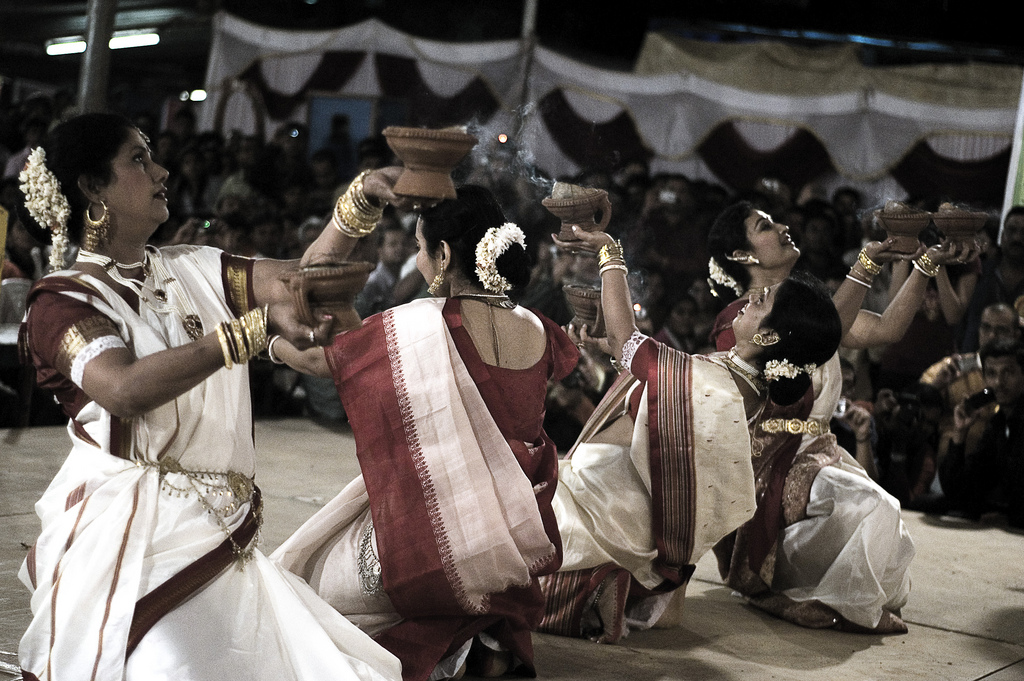
In South India, the flowers are gathered in winter and made into garlands, which women wear in their hair. In Thailand, the plant is used in traditional medicine as a tonic and for other purposes. It is also valued as a decorative garden shrub in many regions where it has become naturalized.
Kinds of Philippine violet
In Fiji, the plant is called 'tombithi', and in Thailand, it is known as 'อังกาบ'. The flowers come in several colours, including violet, pink, and white. Local names and uses vary across its range.
What Philippine violet means
Philippine violet is part of local traditions in South India, where its winter blooms are woven into hair garlands. In Thailand, it features in herbal medicine. The plant is also grown for its beauty in gardens and has adapted to new regions outside its native range.
Where Philippine violet is used and seen
Questions people ask about Philippine violet
Where does the Philippine violet come from?
It is native to a region stretching from southern China through India, Myanmar, and Pakistan, and has spread to other places such as Fiji and Hawaii.
What does the Philippine violet look like?
It is a shrub about 60 to 100 cm tall with dark green leaves and funnel-shaped flowers that can be violet, pink, or white.
How is this plant used?
In South India, its flowers are made into garlands for hair, and in Thailand, it is used in traditional herbal remedies. It is also grown as an ornamental plant.
Does the Philippine violet have any cultural importance?
Yes, it is woven into hair garlands in South India during winter and used in traditional medicine in Thailand.
Is the Philippine violet found outside its native region?
Yes, it has become naturalized in places like Hawaii, Fiji, and Christmas Island, often growing along roadsides and disturbed areas.
Good reading and sources
- USDA Plants DatabaseUS Department of Agriculture, Article
- Plants of the World OnlineRoyal Botanic Gardens, Kew, Plant database
- Where it has been recordedGBIF, Plant database
- Sightings and photos by naturalistsiNaturalist, Plant database
- Barleria cristata on WikipediaEncyclopedia
- More photos on Wikimedia CommonsPhotos
- Wikidata recordOpen data
The facts on this page come from the Wikipedia article "Barleria cristata", written by its contributors and used under the CC BY-SA 4.0 licence, and from its Wikidata record (CC0). Phool rewrote the text in its own words, with AI assistance, and compares every page with the article to make sure no passage is copied. It may be reused under the same CC BY-SA 4.0 licence with a link back.
It may contain mistakes. It is not medical or foraging advice: many flowers are poisonous, and traditional uses are reported, not recommended. If something is wrong, tell us. Last refreshed 2026-10-03.
Others in the family Acanthaceae
The whole family Black-eyed Susan vineThunbergia alata
A fast-growing climbing plant with bright flowers and a dark centre
🇨🇳 China and 7 more · Garden flower
Black-eyed Susan vineThunbergia alata
A fast-growing climbing plant with bright flowers and a dark centre
🇨🇳 China and 7 more · Garden flower
 Porcupine flowerBarleria prionitis
A spiny yellow-flowered shrub grown for hedges, medicine and ornament
🇲🇲 Myanmar and 7 more · Flowering shrub
Porcupine flowerBarleria prionitis
A spiny yellow-flowered shrub grown for hedges, medicine and ornament
🇲🇲 Myanmar and 7 more · Flowering shrub
 Bengal trumpetThunbergia grandiflora
A climbing vine with large blue-violet trumpet flowers from Southeast Asia
🇮🇳 India and 7 more · Climber
Bengal trumpetThunbergia grandiflora
A climbing vine with large blue-violet trumpet flowers from Southeast Asia
🇮🇳 India and 7 more · Climber
 NeelakurinjiStrobilanthes kunthiana
A blue-purple shrub that blooms once every 12 years in South India's hills
🇮🇳 India · Wildflower
NeelakurinjiStrobilanthes kunthiana
A blue-purple shrub that blooms once every 12 years in South India's hills
🇮🇳 India · Wildflower
More from China
All the flowers of China PeachPrunus persica
A flowering fruit tree from China, grown for its pink blossoms and sweet fruit
🇨🇳 China and 7 more · Flowering tree
PeachPrunus persica
A flowering fruit tree from China, grown for its pink blossoms and sweet fruit
🇨🇳 China and 7 more · Flowering tree
 Common sunflowerHelianthus annuus
A tall annual plant grown for its large yellow flower heads and edible seeds
🇨🇦 Canada and 4 more · Wildflower
Common sunflowerHelianthus annuus
A tall annual plant grown for its large yellow flower heads and edible seeds
🇨🇦 Canada and 4 more · Wildflower
 PomegranatePunica granatum
A shrub with bright red flowers and a fruit full of edible seeds
🇮🇷 Iran and 9 more · Flowering shrub
PomegranatePunica granatum
A shrub with bright red flowers and a fruit full of edible seeds
🇮🇷 Iran and 9 more · Flowering shrub
 BirchBetula
Slender trees with papery bark found across the northern world
🇨🇳 China and 7 more · Wildflower
BirchBetula
Slender trees with papery bark found across the northern world
🇨🇳 China and 7 more · Wildflower