
Bulbinella
Tall flower spikes from South Africa and New Zealand with yellow, white or orange blooms
Bulbinella is a group of flowering plants in the Asphodelaceae family, found mainly in South Africa’s Cape Province and parts of New Zealand. These plants grow up to a metre tall, with dense spikes of yellow, white, pink, or orange flowers, and narrow, thread-like leaves that decay into fibrous nets at the base.
- Most species are found only in South Africa’s Cape Province
- Some Bulbinella species are native to New Zealand’s Otago region
- Flower spikes can be yellow, white, pink, or orange
- Plants grow up to 1 metre tall with narrow, fibrous leaves
- Bulbinella was first described as a genus in 1843
What does Bulbinella look like?
Bulbinella plants can reach up to one metre in height. They have narrow or thread-like leaves that are never succulent and often decay into fibrous, netted bases, except in New Zealand species. The flowers are packed densely on a tall spike (raceme) at the end of the stem. Depending on the species, the blooms can be yellow, white, pink, or orange. Each flower has six stamens and sits in the axil of a bract. The seeds are shield-shaped, with one or two per chamber.
Where does Bulbinella come from?
The genus Bulbinella was first described in 1843. Most species are native to the winter rainfall area of Cape Province in western South Africa, where they are often found only in this region. Some species are also native to New Zealand, especially in the central Otago region, which has a climate similar to South Africa’s Cape. The plants have adapted to overwinter and survive dry periods with wiry or swollen tubers.
When and how Bulbinella blooms
Bulbinella grows from tubers that help the plant survive dry or cold seasons. They tend to overwinter and aestivate, meaning they remain dormant during unfavourable conditions. The plants send up tall flower spikes, with each flower emerging from the axil of a bract. The leaves are narrow and become fibrous as they age. Bulbinella can be found growing wild in regions with winter rainfall.

How Bulbinella is used
There is no information in the sources about traditional, decorative, or medicinal uses of Bulbinella. The genus is primarily noted for its presence in the wild and its distinctive flower spikes, which may be grown in gardens but are not mentioned as cut flowers or for other uses.
Kinds of Bulbinella
There are several species of Bulbinella, with many found only in South Africa’s Cape Province, such as Bulbinella cauda-felis and Bulbinella floribunda. In New Zealand, species like Bulbinella hookeri (Maori Lily) and Bulbinella rossii (Ross Lily) are native to both the North and South Islands, as well as outlying islands. Flower colour and leaf fibre patterns vary among species.
What Bulbinella means
The sources do not mention any symbolism, cultural significance, or use of Bulbinella in festivals or religious practice. The genus is mainly noted for its endemism and adaptation to specific climates in South Africa and New Zealand.
Where to see Bulbinella

Questions people ask about Bulbinella
Where does Bulbinella come from?
Most Bulbinella species are native to the Cape Province in western South Africa, while others are found in New Zealand, especially in the central Otago region.
What does Bulbinella look like?
Bulbinella plants grow up to a metre tall, with dense spikes of yellow, white, pink, or orange flowers. The leaves are narrow or thread-like and often decay into fibrous nets at the base.
How does Bulbinella grow?
Bulbinella grows from wiry or swollen tubers, which help it survive dry or cold seasons. The plant produces tall flower spikes, and its leaves become fibrous as they age.
Are there different types of Bulbinella?
Yes, there are several species, with most found only in South Africa and some in New Zealand. Flower colour and leaf fibre patterns can vary between species.
Is Bulbinella used for any special purpose?
The sources do not mention any traditional, decorative, or medicinal uses for Bulbinella. It is mainly noted for its wild presence and distinctive flowers.
Good reading and sources
- Plants of the World OnlineRoyal Botanic Gardens, Kew, Plant database
- Where it has been recordedGBIF, Plant database
- Sightings and photos by naturalistsiNaturalist, Plant database
The facts on this page come from the Wikipedia article "Bulbinella", written by its contributors and used under the CC BY-SA 4.0 licence, and from its Wikidata record (CC0). Phool rewrote the text in its own words, with AI assistance, and compares every page with the article to make sure no passage is copied. It may be reused under the same CC BY-SA 4.0 licence with a link back.
It may contain mistakes. It is not medical or foraging advice: many flowers are poisonous, and traditional uses are reported, not recommended. If something is wrong, tell us. Last refreshed 2026-10-03.
Others in the family Asphodelaceae
The whole family Cape aloeAloe ferox
A tall, spiny aloe from southern Africa with orange-red flowers and medicinal uses
🇱🇸 Lesotho · Wildflower
Cape aloeAloe ferox
A tall, spiny aloe from southern Africa with orange-red flowers and medicinal uses
🇱🇸 Lesotho · Wildflower
 Kniphofia thomsonii
A spiky-flowered plant from Africa’s Great Lakes region
🇰🇪 Kenya and 5 more · Wildflower
Kniphofia thomsonii
A spiky-flowered plant from Africa’s Great Lakes region
🇰🇪 Kenya and 5 more · Wildflower
 Zimbabwe AloeAloe excelsa
A tall, single-stemmed aloe from southern Africa with a crown of curved leaves
🇿🇼 Zimbabwe and 4 more · Flowering tree
Zimbabwe AloeAloe excelsa
A tall, single-stemmed aloe from southern Africa with a crown of curved leaves
🇿🇼 Zimbabwe and 4 more · Flowering tree
 Spiral aloeAloe polyphylla
A rare mountain succulent with leaves arranged in a perfect spiral
🇱🇸 Lesotho and 1 more · Cactus or succulent
Spiral aloeAloe polyphylla
A rare mountain succulent with leaves arranged in a perfect spiral
🇱🇸 Lesotho and 1 more · Cactus or succulent
More from South Africa
All the flowers of South Africa Eucalyptus
The tall, aromatic trees and shrubs known as gum trees or eucalypts
🇦🇺 Australia and 7 more · Flowering tree
Eucalyptus
The tall, aromatic trees and shrubs known as gum trees or eucalypts
🇦🇺 Australia and 7 more · Flowering tree
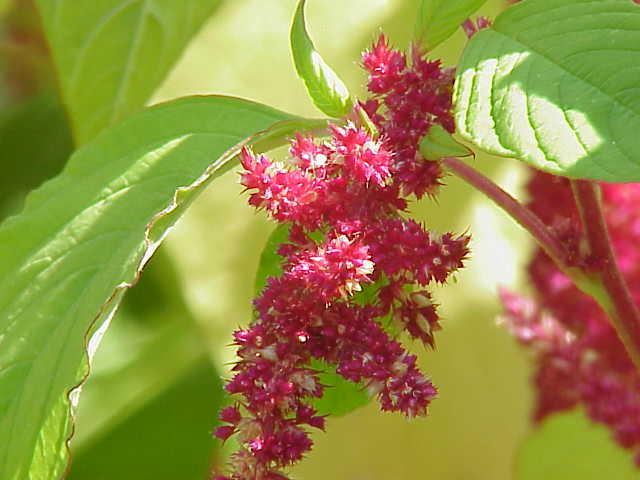 AmaranthAmaranthus
A tall, colourful plant grown for its flowers, leaves and edible seeds
🇲🇽 Mexico and 7 more · Wildflower
AmaranthAmaranthus
A tall, colourful plant grown for its flowers, leaves and edible seeds
🇲🇽 Mexico and 7 more · Wildflower
 Acacia
Shrubs and trees with golden or cream puffball flowers, native mostly to Australia
🇦🇺 Australia and 6 more · Wildflower
Acacia
Shrubs and trees with golden or cream puffball flowers, native mostly to Australia
🇦🇺 Australia and 6 more · Wildflower
 Sensitive PlantMimosa pudica
A touch-sensitive plant whose leaves fold up when disturbed
🇧🇷 Brazil and 8 more · Wildflower
Sensitive PlantMimosa pudica
A touch-sensitive plant whose leaves fold up when disturbed
🇧🇷 Brazil and 8 more · Wildflower