
Combretum
A large group of tropical trees and shrubs called bushwillows
Combretum is a genus of about 272 species of trees and shrubs found mainly in tropical and southern Africa, with some species in Madagascar, Asia, Australia, and the Americas. These plants are important in their native habitats and are used in traditional medicine in Africa and India.
- About 272 species of Combretum exist worldwide
- Most species are native to tropical and southern Africa
- Used in traditional medicine in Africa, India, and Madagascar
- Some species dominate African savannahs and woodlands
- Combretastatins, studied for medicine, were first isolated from Combretum
What does Combretum look like?
Combretum includes trees and shrubs known as bushwillows. These plants can vary in size but are often found as dominant species in African savannahs and woodlands. Their leaves and overall shape may remind some of willows, but they are not closely related. The flowers and fruits differ by species, and the genus is ecologically significant in many tropical regions.
Where does Combretum come from?
Most Combretum species grow wild in tropical and southern Africa, with a few native to Madagascar, tropical Asia, Australia, and the Americas. The genus has adapted to a range of habitats, from African savannahs with granitic soils to moist forests in South America. The name Combretum was studied and classified by botanist George Don.
When and how Combretum blooms
Combretum species grow naturally in their native regions and are not widely cultivated as ornamentals. They thrive in tropical climates and are often found in woodlands, savannahs, and forests. Flowering and fruiting times vary by species and location. Some species are pollinated by insects, birds, or even mammals.


How Combretum is used
Several Combretum species are used in traditional medicine in Africa and India. In Madagascar, bushwillows called voantamenaka are used as deworming remedies. Certain species contain compounds like combretastatins and antioxidants. The plants also play a key role in local ecosystems, supporting insects and other wildlife.
Kinds of Combretum
There are about 272 species in the genus, with some, like C. apiculatum, notable in southern Africa. Species in Madagascar are known for their medicinal use. The genus Quisqualis, once separate, is now included within Combretum. Each species can differ in size, leaf shape, and ecological role.
What Combretum means
Combretum species are important in local cultures for their medicinal uses. The Luvuvhu River in South Africa is named after C. erythrophyllum, showing the plant's cultural significance. The chemical combretastatin, first found in South African bushwillow, has been studied for its medicinal properties.
Questions people ask about Combretum
Where does Combretum come from?
Most Combretum species are native to tropical and southern Africa, but some also grow in Madagascar, tropical Asia, Australia, and the Americas.
What is Combretum used for?
Several species are used in traditional medicine in Africa and India. In Madagascar, some are used as deworming remedies. Certain species contain compounds that have been studied for medicinal purposes.
What does a Combretum plant look like?
Combretum includes both trees and shrubs, often found in savannahs and woodlands. Their appearance can vary, but some have a willow-like habit. The flowers and fruits differ by species.
Is Combretum important in its habitat?
Yes, some Combretum species are dominant plants in African savannahs and woodlands, playing a key role in the ecosystem and supporting various insects and animals.
Are there many species of Combretum?
There are about 272 accepted species in the genus, with a wide range of forms and ecological roles.
Good reading and sources
- USDA Plants DatabaseUS Department of Agriculture, Article
- Plants of the World OnlineRoyal Botanic Gardens, Kew, Plant database
- Where it has been recordedGBIF, Plant database
- Sightings and photos by naturalistsiNaturalist, Plant database
The facts on this page come from the Wikipedia article "Combretum", written by its contributors and used under the CC BY-SA 4.0 licence, and from its Wikidata record (CC0). Phool rewrote the text in its own words, with AI assistance, and compares every page with the article to make sure no passage is copied. It may be reused under the same CC BY-SA 4.0 licence with a link back.
It may contain mistakes. It is not medical or foraging advice: many flowers are poisonous, and traditional uses are reported, not recommended. If something is wrong, tell us. Last refreshed 2026-10-03.
More from South Africa
All the flowers of South Africa Eucalyptus
The tall, aromatic trees and shrubs known as gum trees or eucalypts
🇦🇺 Australia and 7 more · Flowering tree
Eucalyptus
The tall, aromatic trees and shrubs known as gum trees or eucalypts
🇦🇺 Australia and 7 more · Flowering tree
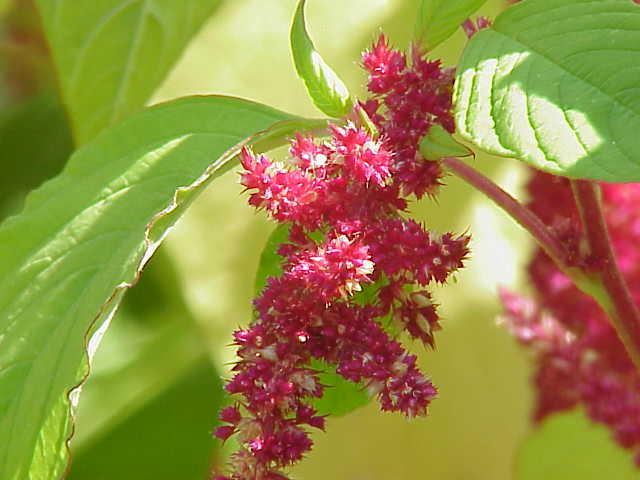 AmaranthAmaranthus
A tall, colourful plant grown for its flowers, leaves and edible seeds
🇲🇽 Mexico and 7 more · Wildflower
AmaranthAmaranthus
A tall, colourful plant grown for its flowers, leaves and edible seeds
🇲🇽 Mexico and 7 more · Wildflower
 Acacia
Shrubs and trees with golden or cream puffball flowers, native mostly to Australia
🇦🇺 Australia and 6 more · Wildflower
Acacia
Shrubs and trees with golden or cream puffball flowers, native mostly to Australia
🇦🇺 Australia and 6 more · Wildflower
 Sensitive PlantMimosa pudica
A touch-sensitive plant whose leaves fold up when disturbed
🇧🇷 Brazil and 8 more · Wildflower
Sensitive PlantMimosa pudica
A touch-sensitive plant whose leaves fold up when disturbed
🇧🇷 Brazil and 8 more · Wildflower