Avens
Geum, family Rosaceae
A group of perennial flowers with hooked fruits and rose-like blooms
Avens (Geum) is a genus of about 60 perennial plants in the rose family, found in temperate and alpine areas worldwide. These plants grow from a leafy base and send up slender stems topped with small, rose-like flowers in red, yellow, orange, or white, and are valued both in gardens and traditional medicine.
- Avens flowers can be red, yellow, orange, or white
- The fruit often has a hooked tip that sticks to animals
- Grown as ornamentals and used in folk medicine
- Support pollinators like bees and insect larvae
- Found in temperate and alpine regions worldwide
What does Avens look like?
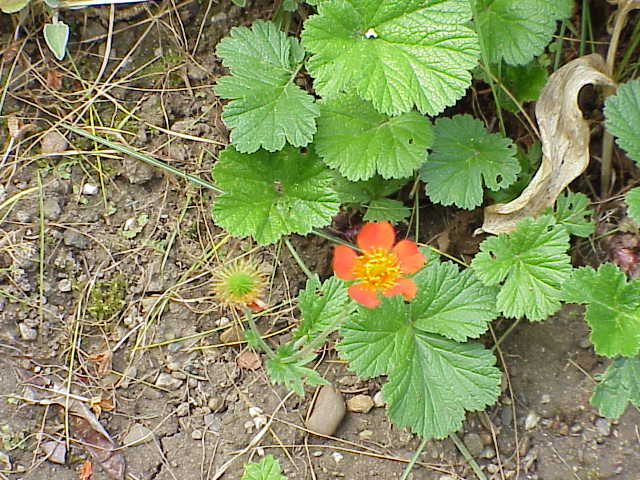
Avens are perennial herbs that usually form clumps of leaves at the base, with upright stems reaching up to about 60 cm, though some can be taller. Their leaves are deeply lobed and can change shape as the season progresses. The flowers, which appear in open clusters, have five rounded petals in shades of yellow, white, orange, or red. Many species have a distinctive hooked style on their fruit, which helps with animal dispersal. The blooms are small, often less than 5 cm across, and resemble miniature roses.
Where does Avens come from?
Geum species are native to a wide range of temperate and alpine environments, including regions in Africa, the Americas, Eurasia, and the Pacific. The name 'Geum' has classical roots, referring to the clove-like scent of the roots when crushed. The genus has a long taxonomic history, with early mentions in literature from the first century and formal naming by Linnaeus in the 18th century. Over time, botanists have debated which species belong in Geum, with recent genetic studies continuing to refine its classification.
When and how Avens blooms
Avens bloom mainly in midsummer, sending up flower stalks from a base of evergreen or semi-evergreen leaves. They grow best in cooler climates with moist, well-drained soil but can tolerate some dryness. The plants are usually grown from seed or divided roots, and some species spread by rhizomes or runners. Flowers are pollinated by insects, especially bees, and the hooked fruits are carried away by animals.


How Avens is used
People grow avens in gardens for their bright, rose-like flowers and tidy growth. Some varieties, such as 'Mrs J. Bradshaw', are recognized for their ornamental value. In addition to their decorative use, various Geum species have been used in folk medicine for their astringent and anti-inflammatory properties. The plants also support wildlife, serving as food for insect larvae and attracting pollinators.
Kinds of Avens
The genus includes about 60 species and several hybrids. Notable types are Geum urbanum (wood avens), Geum rivale (water avens), Geum triflorum (prairie smoke), and Geum quellyon (scarlet avens). Cultivars like 'Mrs J. Bradshaw' are grown for their showy orange flowers. Species differ in leaf shape, flower color, and whether their fruits have the characteristic hooked style.
What Avens means
Avens have been mentioned in botanical texts for centuries and are valued for their modest beauty and resilience. While not a major symbol in folklore, their roots' clove scent is noted in their name's origin. The genus is important in plant science for its diversity and hybridization, and some species are maintained in national plant collections. Their role as host plants for insects also makes them ecologically significant.
Questions people ask about Avens
Where do avens come from?
Avens are native to temperate and alpine regions across the world, including parts of Africa, Eurasia, the Americas, and the Pacific Islands.
What do avens look like?
Avens have clumps of deeply lobed leaves and upright stems topped with small, five-petaled flowers in red, yellow, orange, or white. Their fruits often have a hooked style.
How are avens used?
They are grown in gardens for their colorful flowers and have been used in traditional medicine for their astringent and anti-inflammatory qualities.
Are avens important for wildlife?
Yes, avens support various insects, including bees and butterfly larvae, and their flowers provide nectar for pollinators.
What does the name 'Geum' mean?
The name comes from classical words meaning 'taste,' referring to the clove-like smell of the roots when crushed.
Good reading and sources
- Encyclopaedia BritannicaArticle
- USDA Plants DatabaseUS Department of Agriculture, Article
- Lady Bird Johnson Wildflower CenterLady Bird Johnson Wildflower Center, Article
- Geum 'Mrs J. Bradshaw' (d)Royal Horticultural Society, Article
- Plants of the World OnlineRoyal Botanic Gardens, Kew, Plant database
- Where it has been recordedGBIF, Plant database
- Sightings and photos by naturalistsiNaturalist, Plant database
The facts on this page come from the Wikipedia article "Geum", written by its contributors and used under the CC BY-SA 4.0 licence, and from its Wikidata record (CC0). Phool rewrote the text in its own words, with AI assistance, and compares every page with the article to make sure no passage is copied. It may be reused under the same CC BY-SA 4.0 licence with a link back.
It may contain mistakes. It is not medical or foraging advice: many flowers are poisonous, and traditional uses are reported, not recommended. If something is wrong, tell us. Last refreshed 2026-10-03.
Others in the family Rosaceae
The whole family RoseRosa
Woody perennial plants with showy, often fragrant flowers in many colours
Rosa · Wildflower
RoseRosa
Woody perennial plants with showy, often fragrant flowers in many colours
Rosa · Wildflower
 PeachPrunus persica
A flowering fruit tree from China, grown for its pink blossoms and sweet fruit
🇨🇳 China and 7 more · Flowering tree
PeachPrunus persica
A flowering fruit tree from China, grown for its pink blossoms and sweet fruit
🇨🇳 China and 7 more · Flowering tree
 AlmondPrunus amygdalus
A Mediterranean tree grown for its fragrant spring flowers and edible seeds
🇮🇷 Iran and 6 more · Flowering tree
AlmondPrunus amygdalus
A Mediterranean tree grown for its fragrant spring flowers and edible seeds
🇮🇷 Iran and 6 more · Flowering tree
 ApricotPrunus armeniaca
A small fruit tree with early white to pink blossoms and golden-orange fruit
🇨🇳 China and 6 more · Flowering tree
ApricotPrunus armeniaca
A small fruit tree with early white to pink blossoms and golden-orange fruit
🇨🇳 China and 6 more · Flowering tree