
Red hot poker
Kniphofia uvaria, family Asphodelaceae
Tall spikes of red, orange and yellow flowers from South Africa
Red hot poker is a perennial plant with tall, torch-like flower spikes in red, orange, and yellow. Native to South Africa’s Cape Province, it is grown worldwide as a garden plant and has naturalised in places like Australia and New Zealand.
- Native to South Africa’s Cape Province
- Flower spikes can reach up to 1.5 meters tall
- Flowers blend red, orange, and yellow
- Naturalised and sometimes invasive in Australia
- Known as torch lily or tritomea
What does Red hot poker look like?
Red hot poker is a perennial with long, narrow, lily-like leaves and tall flower spikes that can reach up to 1.5 meters (5 feet) high. The flowerheads are dense and upright, shaped like a torch or poker, with colors that blend from red at the top through orange to yellow at the base. The plant forms clumps and stands out in gardens for its striking, warm-toned blooms.
Where does Red hot poker come from?
This plant comes from the Cape Province in South Africa, where it grows wild. It was introduced to gardens in many parts of the world for its bold appearance. Over time, it has spread outside gardens and become naturalised in places such as Australia, New Zealand, and India, sometimes escaping cultivation and growing in the wild.
When and how Red hot poker blooms
Red hot poker blooms at different times depending on the variety. It is grown as a garden perennial, suited to a range of climates from temperate to warm, and is hardy in zones 5–10. The plant is usually grown from divisions or sometimes from seed, and prefers well-drained soil and a sunny position.


How Red hot poker is used
Gardeners plant red hot poker for its showy flower spikes and to add color to borders and beds. In some regions, it has escaped from gardens and grows in the wild, sometimes forming thick clumps. It is not reported as being used in ceremonies or for food, but is valued mainly for its ornamental qualities.
Kinds of Red hot poker
There are many varieties of red hot poker, which differ in flowering times and sometimes in the exact shade of their blooms. Some varieties have been bred for earlier or later blooming, or for more compact growth, making them suitable for different garden settings.
What Red hot poker means
Red hot poker is mainly known as a garden plant and is not tied to specific symbolism or festivals in the sources. In some parts of Australia, it is considered an environmental weed because it can spread and threaten local ecosystems when it escapes gardens.
Questions people ask about Red hot poker
Where does red hot poker come from?
Red hot poker is native to the Cape Province of South Africa, where it grows wild. It has been introduced to gardens in many other parts of the world.
What does the red hot poker flower look like?
It has tall, upright spikes of flowers that blend red, orange, and yellow, with long, narrow leaves like a lily. The flowerheads can reach up to 1.5 meters high.
Is red hot poker grown outside South Africa?
Yes, it is widely grown as a garden plant in places like Australia, New Zealand, and India, and has naturalised in some of these areas.
Does red hot poker have any special meaning or use?
The sources do not mention any special symbolism or ceremonial use. It is mainly valued as an ornamental plant for gardens.
Can red hot poker become invasive?
In parts of south-eastern Australia, red hot poker has escaped gardens and become an environmental weed, forming dense clumps that can threaten sensitive ecosystems.
Good reading and sources
- USDA Plants DatabaseUS Department of Agriculture, Article
- Plants of the World OnlineRoyal Botanic Gardens, Kew, Plant database
- Where it has been recordedGBIF, Plant database
- Sightings and photos by naturalistsiNaturalist, Plant database
- Kniphofia uvaria on WikipediaEncyclopedia
- More photos on Wikimedia CommonsPhotos
- Wikidata recordOpen data
The facts on this page come from the Wikipedia article "Kniphofia uvaria", written by its contributors and used under the CC BY-SA 4.0 licence, and from its Wikidata record (CC0). Phool rewrote the text in its own words, with AI assistance, and compares every page with the article to make sure no passage is copied. It may be reused under the same CC BY-SA 4.0 licence with a link back.
It may contain mistakes. It is not medical or foraging advice: many flowers are poisonous, and traditional uses are reported, not recommended. If something is wrong, tell us. Last refreshed 2026-10-03.
Others in the family Asphodelaceae
The whole family Cape aloeAloe ferox
A tall, spiny aloe from southern Africa with orange-red flowers and medicinal uses
🇱🇸 Lesotho · Wildflower
Cape aloeAloe ferox
A tall, spiny aloe from southern Africa with orange-red flowers and medicinal uses
🇱🇸 Lesotho · Wildflower
 Kniphofia thomsonii
A spiky-flowered plant from Africa’s Great Lakes region
🇰🇪 Kenya and 5 more · Wildflower
Kniphofia thomsonii
A spiky-flowered plant from Africa’s Great Lakes region
🇰🇪 Kenya and 5 more · Wildflower
 Zimbabwe AloeAloe excelsa
A tall, single-stemmed aloe from southern Africa with a crown of curved leaves
🇿🇼 Zimbabwe and 4 more · Flowering tree
Zimbabwe AloeAloe excelsa
A tall, single-stemmed aloe from southern Africa with a crown of curved leaves
🇿🇼 Zimbabwe and 4 more · Flowering tree
 Spiral aloeAloe polyphylla
A rare mountain succulent with leaves arranged in a perfect spiral
🇱🇸 Lesotho and 1 more · Cactus or succulent
Spiral aloeAloe polyphylla
A rare mountain succulent with leaves arranged in a perfect spiral
🇱🇸 Lesotho and 1 more · Cactus or succulent
More from South Africa
All the flowers of South Africa Eucalyptus
The tall, aromatic trees and shrubs known as gum trees or eucalypts
🇦🇺 Australia and 7 more · Flowering tree
Eucalyptus
The tall, aromatic trees and shrubs known as gum trees or eucalypts
🇦🇺 Australia and 7 more · Flowering tree
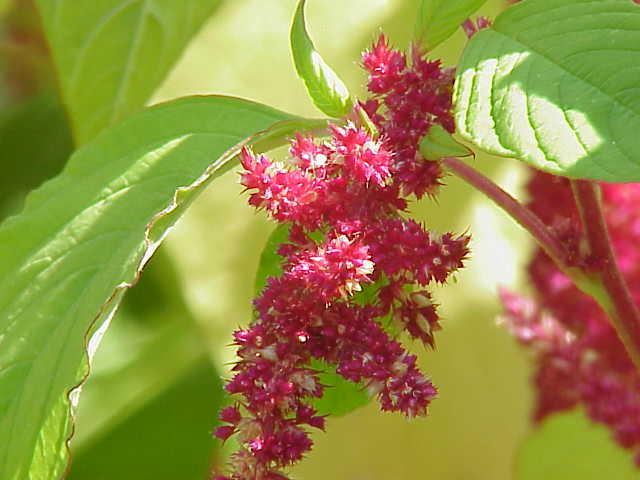 AmaranthAmaranthus
A tall, colourful plant grown for its flowers, leaves and edible seeds
🇲🇽 Mexico and 7 more · Wildflower
AmaranthAmaranthus
A tall, colourful plant grown for its flowers, leaves and edible seeds
🇲🇽 Mexico and 7 more · Wildflower
 Acacia
Shrubs and trees with golden or cream puffball flowers, native mostly to Australia
🇦🇺 Australia and 6 more · Wildflower
Acacia
Shrubs and trees with golden or cream puffball flowers, native mostly to Australia
🇦🇺 Australia and 6 more · Wildflower
 Sensitive PlantMimosa pudica
A touch-sensitive plant whose leaves fold up when disturbed
🇧🇷 Brazil and 8 more · Wildflower
Sensitive PlantMimosa pudica
A touch-sensitive plant whose leaves fold up when disturbed
🇧🇷 Brazil and 8 more · Wildflower