Turk's cap lily
Lilium superbum, family Liliaceae
Tall wild lily with curled orange flowers and a green star at the center
Turk's cap lily is a tall wildflower found in wet places from New England to the southeastern United States. Its striking flowers, with petals that curve back and show off deep yellow to reddish-orange shades, attract hummingbirds. Some Native Americans once used its bulbs in soups.
- Petals curl back to form a 'cap' shape
- Flowers can range from yellow to reddish-orange
- Grows in swamps, wet woods, and meadows
- Bulbs were used in soups by Native Americans
- Highly toxic to cats
What does Turk's cap lily look like?
Turk's cap lily grows from just under a meter up to over two meters tall. Each stem can hold several blooms, sometimes as many as forty. The flowers have petals that curl sharply backward, forming a shape that suggests a cap or turban. Their colors range from deep yellow to orange and reddish-orange, often with red at the tips and a green star in the center. This lily is found in swamps, moist woods, and wet meadows.
Where does Turk's cap lily come from?
This lily is native to the eastern and central United States, with its range stretching from southern New Hampshire and Massachusetts down to Florida and west to Arkansas and Missouri. It thrives in areas with wet soil and humid conditions, especially in regions like the Appalachian Mountains. The name 'Turk's cap' comes from the flower's curved petals, which reminded people of the hats once worn in Turkey.
When and how Turk's cap lily blooms
Turk's cap lily blooms in summer. It prefers damp soils and can be found in natural wetlands, woods, and meadows. The plant grows from bulbs, which send up tall stems each year. It is sometimes grown in gardens, especially those that can provide moist conditions similar to its wild habitat.
How Turk's cap lily is used
The bulbs of this lily were traditionally used by some Native American groups to make soup. The flowers are important for wildlife, providing nectar for hummingbirds and large insects. Because all true lilies are highly toxic to cats, people with cats are advised not to grow or keep this plant.
Kinds of Turk's cap lily
Lilium superbum varies in size, flower form, and color. Some plants are much taller or have more flowers than others. The green star at the center of the flower helps tell it apart from similar lilies, such as the Asiatic tiger lily.
What Turk's cap lily means
Turk's cap lily is endangered or threatened in several states and Canadian provinces, including Florida, New Hampshire, Alberta, and Saskatchewan. In New York, it is considered vulnerable. Its unique flower shape and bright colors make it a favorite among wildflower enthusiasts, but its populations are at risk in parts of its range.
Questions people ask about Turk's cap lily
Where does the Turk's cap lily come from?
It is native to the eastern and central United States, from New England south to Florida and west to Arkansas and Missouri.
What does the Turk's cap lily look like?
It is a tall plant with several large flowers per stem. The petals curl backward, and the colors range from deep yellow to reddish-orange with a green star at the center.
Is the Turk's cap lily poisonous?
Yes, all parts of the plant are extremely toxic to cats and can be fatal if ingested.
How was the Turk's cap lily used by Native Americans?
Some Native American groups used the bulbs of this lily to make soup.
Why is it called Turk's cap lily?
The name comes from the way the petals curve back, which people thought resembled a Turkish cap or turban.
Good reading and sources
- Lady Bird Johnson Wildflower CenterLady Bird Johnson Wildflower Center, Article
- Plants of the World OnlineRoyal Botanic Gardens, Kew, Plant database
- Where it has been recordedGBIF, Plant database
- Sightings and photos by naturalistsiNaturalist, Plant database
- Lilium superbum on WikipediaEncyclopedia
- More photos on Wikimedia CommonsPhotos
- Wikidata recordOpen data
The facts on this page come from the Wikipedia article "Lilium superbum", written by its contributors and used under the CC BY-SA 4.0 licence, and from its Wikidata record (CC0). Phool rewrote the text in its own words, with AI assistance, and compares every page with the article to make sure no passage is copied. It may be reused under the same CC BY-SA 4.0 licence with a link back.
It may contain mistakes. It is not medical or foraging advice: many flowers are poisonous, and traditional uses are reported, not recommended. If something is wrong, tell us. Last refreshed 2026-10-03.
Others in the family Liliaceae
The whole family TulipTulipa
Spring-blooming bulbs with showy, cup-shaped flowers in many colours
🇳🇱 Netherlands and 7 more · Wildflower
TulipTulipa
Spring-blooming bulbs with showy, cup-shaped flowers in many colours
🇳🇱 Netherlands and 7 more · Wildflower
 LilyLilium
Tall bulb flowers with large, colourful blooms in many gardens and cultures
Lilium · Wildflower
LilyLilium
Tall bulb flowers with large, colourful blooms in many gardens and cultures
Lilium · Wildflower
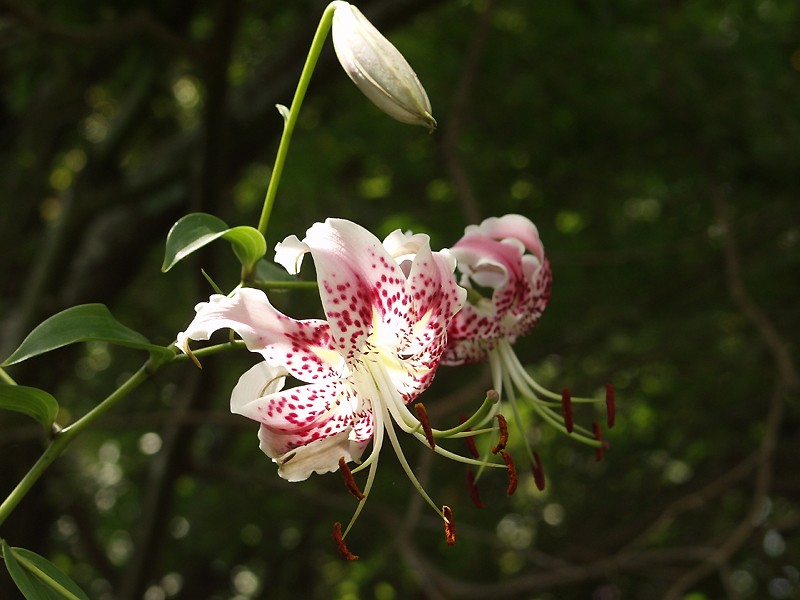 Lilium speciosum
A late-summer lily with fragrant white to pink flowers from East Asia
🇯🇵 Japan and 2 more · Wildflower
Lilium speciosum
A late-summer lily with fragrant white to pink flowers from East Asia
🇯🇵 Japan and 2 more · Wildflower
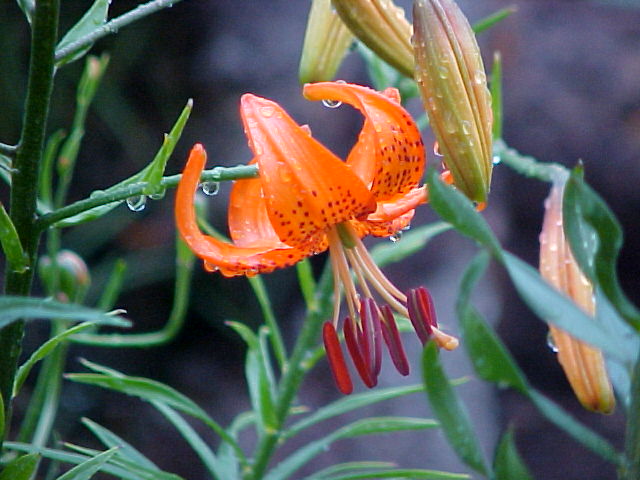 Lilium davidii
A tall Asian lily with edible bulbs and orange recurved flowers
🇨🇳 China and 1 more · Wildflower
Lilium davidii
A tall Asian lily with edible bulbs and orange recurved flowers
🇨🇳 China and 1 more · Wildflower