
ʻŌhiʻa Lehua
Metrosideros polymorpha, family Myrtaceae
The sacred flowering tree of Hawaiʻi with pom-pom blossoms from red to yellow
ʻŌhiʻa Lehua is an evergreen tree native only to the Hawaiian Islands, known for its pom-pom shaped flowers in red, yellow, and other shades. It grows from sea level to high mountains, is sacred in Hawaiian tradition, and its wood and flowers are used for building, lei, and honey.
- Endemic to the six largest Hawaiian Islands
- Flowers range from red to yellow and are used in lei
- First tree to grow on new lava flows
- State tree of Hawaiʻi
- Linked to the volcano goddess Pele in Hawaiian tradition
What does ʻŌhiʻa Lehua look like?
ʻŌhiʻa Lehua is a highly variable evergreen tree, sometimes reaching up to 30 meters tall but often appearing as a shrub in harsher conditions. Its trunk may be straight or twisted, and some trees have stilt or aerial roots. The flowers, clustered at branch tips, are made up of masses of stamens, giving them a pom-pom look. Most are bright red, but orange, pink, salmon, and yellow forms also occur. The leaves can close their pores to protect against harmful gases.
Where does ʻŌhiʻa Lehua come from?
This tree is found only in Hawaiʻi, where it is the most common native tree. It grows from sea level to 2,500 meters, thriving in many habitats from dry forests to bogs and recent lava flows. ʻŌhiʻa Lehua is often the first plant to colonize new lava. The species name 'polymorpha' means 'many forms', reflecting its adaptability. The genus Metrosideros is widespread in the Pacific, but Metrosideros polymorpha is unique to Hawaiʻi.
When and how ʻŌhiʻa Lehua blooms
ʻŌhiʻa Lehua grows slowly and can be started from seed. It thrives in acidic to neutral soils and tolerates a wide range of rainfall, from dry areas to rain-soaked bogs. On deep, moist soils it grows tall, while in poor or dry spots it stays shrubby. In forests, seedlings may start on decaying logs or tree ferns, sometimes developing stilt roots as they mature.


How ʻŌhiʻa Lehua is used
The hard, reddish-brown wood is used in Hawaiian building, tools, and firewood. The flowers and leaf buds are woven into lei for celebrations and ceremonies. The tree is a source of native honey. In traditional medicine, the flowers were used to ease childbirth pain. ʻŌhiʻa Lehua is also planted in gardens and is important for native wildlife.
Kinds of ʻŌhiʻa Lehua
ʻŌhiʻa Lehua varies greatly in size and form, from tall trees to low shrubs. Flower color also ranges widely, with red being most common but yellow, pink, and orange forms found. Five Metrosideros species are native to Hawaiʻi, each with distinct leaves. Related trees from New Zealand and the Kermadec Islands have been planted in Hawaiʻi but are not native.
What ʻŌhiʻa Lehua means
ʻŌhiʻa Lehua is sacred in Hawaiian culture, linked to the volcano goddess Pele and the goddess of hula, Laka. A legend tells of two lovers, ʻŌhiʻa and Lehua, transformed into the tree and its flower. The tree is the state tree of Hawaiʻi, and its forests are vital for native species. Rapid ʻōhiʻa death, a fungal disease, threatens these forests today.
Questions people ask about ʻŌhiʻa Lehua
Where does ʻŌhiʻa Lehua come from?
ʻŌhiʻa Lehua is native only to the six largest Hawaiian Islands. It grows from sea level up to high elevations and is the most common native tree in Hawaiʻi.
What does the ʻŌhiʻa Lehua flower look like?
The flowers are pom-pom shaped clusters made up of many stamens. Most are bright red, but orange, pink, salmon, and yellow forms also occur.
What is ʻŌhiʻa Lehua used for?
Its wood is used for building, tools, and firewood. The flowers and buds are woven into lei, and the tree is a source of native honey. The flowers were also used in traditional medicine.
What does ʻŌhiʻa Lehua symbolize?
ʻŌhiʻa Lehua is sacred in Hawaiian culture, associated with the volcano goddess Pele and the goddess of hula, Laka. It is featured in legends about love and transformation.
Is ʻŌhiʻa Lehua threatened?
ʻŌhiʻa forests face threats from invasive species and a fungal disease called rapid ʻōhiʻa death, which can kill trees quickly and affects native wildlife that depend on them.
Good reading and sources
- Trees - Hawaiʻi Volcanoes National Park (U.S. National Park Service)US National Park Service, Article
- IUCN Red List of Threatened SpeciesIUCN Red List, Article
- Plants of the World OnlineRoyal Botanic Gardens, Kew, Plant database
- Where it has been recordedGBIF, Plant database
- Sightings and photos by naturalistsiNaturalist, Plant database
- Metrosideros polymorpha on WikipediaEncyclopedia
- More photos on Wikimedia CommonsPhotos
- Wikidata recordOpen data
The facts on this page come from the Wikipedia article "Metrosideros polymorpha", written by its contributors and used under the CC BY-SA 4.0 licence, and from its Wikidata record (CC0). Phool rewrote the text in its own words, with AI assistance, and compares every page with the article to make sure no passage is copied. It may be reused under the same CC BY-SA 4.0 licence with a link back.
It may contain mistakes. It is not medical or foraging advice: many flowers are poisonous, and traditional uses are reported, not recommended. If something is wrong, tell us. Last refreshed 2026-10-03.
Others in the family Myrtaceae
The whole family Eucalyptus
The tall, aromatic trees and shrubs known as gum trees or eucalypts
🇦🇺 Australia and 7 more · Flowering tree
Eucalyptus
The tall, aromatic trees and shrubs known as gum trees or eucalypts
🇦🇺 Australia and 7 more · Flowering tree
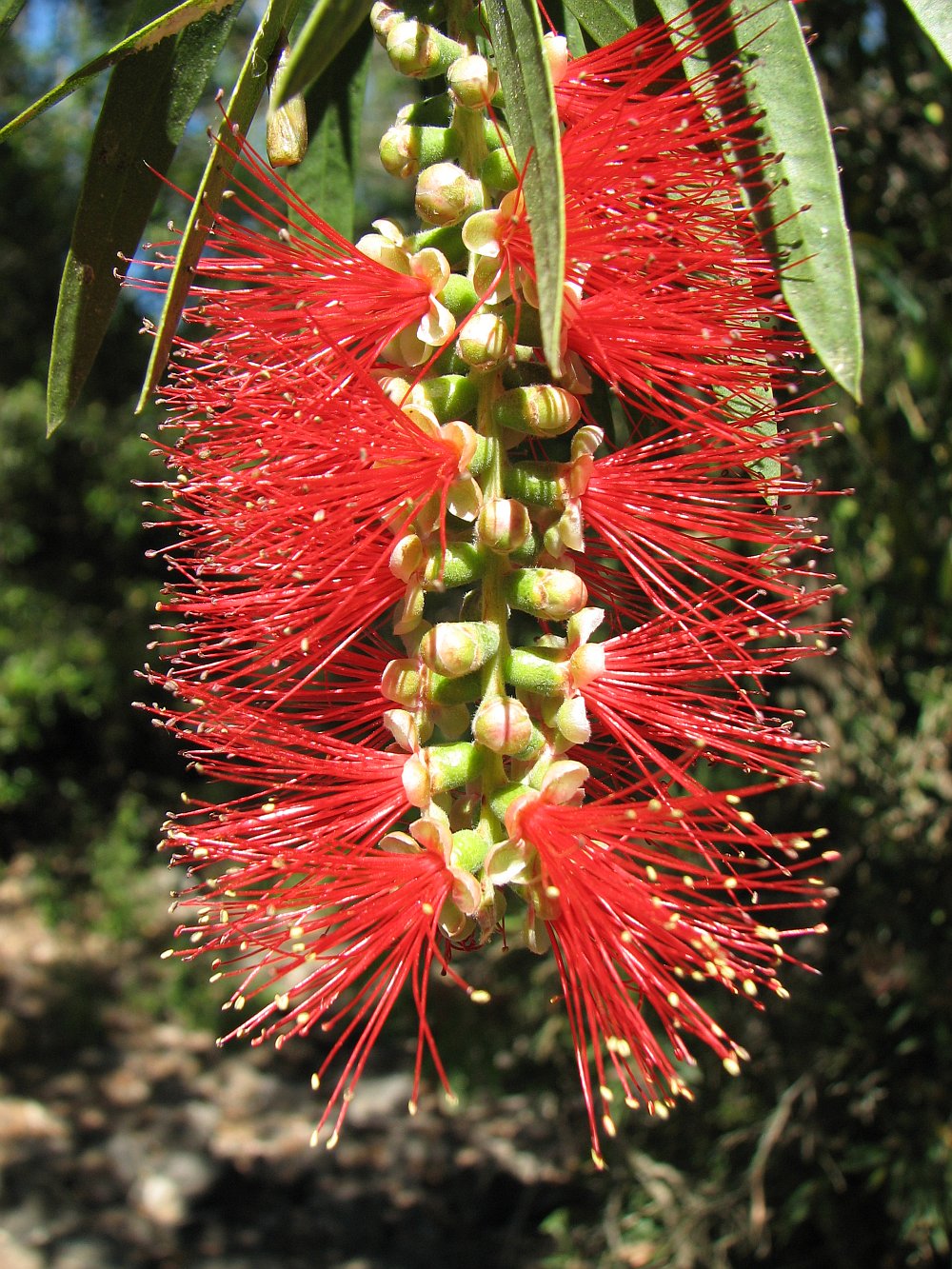 BottlebrushCallistemon
Shrubs with brush-shaped flowers native to Australia
🇦🇺 Australia · Flowering shrub
BottlebrushCallistemon
Shrubs with brush-shaped flowers native to Australia
🇦🇺 Australia · Flowering shrub
 Darwinia
Australian shrubs with bell-like flowers wrapped in colourful bracts
🇦🇺 Australia · Flowering shrub
Darwinia
Australian shrubs with bell-like flowers wrapped in colourful bracts
🇦🇺 Australia · Flowering shrub
 Weeping bottlebrushMelaleuca viminalis
A red-flowered Australian tree with weeping branches and bottlebrush blooms
🇦🇺 Australia and 5 more · Flowering tree
Weeping bottlebrushMelaleuca viminalis
A red-flowered Australian tree with weeping branches and bottlebrush blooms
🇦🇺 Australia and 5 more · Flowering tree