Bottlebrush
Callistemon, family Myrtaceae
Shrubs with brush-shaped flowers native to Australia
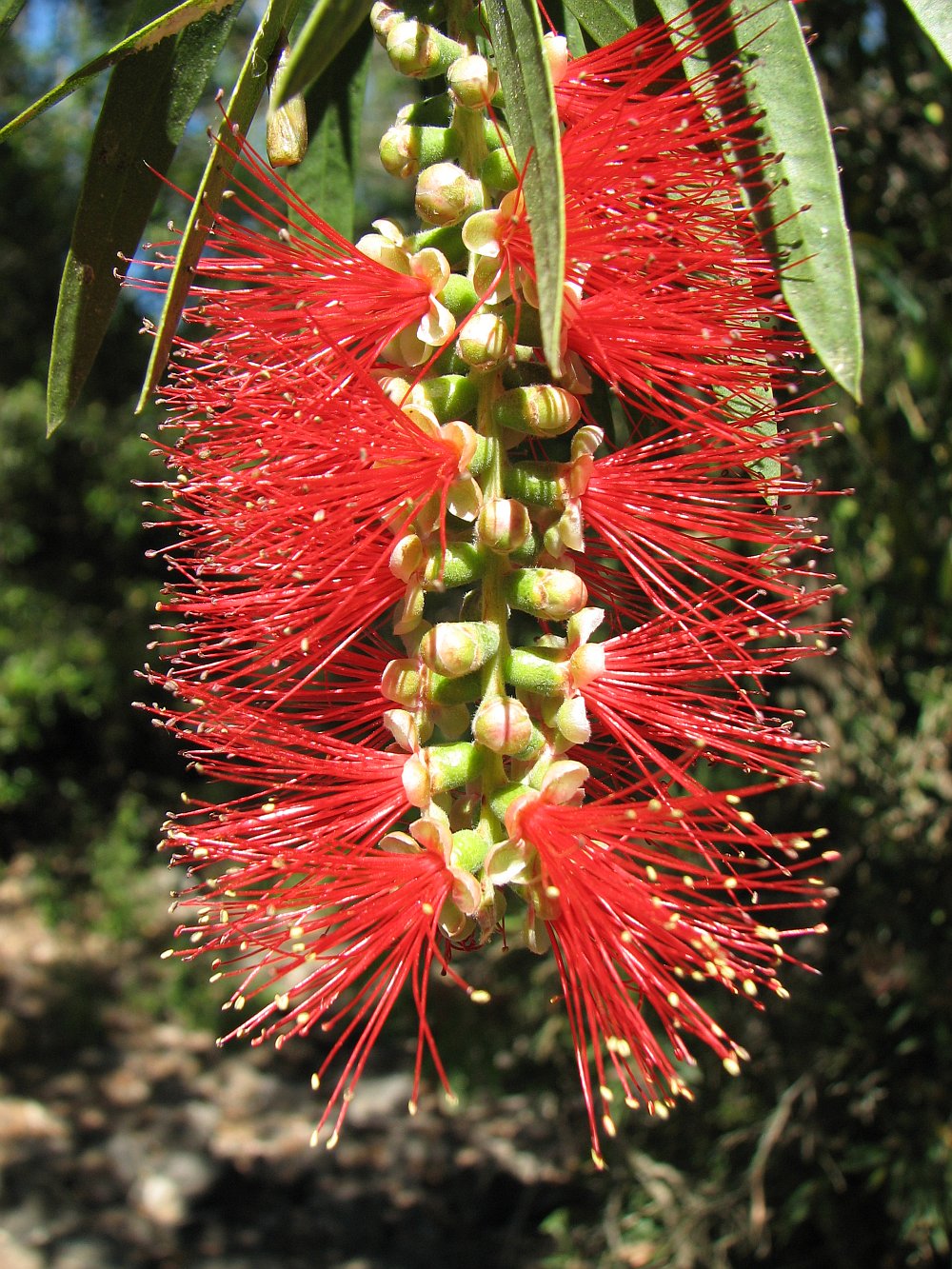
Bottlebrush refers to shrubs in the Callistemon genus, known for their cylindrical flower spikes that resemble cleaning brushes. Native to Australia, these plants are popular in gardens for their bright, bristly flowers, which are usually red but can appear in other colours. They thrive in temperate climates and are grown worldwide.
- Bottlebrush flowers are shaped like cylindrical brushes.
- Most species are native only to Australia.
- Flower colours include red, yellow, green, orange, pink, and white.
- They bloom mainly in spring and early summer.
- The genus is closely related to Melaleuca.
What does Bottlebrush look like?
Bottlebrush plants are shrubs with flower spikes that look like the brushes used to clean bottles. The flowers are made up mostly of long, colourful stamens, while the petals are small and not very noticeable. Most species have bright red flowers, but some kinds show yellow, green, orange, pink, or white. The flower heads are dense and cylindrical, and after blooming, woody seed capsules form along the stems.
Where does Bottlebrush come from?
Callistemon is a genus first described in 1814 and is found only in Australia in the wild. These shrubs are especially common along the east coast and in temperate regions, but some species also grow in Tasmania and southwestern parts of the country. The name comes from Greek words for 'beautiful stamen.' Over time, botanists have debated whether Callistemon should be grouped with Melaleuca, a closely related genus, and the classification remains unsettled.
When and how Bottlebrush blooms
Bottlebrush shrubs flower mainly in spring and early summer, but some may bloom at other times if conditions are right. They prefer deep, light soils and regular watering, though some species can handle dry spells. Plants can be grown from seeds or cuttings, and pruning after flowering helps maintain their shape. They are suited to mild climates and may be damaged by heavy frost.



How Bottlebrush is used
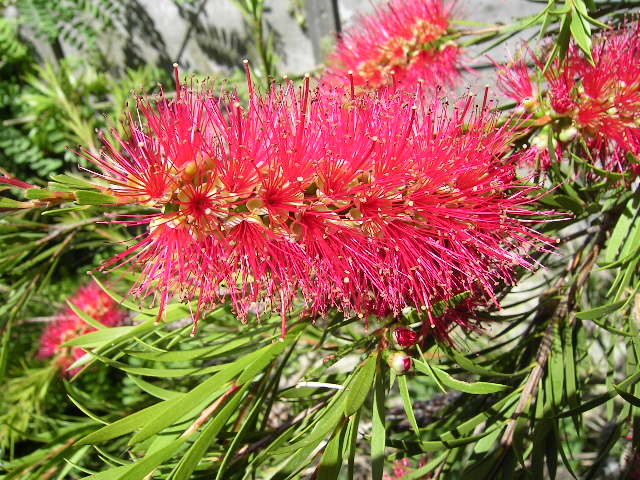
These shrubs are widely grown in gardens for their striking flower spikes and are also used in landscaping. They can be planted in the ground or kept in pots. Their colourful flowers attract attention and are valued for home decoration. Some species are drought-tolerant, making them useful in gardens that receive less water.
Kinds of Bottlebrush
There are about 50 species of bottlebrush, each with its own flower colour and size. Some species are more suited to certain climates or soils, and a few are found only in specific regions of Australia. The genus is still under review by botanists, with some species being moved between Callistemon and Melaleuca.
What Bottlebrush means
Bottlebrush plants are a familiar sight in Australian gardens and public spaces. They are valued for their unique appearance and ability to thrive in local conditions. The debate over their classification reflects their close ties to other Australian native plants. They are not tied to specific cultural or religious traditions, but their bright flowers make them a popular choice for ornamental planting.
Where Bottlebrush is used and seen

Questions people ask about Bottlebrush
Where do bottlebrush plants come from?
Bottlebrush plants, or Callistemon, are native to Australia. They are found mainly in temperate regions, especially along the east coast, but some species grow in Tasmania and southwestern Australia.
Why are they called bottlebrush?
Their flower spikes are dense and cylindrical, with long, colourful stamens that look like the brushes used for cleaning bottles. This unique shape gives the plant its common name.
What colours do bottlebrush flowers have?
Most bottlebrush flowers are red, but some species have yellow, green, orange, pink, or white flowers. The colour depends on the species.
How are bottlebrush plants used?
They are mainly grown as ornamental shrubs in gardens and landscaping. Their bright, brush-like flowers make them popular for home decoration, and some species are valued for their ability to handle dry conditions.
Are bottlebrush plants important in culture or religion?
Bottlebrush plants are widely planted in Australia for their appearance, but the sources do not mention any specific cultural or religious significance.
Good reading and sources
- Encyclopaedia BritannicaArticle
- Bottlebrush - CallistemonAustralian National Botanic Gardens, Article
- USDA Plants DatabaseUS Department of Agriculture, Article
- Plants of the World OnlineRoyal Botanic Gardens, Kew, Plant database
- Where it has been recordedGBIF, Plant database
- Sightings and photos by naturalistsiNaturalist, Plant database
The facts on this page come from the Wikipedia article "Callistemon", written by its contributors and used under the CC BY-SA 4.0 licence, and from its Wikidata record (CC0). Phool rewrote the text in its own words, with AI assistance, and compares every page with the article to make sure no passage is copied. It may be reused under the same CC BY-SA 4.0 licence with a link back.
It may contain mistakes. It is not medical or foraging advice: many flowers are poisonous, and traditional uses are reported, not recommended. If something is wrong, tell us. Last refreshed 2026-10-03.
Others in the family Myrtaceae
The whole family Darwinia
Australian shrubs with bell-like flowers wrapped in colourful bracts
🇦🇺 Australia · Flowering shrub
Darwinia
Australian shrubs with bell-like flowers wrapped in colourful bracts
🇦🇺 Australia · Flowering shrub
 Common red bottlebrushMelaleuca citrina
A hardy Australian shrub with bright red brush-like flowers
🇦🇺 Australia · Flowering shrub
Common red bottlebrushMelaleuca citrina
A hardy Australian shrub with bright red brush-like flowers
🇦🇺 Australia · Flowering shrub
 WaxflowerChamelaucium
Evergreen shrubs with waxy, aromatic flowers from Western Australia
🇦🇺 Australia and 1 more · Wildflower
WaxflowerChamelaucium
Evergreen shrubs with waxy, aromatic flowers from Western Australia
🇦🇺 Australia and 1 more · Wildflower
 Weeping bottlebrushMelaleuca viminalis
A red-flowered Australian tree with weeping branches and bottlebrush blooms
🇦🇺 Australia and 5 more · Flowering tree
Weeping bottlebrushMelaleuca viminalis
A red-flowered Australian tree with weeping branches and bottlebrush blooms
🇦🇺 Australia and 5 more · Flowering tree
More from Australia
All the flowers of Australia AlmondPrunus amygdalus
A Mediterranean tree grown for its fragrant spring flowers and edible seeds
🇮🇷 Iran and 6 more · Flowering tree
AlmondPrunus amygdalus
A Mediterranean tree grown for its fragrant spring flowers and edible seeds
🇮🇷 Iran and 6 more · Flowering tree
 FennelFoeniculum vulgare
A tall, aromatic herb with feathery leaves and yellow umbels, used for food and spice
🇨🇳 China and 7 more · Herb or useful flower
FennelFoeniculum vulgare
A tall, aromatic herb with feathery leaves and yellow umbels, used for food and spice
🇨🇳 China and 7 more · Herb or useful flower
 RosemarySalvia rosmarinus
A fragrant evergreen shrub with needle-like leaves and purple, blue, or white flowers
🇪🇸 Spain and 5 more · Flowering shrub
RosemarySalvia rosmarinus
A fragrant evergreen shrub with needle-like leaves and purple, blue, or white flowers
🇪🇸 Spain and 5 more · Flowering shrub
 Eucalyptus
The tall, aromatic trees and shrubs known as gum trees or eucalypts
🇦🇺 Australia and 7 more · Flowering tree
Eucalyptus
The tall, aromatic trees and shrubs known as gum trees or eucalypts
🇦🇺 Australia and 7 more · Flowering tree