
Waxflower
Chamelaucium, family Myrtaceae
Evergreen shrubs with waxy, aromatic flowers from Western Australia
Waxflower is a group of evergreen shrubs native to southwestern Western Australia. These plants have small, waxy flowers and aromatic leaves, and are most famous for the Geraldton wax, which is grown for gardens and as a cut flower in Australia and beyond.
- Native only to southwestern Western Australia
- Leaves are aromatic when crushed
- Geraldton wax is the most widely grown species
- Flowers have a waxy texture
- Used in the cut flower industry in Australia and abroad
What does Waxflower look like?
Waxflower plants are woody evergreen shrubs that range from about 15 cm to 3 m tall. Their leaves are small to medium, arranged in pairs along the stems, and contain oil glands that release a pleasant scent when crushed. The flowers are small, with five waxy petals and ten stamens, and are followed by small, hard fruits. The petals have a waxy feel, which gives the plant its common name.
Where does Waxflower come from?
Chamelaucium is native only to the southwest of Western Australia, where it grows in heathlands on sandy soils and granite outcrops, sometimes in semi-arid areas. The genus was first described by the French botanist René Louiche Desfontaines in 1819. Fourteen species are recognised, with the best-known being Geraldton wax. The group is closely related to other Australian myrtle family plants.
When and how Waxflower blooms
Waxflowers bloom naturally in their native habitats, thriving in well-drained sandy soils and sunny spots. In cultivation, they prefer dry climates and are resistant to drought and frost, but can be affected by certain soil-borne diseases. They are grown from seed or cuttings, especially for the cut flower trade, where the Geraldton wax is the most popular species.


How Waxflower is used
Waxflowers are grown in gardens across southern Australia for their attractive appearance and aromatic foliage. The Geraldton wax is especially valued in the cut flower industry, with blooms exported to places like Israel and the USA. The flowers are used in floral arrangements and as decorative garden plants.
Kinds of Waxflower
There are fourteen recognised species in the Chamelaucium genus. The Geraldton wax (Chamelaucium uncinatum) is the most widely grown and known, but other species are also found in the wild in Western Australia. The genus is part of a group called the Chamelaucium alliance, which includes several related Australian genera.
What Waxflower means
Waxflowers are closely tied to Western Australia's natural landscape and are a symbol of the region's unique flora. While not a national emblem, they are well known in Australian gardens and the cut flower trade. Their waxy petals and aromatic leaves make them popular for both home gardens and commercial use.
Questions people ask about Waxflower
Where do waxflowers come from?
Waxflowers are native to the southwest of Western Australia, where they grow in sandy heathlands and granite outcrops.
What do waxflowers look like?
They are evergreen shrubs with small, waxy flowers and aromatic leaves. The flowers have five petals and a waxy feel.
How are waxflowers used?
Waxflowers are grown in gardens and widely used as cut flowers in floral arrangements, especially the Geraldton wax.
Are waxflowers fragrant?
The leaves are aromatic and give off a pleasant scent when crushed, but the flowers themselves are not strongly scented.
What is the most famous species of waxflower?
The Geraldton wax (Chamelaucium uncinatum) is the best-known and most widely cultivated species.
Good reading and sources
- USDA Plants DatabaseUS Department of Agriculture, Article
- Plants of the World OnlineRoyal Botanic Gardens, Kew, Plant database
- Where it has been recordedGBIF, Plant database
- Sightings and photos by naturalistsiNaturalist, Plant database
The facts on this page come from the Wikipedia article "Chamelaucium", written by its contributors and used under the CC BY-SA 4.0 licence, and from its Wikidata record (CC0). EveryPhool rewrote the text in its own words, with AI assistance, and compares every page with the article to make sure no passage is copied. It may be reused under the same CC BY-SA 4.0 licence with a link back.
It may contain mistakes. It is not medical or foraging advice: many flowers are poisonous, and traditional uses are reported, not recommended. If something is wrong, tell us. Last refreshed 2026-10-03.
Others in the family Myrtaceae
The whole family Weeping bottlebrushMelaleuca viminalis
A red-flowered Australian tree with weeping branches and bottlebrush blooms
🇦🇺 Australia and 5 more · Flowering tree
Weeping bottlebrushMelaleuca viminalis
A red-flowered Australian tree with weeping branches and bottlebrush blooms
🇦🇺 Australia and 5 more · Flowering tree
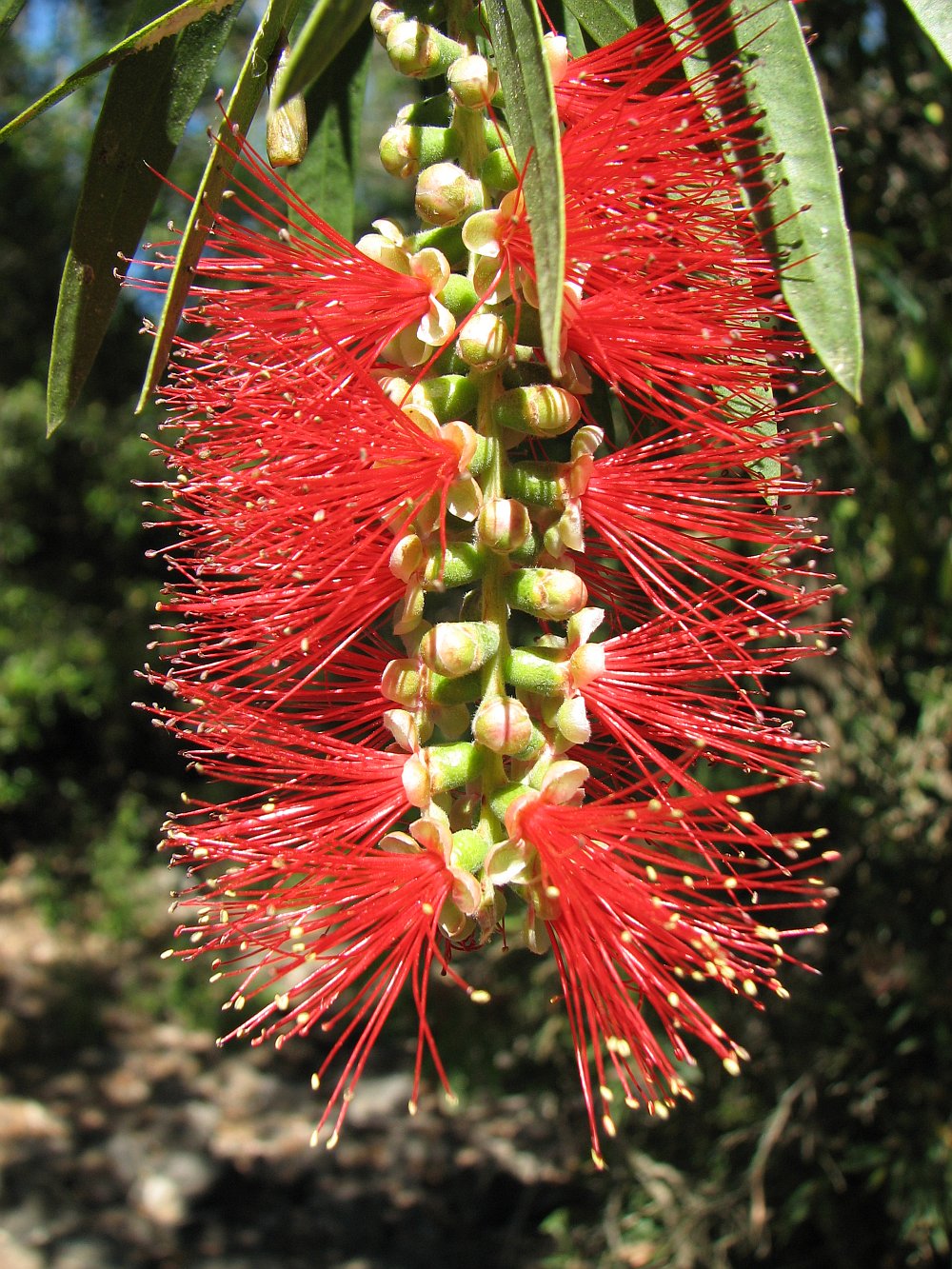 BottlebrushCallistemon
Shrubs with brush-shaped flowers native to Australia
🇦🇺 Australia · Flowering shrub
BottlebrushCallistemon
Shrubs with brush-shaped flowers native to Australia
🇦🇺 Australia · Flowering shrub
 Darwinia
Australian shrubs with bell-like flowers wrapped in colourful bracts
🇦🇺 Australia · Flowering shrub
Darwinia
Australian shrubs with bell-like flowers wrapped in colourful bracts
🇦🇺 Australia · Flowering shrub
 Common red bottlebrushMelaleuca citrina
A hardy Australian shrub with bright red brush-like flowers
🇦🇺 Australia · Flowering shrub
Common red bottlebrushMelaleuca citrina
A hardy Australian shrub with bright red brush-like flowers
🇦🇺 Australia · Flowering shrub
More from Australia
All the flowers of Australia AlmondPrunus amygdalus
A Mediterranean tree grown for its fragrant spring flowers and edible seeds
🇮🇷 Iran and 6 more · Flowering tree
AlmondPrunus amygdalus
A Mediterranean tree grown for its fragrant spring flowers and edible seeds
🇮🇷 Iran and 6 more · Flowering tree
 FennelFoeniculum vulgare
A tall, aromatic herb with feathery leaves and yellow umbels, used for food and spice
🇨🇳 China and 7 more · Herb or useful flower
FennelFoeniculum vulgare
A tall, aromatic herb with feathery leaves and yellow umbels, used for food and spice
🇨🇳 China and 7 more · Herb or useful flower
 RosemarySalvia rosmarinus
A fragrant evergreen shrub with needle-like leaves and purple, blue, or white flowers
🇪🇸 Spain and 5 more · Flowering shrub
RosemarySalvia rosmarinus
A fragrant evergreen shrub with needle-like leaves and purple, blue, or white flowers
🇪🇸 Spain and 5 more · Flowering shrub
 Eucalyptus
The tall, aromatic trees and shrubs known as gum trees or eucalypts
🇦🇺 Australia and 7 more · Flowering tree
Eucalyptus
The tall, aromatic trees and shrubs known as gum trees or eucalypts
🇦🇺 Australia and 7 more · Flowering tree